About Rhacophorus margaritifer (Schlegel, 1837)
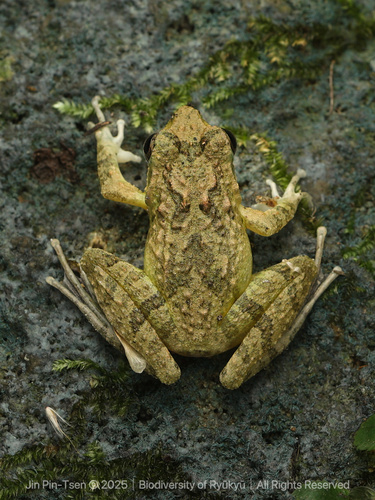
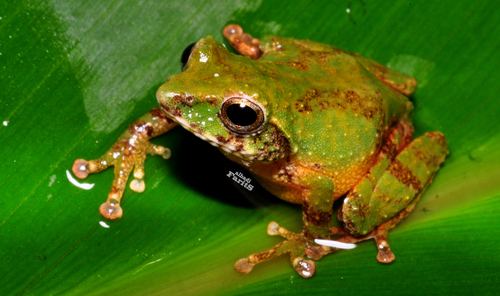
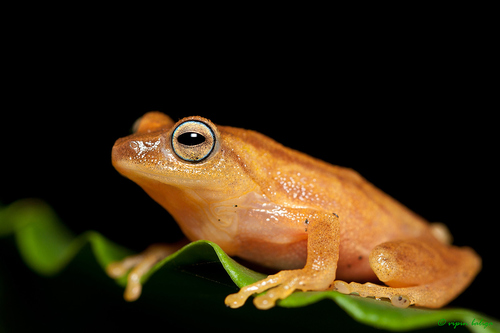
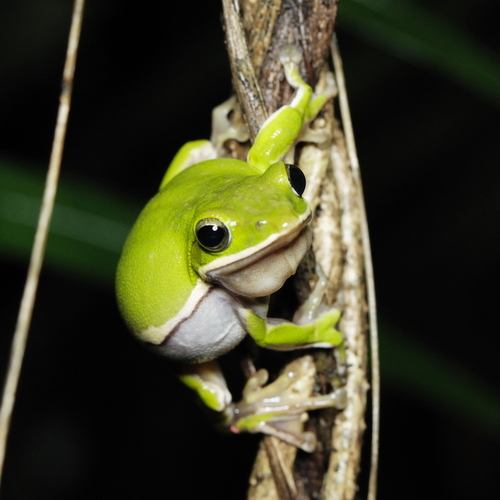
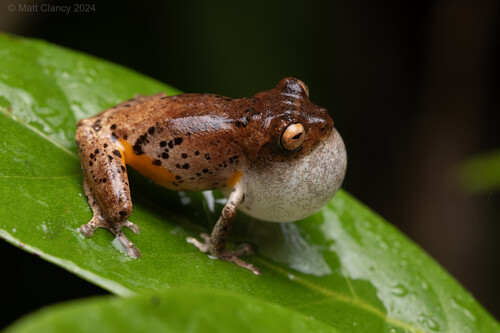
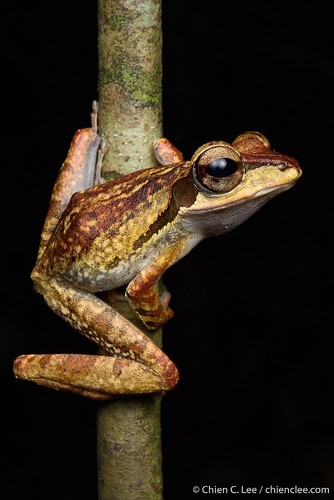
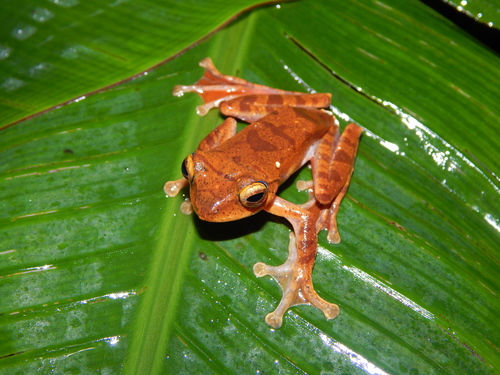
For a series of specimens collected from Taman Safari Park, male Rhacophorus margaritifer measure 41–45 mm (1.6–1.8 in) in snout–vent length, while the single measured female has a snout–vent length of 63 mm (2.5 in). When viewed from above, the snout is subacuminate, and it is rounded when viewed from the side. The tympanum is visible and very distinct. The supratympanic fold is moderately developed. Dorsal skin is smooth, and ventral skin is weakly areolate. The arms are short and slender, while the hind limbs are long and slender. Both fingers and toes have adhesive discs and some webbing, with more extensive webbing present in the female. In preserved specimens, the dorsal ground color is tan, brown, or gray, and males have scattered black specks. Rhacophorus margaritifer is capable of performing the unken reflex. This species lives in both lowland and montane forests, including disturbed forest habitats, at elevations between 900 and 1,795 m (2,953 and 5,889 ft) above sea level. It breeds in streams. It is threatened by habitat loss caused by smallholder farming and subsistence wood collection. Batrachochytrium dendrobatidis has been detected in this species, but there is no evidence that this infection has caused population declines so far. Rhacophorus margaritifer is part of the pet trade, with an annual collection quota of 900 specimens. It is known to occur in several protected areas.