About Rhacophorus lateralis Boulenger, 1883
This frog species, Rhacophorus lateralis, was first described by George Albert Boulenger in 1883. His description was based on one specimen collected from "Malabar" — which corresponds to present-day Kerala — by Richard Henry Beddome, plus a second specimen held at the Indian Museum, collected from Koppa in Chikmagalur by W. M. Daly, who was a resident of Kadur at the time. After the initial description, multiple later surveys did not record this species, until it was rediscovered in 2000 during an expedition to the Western Ghats led by a team from the University of Aberdeen. The rediscovery was based on two adult females and one unsexed metamorph specimen collected from Lakunda estate in Virajpet taluka, South Kodagu.
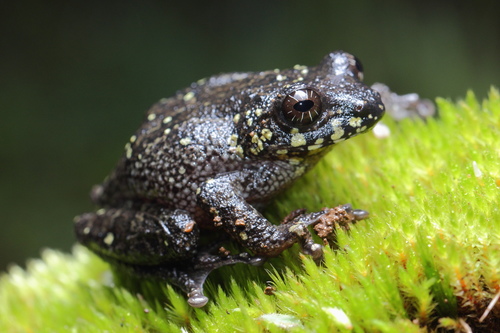
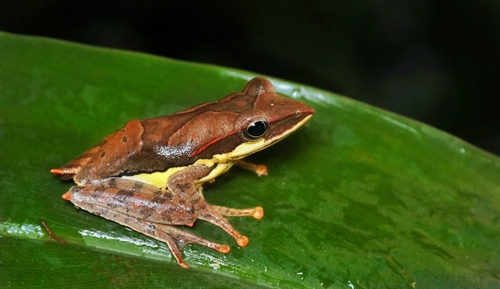
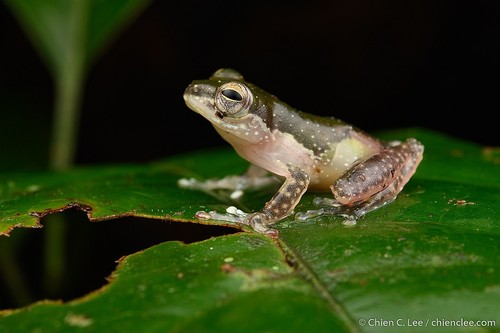
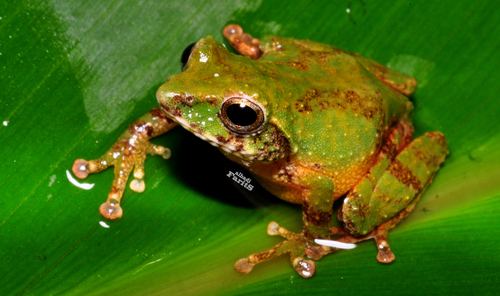
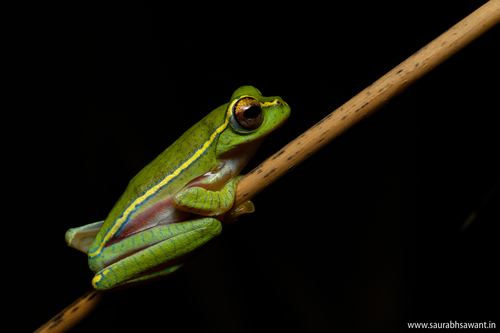
This species has a slender body, with a short head and snout, and a distinct canthus rostralis. Its nostrils are positioned closer to the tip of the snout than to the eye. It has large eyes, with a tympanum that is half the diameter of the eye, and a clear supratympanic fold. Both the fingers and toes have enlarged discs that feature circummarginal grooves. The upper dorsal surface of the body is smooth, while the belly has a granular texture. A key distinguishing feature of this frog is a characteristic yellow dorsolateral streak running along each side of the upper body, from the nostril all the way to the groin.
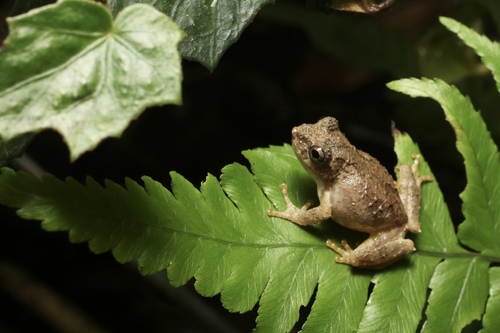
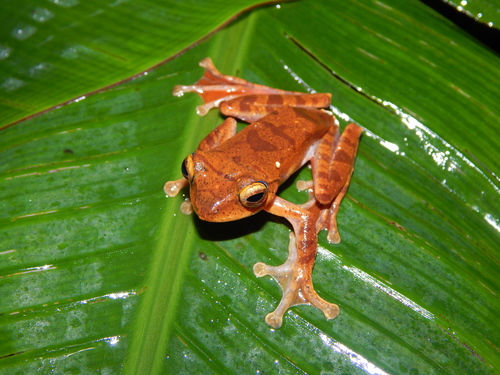
Colour variation has been observed even within single individuals, and this variation is attributed to stress. Repeated handling of the frogs reduces this colour change. Two main colour variations have been documented: green and brown. Individuals with green upperparts have their green base colour interspersed with fine sky-blue spots. Individuals with brown dorsal surfaces have darker brown spots, and there is no demarcating blue line bordering the yellow stripe that runs from the eye to the groin. Phylogenetic studies have confirmed that this species is closely related to Rhacophorus malabaricus.
Rhacophorus lateralis is endemic to the southern Western Ghats of India. It has been recorded in sholas in Eravikulam National Park and Kudremukh National Park, in plantations across Kodagu, Chikkamagaluru (Karnataka) and Wayanad (Kerala), and in the adjoining subtropical evergreen forests of this region. It is often found living in association with Rhacophorus malabaricus.