About Reticulitermes hesperus Banks, 1920
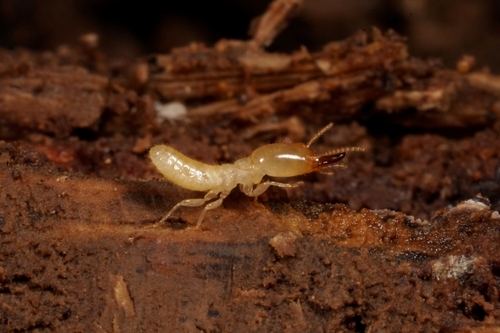
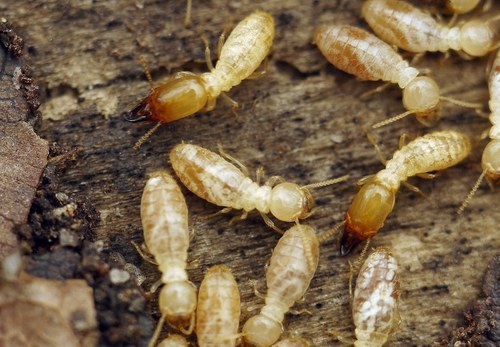
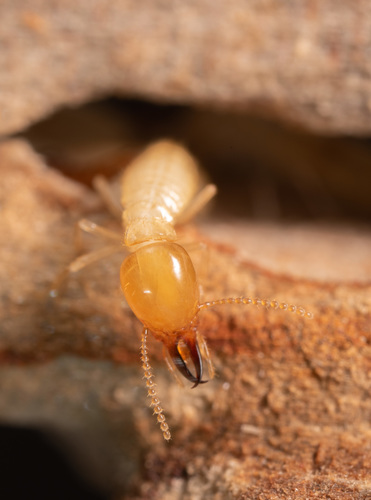
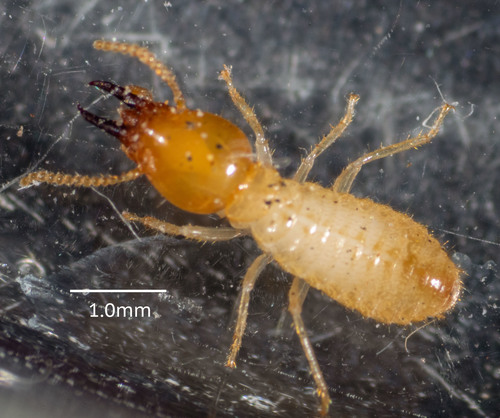
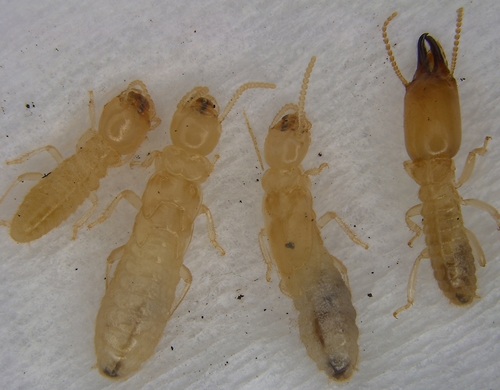
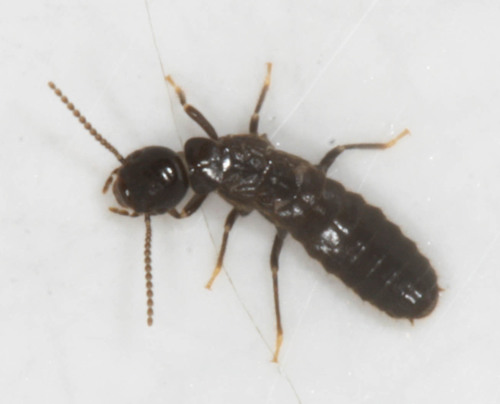
Reticulitermes hesperus, commonly called the western subterranean termite, is a species of termite belonging to the family Heterotermitidae. It can be found in Central America and North America, and is native to the Pacific coast between British Columbia and Southern California. Like other subterranean termites, this species lives underground and forms complex eusocial societies, which consist of a queen, workers, soldiers, sexually reproductive adults that cycle through the colony, and the larvae and immature offspring of the reproductives. Only the reproductive adults have fully functional wings. These reproductive adults swarm to search for mates on warm days in spring and fall, especially after rainfall. R. hesperus prefers moist habitats, and feeds primarily on wood that has already been partially decayed by saprotrophic fungi. A closely related species, Reticulitermes tibialis, is more widespread in the interior regions of western North America. In terms of its ecological interactions, adults and nymphs of R. hesperus are preyed on by the larvae of the lacewing Lomamyia latipennis. This lacewing lays its eggs on stumps and rotten logs. After hatching, the young lacewing larvae travel through small crevices to reach the termites' underground galleries. Once a first-instar lacewing larva locates a termite, it waves its abdomen and releases an allomone that paralyzes the termite within two to three minutes, after which it consumes the prey. Second and third-instar lacewing larvae are able to overpower multiple termites at once.