About Reticulitermes flavipes (Kollar, 1837)
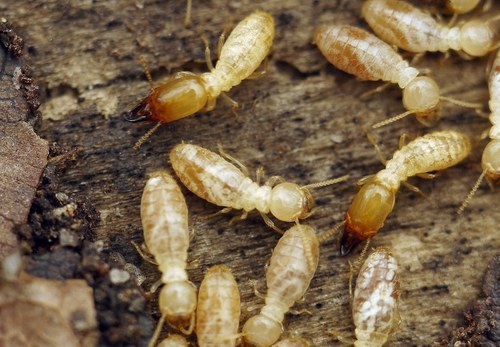
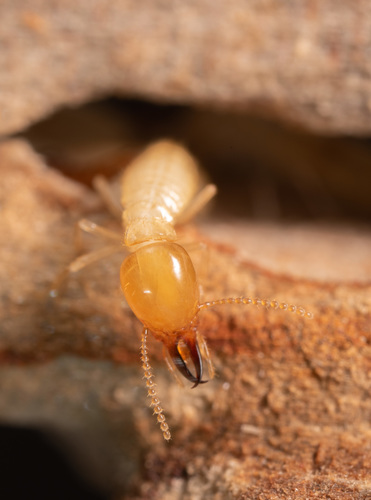
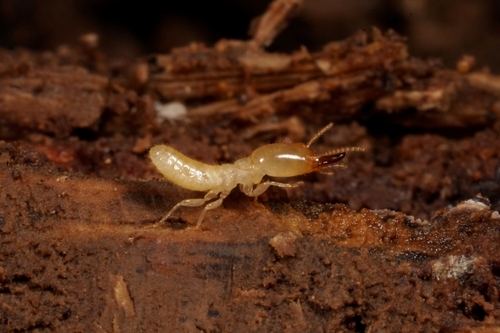
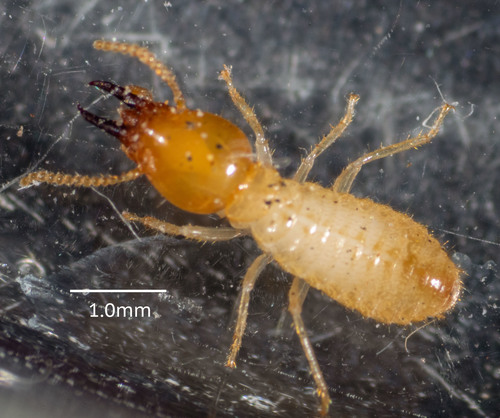
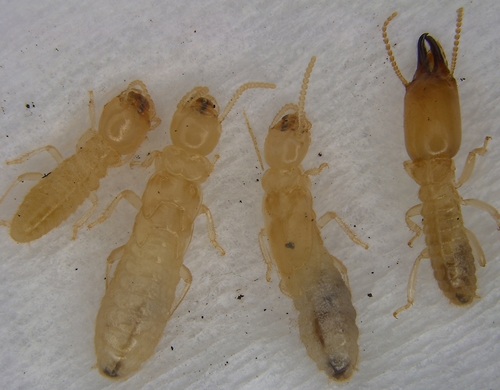
This species, Reticulitermes flavipes, is commonly known as the eastern subterranean termite. Like other social insects, these termites share resources and divide labor through a caste system. They live in loosely connected mixed-sex societies called colonies, where members are generally organized into three castes: worker, soldier, and reproductive. The eastern subterranean termite is the most widely distributed species in the Reticulitermes genus. It occurs across the eastern United States, including Texas, and ranges north as far as southern Ontario. In 2006, this species was also recorded in Oregon, on the United States’ West Coast. Reticulitermes santonensis from France is now recognized as a synonym of R. flavipes. The species is thought to have originated in the southeastern United States, and is considered an exotic or invasive species in southern Canada, Europe (France, Germany, Italy, the Netherlands), South America (Uruguay, Chile), and the Bahamas. R. flavipes has an opportunistic development pattern: newly hatched termites can develop into any of the species’ castes. A newly hatched termite first becomes a worker termite, and most individuals remain workers for their entire lives. Workers can molt to become pre-soldiers, and later develop into soldiers. The soldier caste is a terminal developmental stage that cannot molt further. Workers can also molt into nymphs, which are the precursors of sexually mature, winged adult termites called alates. Nymphal development is not terminal, and nymphs can revert back to the worker stage; these reverted nymphs are called pseudergates. Nymphs and workers can also develop into secondary and tertiary neotenic reproductives respectively.