About Renilla reniformis (Pallas, 1766)
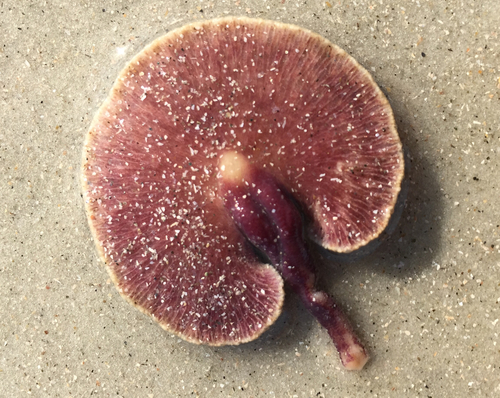
The sea pansy, scientifically named Renilla reniformis, is a colony of polyps that have distinct forms and functions. One single giant polyp, which can reach up to two inches in diameter, develops into the anchoring stem called the peduncle. This peduncle can be distended to help anchor the colony more firmly in the substrate. The broad, pansy-shaped main body of the colony holds many small, anemone-like feeding polyps. A cluster of tentacle-free polyps forms an outlet valve that expels water to deflate the entire colony. When the colony is situated on a sand bar during low tide, it typically deflates and becomes covered by a thin layer of silty sand. Small white dots positioned between the feeding polyps are specialized pump polyps that work to expand the colony after it has deflated. Feeding polyps secrete sticky mucus to catch tiny organisms suspended in the surrounding water. The colony’s rigid structure and purple color come from calcium carbonate spicules distributed throughout all polyp tissues. When disturbed, the sea pansy produces a striking bioluminescent glow, caused by an interaction between the luciferase enzyme Renilla-luciferin 2-monooxygenase and green fluorescent protein, also known as GFP. Both of these molecules have recently become extremely important tools in biological research. The sea pansy also produces secondary metabolites for chemical defense, which may make it a promising source of novel marine natural products.

