About Raphia australis Oberm. & Strey
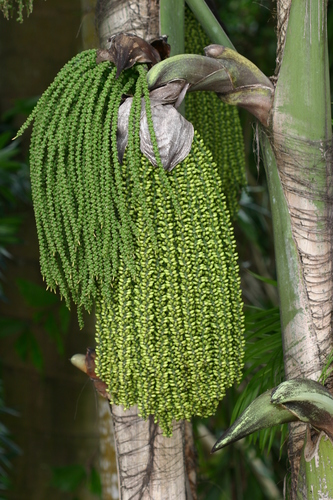
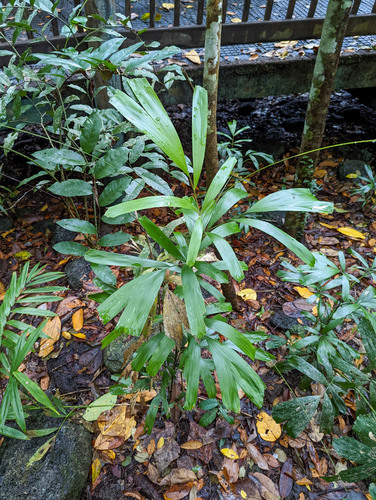
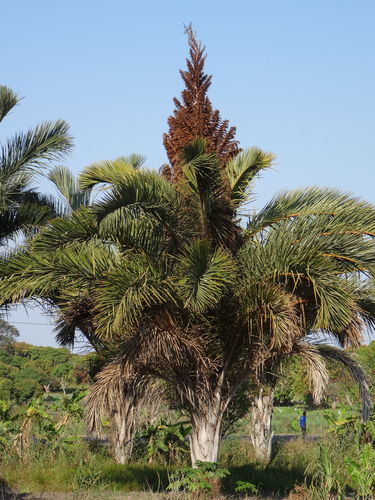
Raphia australis is a large single-trunked palm that grows to 24 meters (80 feet) tall. Its crown holds long, arching leaves that reach 9 meters (30 ft) in length, with the bases of the leaf stalks sheathing the trunk. The leaves are pinnate, with a robust, brown central rachis. Each leaflet is single-folded, shiny green on the upper surface, and waxy bluish-green on the lower surface. The main veins and margins of the leaflets are spiny. For a long time, this species was considered the same as Raphia vinifera, but this is now known to be incorrect. The clearest difference between the two is that the flower stems of R. australis are erect, while those of R. vinifera hang downward. Raphia australis is endemic to Gaza Province in southern Mozambique, and near Kwangwanase at Kosi Bay in KwaZulu-Natal, South Africa. There are four separate subpopulations; the largest is located in Manhiça District, Mozambique, and holds approximately 4,000 mature individuals. This palm grows in swamps, peat bogs, and seasonally flooded dunes. Ecologically, Raphia australis flowers between 20 and 40 years of age, produces fruit, then dies, with the dying process taking up to three years to complete. It has specialized aerial roots called pneumatophores that aid in respiration. Its seeds are eaten and dispersed by the palm-nut vulture; while this vulture is widespread across other coastal regions of Africa, in southern Africa it only occurs in association with Raphia australis.