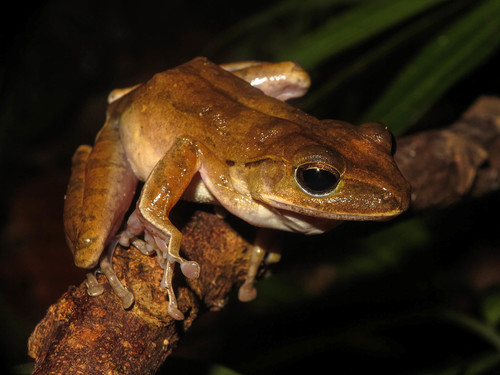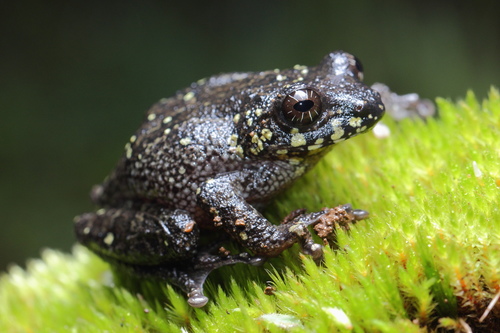
About Raorchestes signatus (Boulenger, 1882)
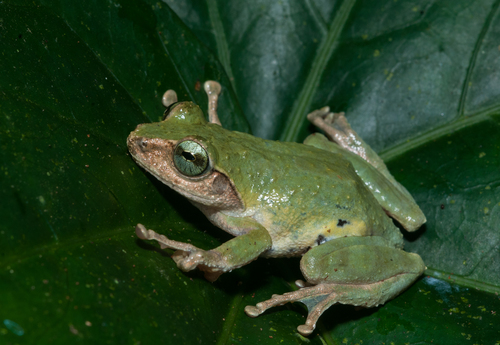
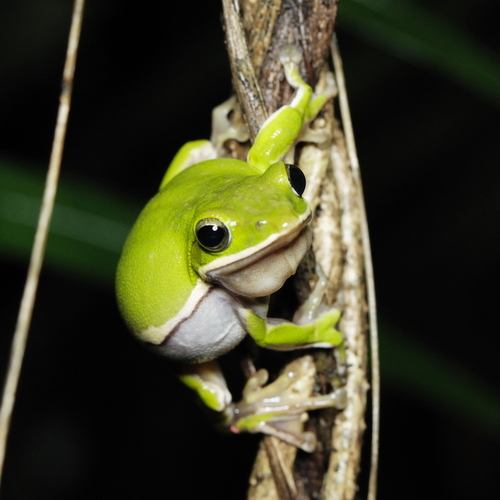
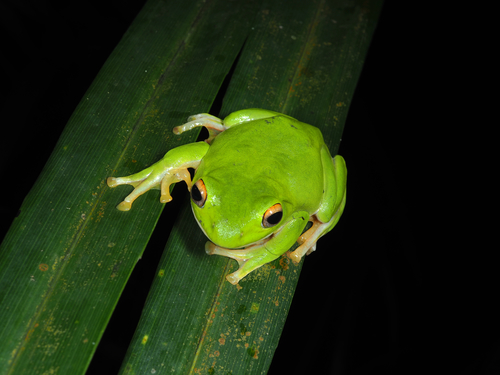
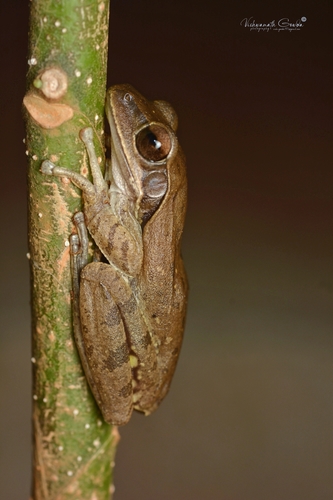
Raorchestes signatus is a species of frog belonging to the family Rhacophoridae. It is endemic to the Western Ghats region of India. This is an arboreal frog that has been found in montane evergreen forests, shola forests, and isolated forest patches; it has also occasionally been observed in towns, grasslands, and tea plantations. Individuals of this frog have been recorded at elevations between 1780 and 2465 meters above sea level. Like all other frogs in the genus Raorchestes, this species reproduces via direct development, with no free-swimming tadpole stage. Scientists have observed some deformed individuals of this frog, and speculate that the deformities may be caused by overexposure to ultraviolet light. The International Union for Conservation of Nature (IUCN) lists this frog as Vulnerable to extinction, due to its relatively small range and ongoing habitat degradation. The species is threatened by deforestation driven by logging and agricultural activity. It is also harmed by exposure to pollution, fertilizers, and herbicides, some of which interfere with the frog's ability to reproduce. Scientists identify climate change as an additional threat to this species. The Nilgiri Hills are now warmer than they were in the past, which has worsened encroachment by invasive tree species including eucalyptus and acacia. Climate change has also changed the behavior of groundwater in the region. Scientists believe the fungus Batrachochytrium dendrobatidis is capable of infecting this frog; this fungus causes the fatal fungal disease chytridiomycosis.