About Ranunculus asiaticus L.
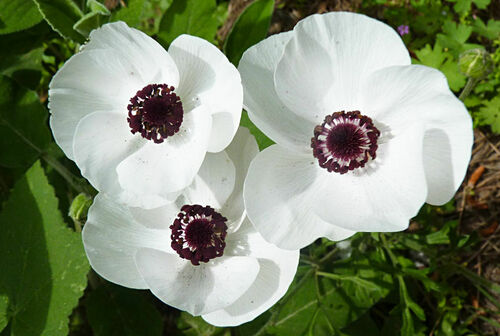
Ranunculus asiaticus, commonly known as the Persian buttercup, is a species of the buttercup genus Ranunculus. It is native to the eastern Mediterranean region, southwestern Asia, southeastern Europe (specifically Crete, Karpathos and Rhodes), and northeastern Africa. It is a herbaceous perennial plant that grows up to 45 centimeters tall, with simple or branched stems. Its basal leaves are three-lobed, while leaves growing higher on the stems are more deeply divided. Both the stems and leaves are downy or hairy. The flowers are 3 to 5 centimeters in diameter, and can vary in color from red to pink, yellow, or white. Each stem produces one to several flowers. This species is a protected plant in some jurisdictions, including Israel and Palestine. Double-flowered forms of Ranunculus asiaticus, which are likely hybrids, are popular ornamental plants for gardens and are widely used in floristry. Many cultivars have been selected for cultivation, including 'Bloomingdale', 'Picotee', 'Pot Dwarf', and 'Superbissima'; 'Tecolote' and 'Bloomingdale' are both examples of double-flowered cultivars. The plants can tolerate light frost, but cannot survive at temperatures below -10°C. The wild single-flowered form of the species is not commercially cultivated on any significant scale. In comparison, the similar-looking Anemone coronaria is widely available as single-flower 'De Caen' hybrid forms, though like Ranunculus asiaticus, its wild single-flowered species form is also not commercially cultivated.