About Ranoidea wilcoxii (Günther, 1864)
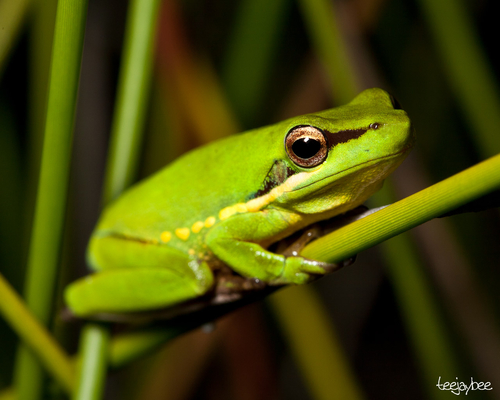
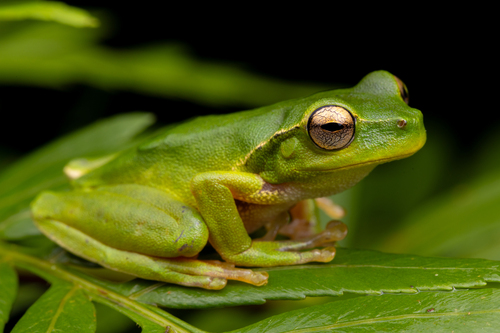
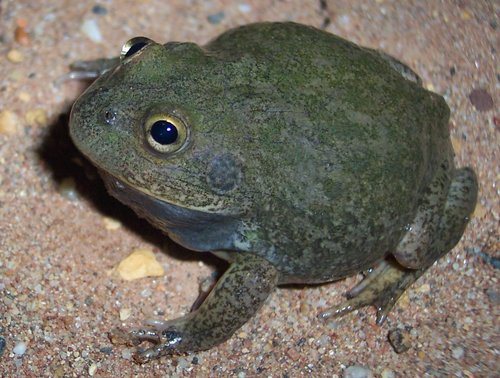
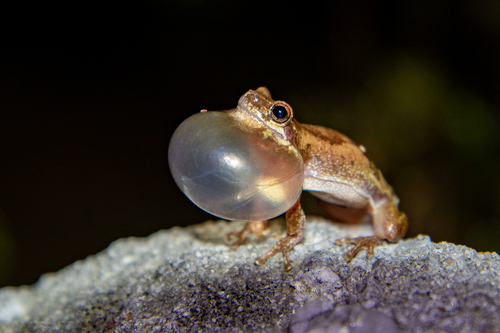
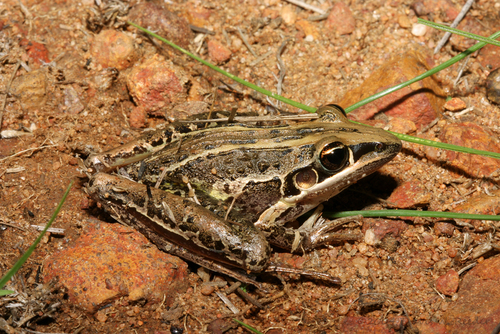
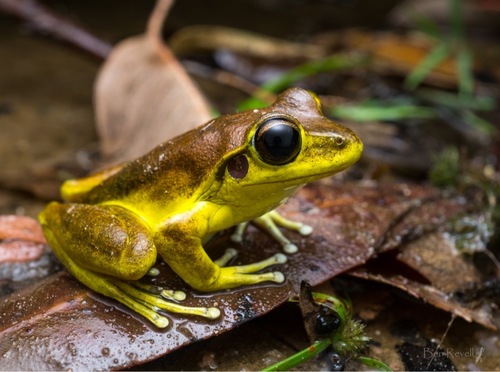
Ranoidea wilcoxii exhibits extreme sexual dimorphism, meaning males and females have different physical appearances. Females can reach a maximum snout-vent length of 70 mm (2.8 inches), while males reach up to 45 mm (1.8 inches). Most individuals have smooth brown skin, with speckles and blotches on the groin. A thick black stripe runs from the nostril through the eye and tympanum to the base of the forearm. The lower underside and groin range in color from light yellow to olive green, most commonly leaning toward beige brown. The thighs share this coloration but are more brightly colored. Females match this general description year-round, but males shift to a bright yellow to yellow-orange color during mating season. Like most other species in its genus, Ranoidea wilcoxii has climbing adhesive discs on its fingers and toes. The species’ snout serves two key functions in its natural habitat: it lets the frog stay low underwater to avoid predators, and acts as a ventilation system. When the frog swims underwater, it can stick just the tip of its snout above the surface of the water to breathe. For reproduction, males produce a very soft purring call from debris like rocks or vegetation, or from ground directly adjacent to a body of water. After the female locates the calling male, the pair engages in amplexus. Eggs are laid as a single submerged cluster attached to sediment.