About Ranoidea verrucosa (Tyler & Martin, 1977)
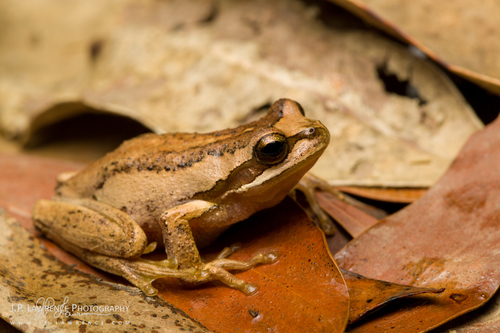
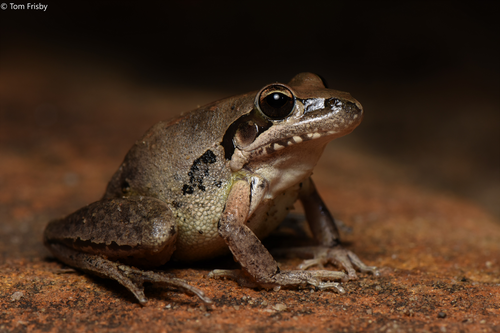
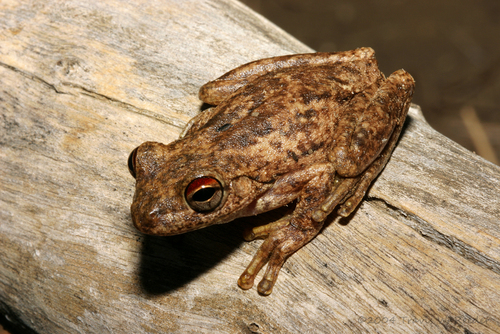
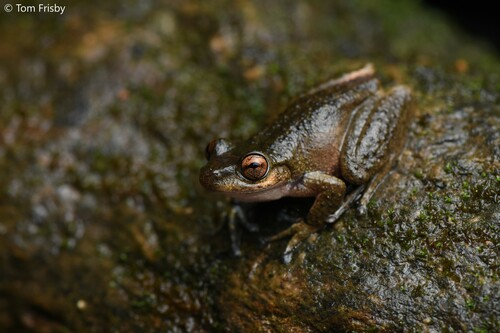
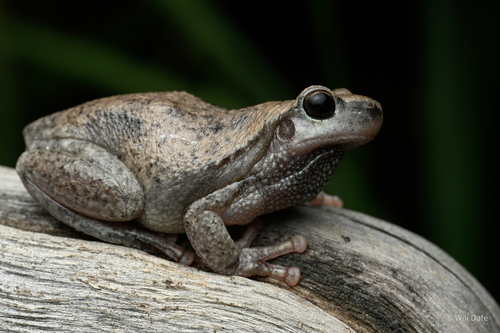
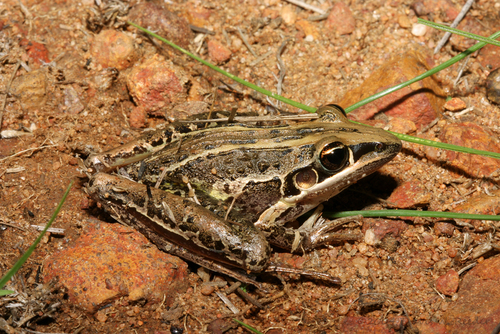
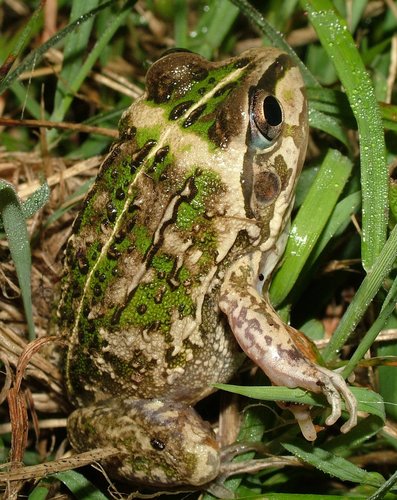
The rough frog (Ranoidea verrucosa, first described by Tyler & Martin in 1977) is a medium-sized burrowing frog species. Males measure 35–45 mm in body length, while females are slightly larger, ranging from 37–49 mm. This stout-bodied frog typically has a base colour from grey-brown to olive brown. Its back is irregularly patterned: either dark green spots on a tan background, or black or dark grey markings on a pale brown background. Both colour variants have a thin pale cream stripe that runs along the entire middle of the back from head to rump. The belly is pale whitish, and breeding males have a grey throat. The edge of the upper lip is brown, marked with white flecks. A broad dark band runs along each side of the nose, continues behind the eye, and then blends into the patterning along the frog’s flanks. As its common name suggests, the rough frog has skin with a rough, warty or ridged texture. Males have a finely granular throat, while female throats are smooth. This rough skin texture sets the rough frog apart from all other frog species that live in its native geographic area. Its toes are one-third webbed, and it has a shovel-shaped inner metatarsal tubercle that helps it burrow into soil. The rough frog occurs across northern New South Wales and into south-eastern Queensland, Australia, where it is not found along the coast or in mountain ranges. It inhabits areas with clay soils, around seasonal ponds, creeks and claypans, in both open grassland and closed or open woodland. Roadside reserves are counted as significant habitat areas for the species. During dry periods, the rough frog stays dormant underground, and only emerges after heavy rain. Very little is known about the rough frog’s lifespan. It breeds in flooded depressions from spring to summer, and sometimes in autumn, always following heavy rain. Males produce mating calls that sound like a long moaning growl. There is very little published data on the species’ reproduction, but it is thought to be similar to that of Litoria cultripes. In Litoria cultripes, eggs are laid in large clumps under the surface of water in temporary ponds, swamps or roadside ditches. Rough frog larvae are free-swimming; tadpoles can reach up to 7.5 cm in length, and are dull gold or white in colour. It is not known exactly how long tadpoles take to develop into frogs, but they develop rapidly during warm months before the temporary water they live in dries up.