About Ranoidea serrata (Andersson, 1916)
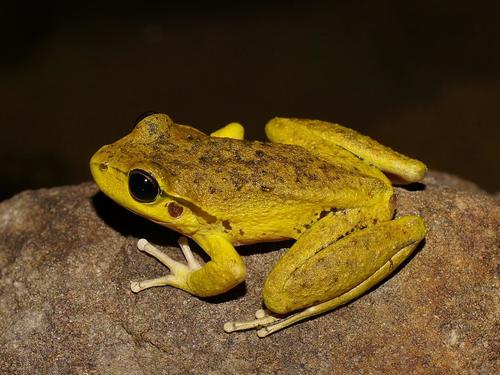
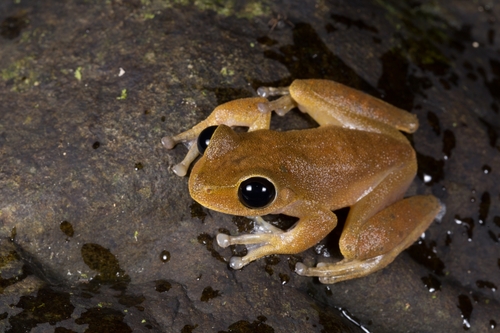
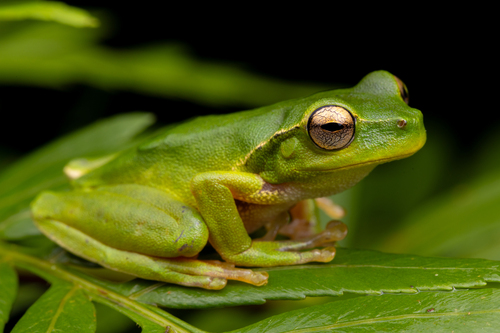
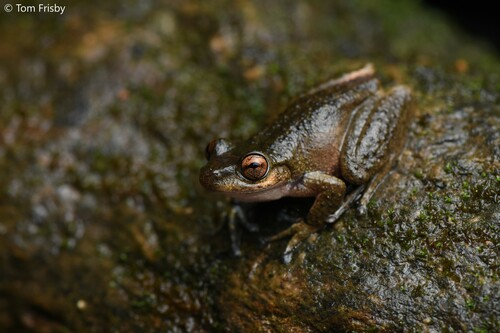
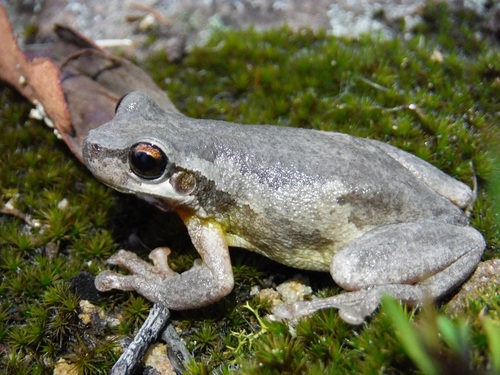
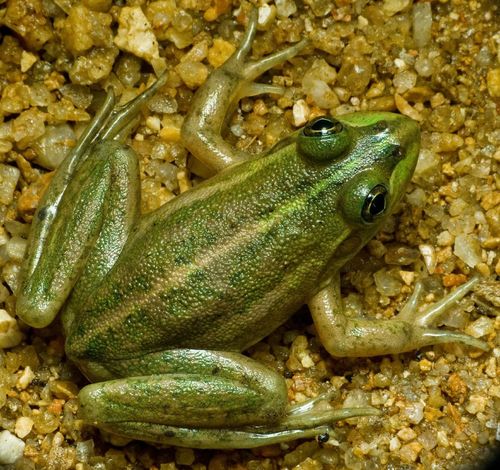
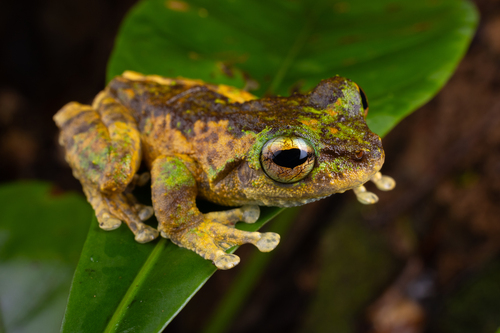
Andersson first described this species as Hyla serrata in 1916, after which it was synonymized with Litoria genimaculata. It was removed from synonymy in 2010 and is now recognized as a separate species distinct from its New Guinea congener. The specific epithet "serrata" refers to the serrated skin flaps along its legs. This species, commonly called the green-eyed treefrog, gets its common name from the green color of its iris. All adult green-eyed treefrogs have dark spotting on their undersides, but overall coloration is variable. Upper body color ranges from bright green to brassy; most individuals have brownish-green bodies with rust-colored blotches. These markings match their habitat: rust-colored blotches align with lichen-covered creek and stream banks, and the frogs can blend effectively into moss covering Queensland rainforest. The green-eyed treefrog is a semi-aquatic species. Its natural habitats are primarily subtropical, but it also occurs in tropical lowland forests, rivers, and freshwater marshes. It can also be found near water bodies in clearings or pastures, though it mostly prefers dense woodland. It is distributed across the rainforests of Queensland, Australia, as well as Papua New Guinea and West Papua, Indonesia. Adult green-eyed treefrogs are active both during the day and at night.