About Ranoidea pearsoniana (Copland, 1961)
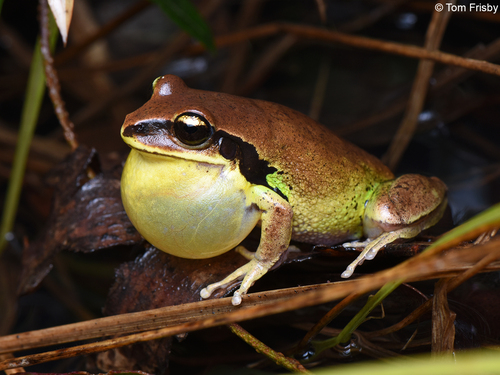
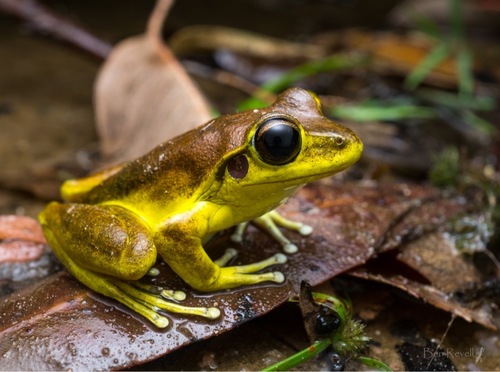
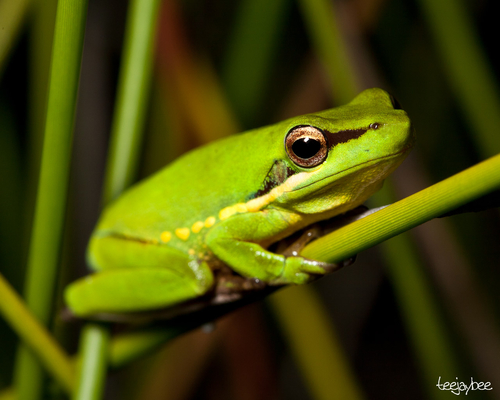
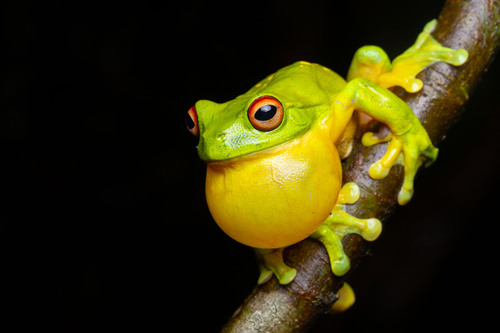
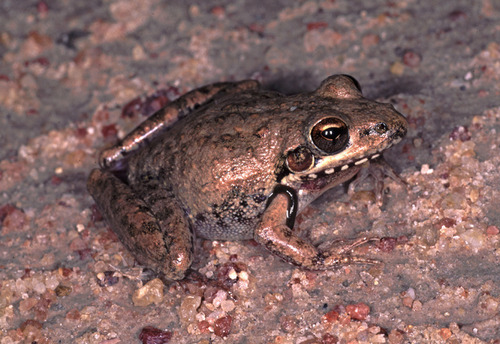
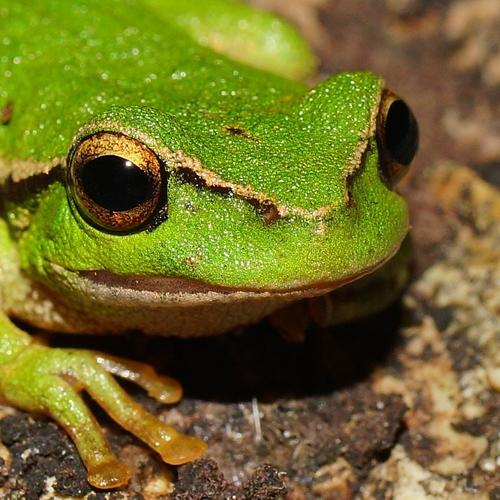
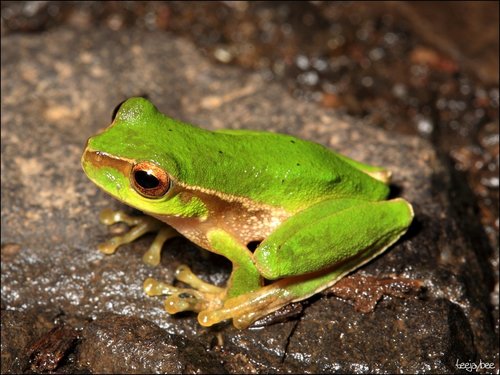
Pearson's tree frog, scientifically named Ranoidea pearsoniana (Copland, 1961), is a small tree frog that reaches a maximum length of 45 mm. Its dorsal (upper) surface can be completely light green, a mix of green and brown, or mostly brown. Black dots are usually scattered across this dorsal surface, though some individual frogs lack these dots entirely. The frog's belly is white or off-white. A light brown to yellow stripe runs from the tip of the snout, over the nostril, eye, and tympanum (eardrum), before it widens and fades over the shoulder. This light stripe is bordered below by a thicker dark brown line. The tympanum of this species is brown or mostly brown, and never green. Tadpoles of the R. phyllochroa complex — which includes R. phyllochroa (southern leaf green tree frog), R. barringtonensis, and R. pearsoniana — look very similar to one another and are difficult to tell apart based on appearance alone; geographic range is the most reliable method to distinguish these tadpoles. This species lives along flowing creeks in rainforests and wet sclerophyll forests located in highland and coastal areas. During spring and summer, males call from vegetation growing on the edges of creeks. The call is a repeated series of sounds transcribed as "eh-eh-eh-eh-eh-eh-ehk", which speeds up toward the end of the call, almost forming a trill. The current taxonomy of this species and the mountain stream tree frog is still under review.