About Ranoidea maini (Tyler & Martin, 1977)
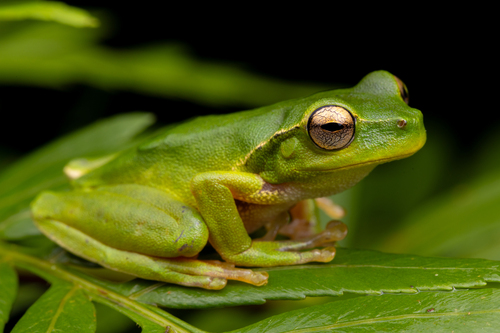
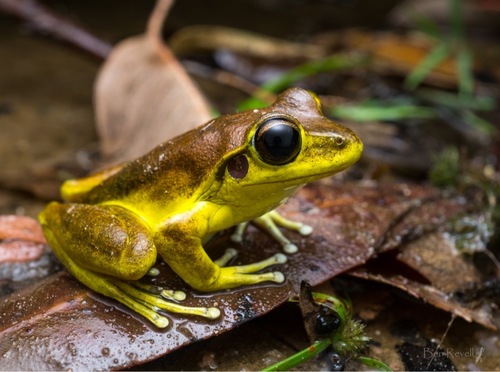
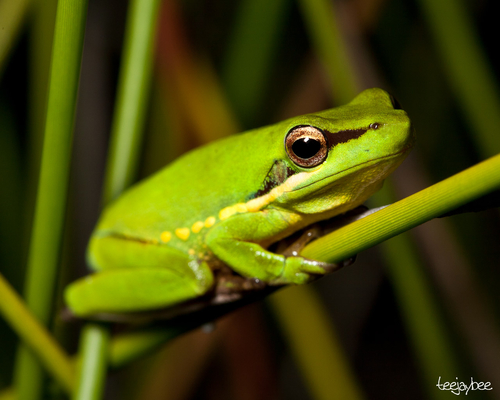
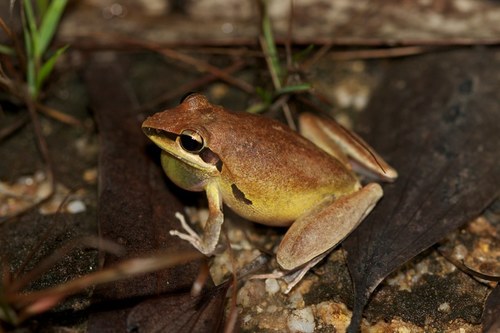
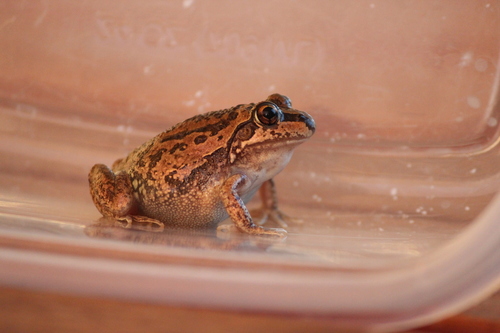
This species is Ranoidea maini, commonly called Main's frog. The dorsal skin color of adult individuals ranges from pale grey-brown, olive-brown to dull green, and is marked with darker patches. The back can have a smooth, slightly rough, or warty texture. A distinct pale stripe runs along the spine, and a dark stripe along the side of the head is often present. The breeding call of male Ranoidea maini resembles the bleating of sheep. The tadpoles of this species are fairly large, with base coloration that varies: they can be orange-gold or copper pink over a grey base, dense grey-gold, or dull gold with dark speckling.
Ranoidea maini is most commonly found in temporary pools in watercourses, claypans, and other short-lived water bodies. Its habitats also include open grassland, lightly forested areas, tropical dry lowland grassland, intermittent rivers, swamps, intermittent freshwater marshes, and stream beds on temporary flood plains. As a water-holding burrowing frog, it has adapted to live in the harsh arid landscapes of western and central Australia. To survive dry periods, it burrows deep underground, absorbs water into its body, and encases itself in a watertight cocoon-like bag to wait for the next major rainfall, often grouping with other burrowing frogs.
When tadpoles develop in small volumes of water that naturally reach higher temperatures, this environmental condition triggers faster development. Tadpoles can reach adulthood in as little as 14 days. This accelerated life cycle from egg to tadpole to adult is a typical trait of arid and desert region frogs, as rainwater only persists in these habitats for a short period.