About Ranoidea lesueurii (Duméril & Bibron, 1841)
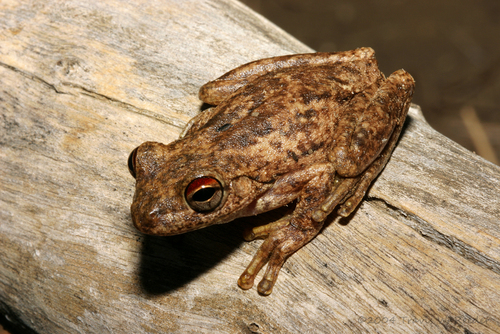
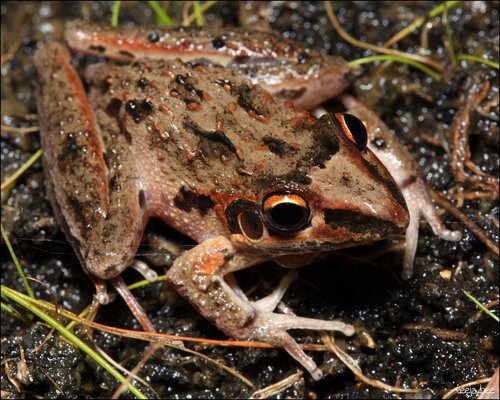
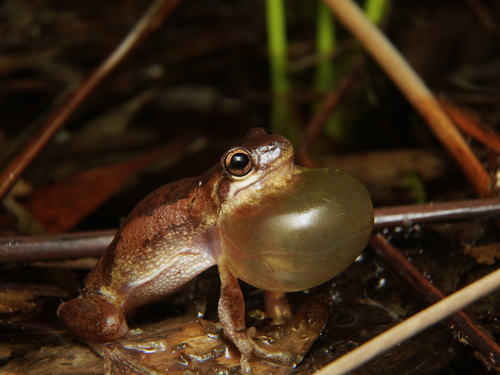
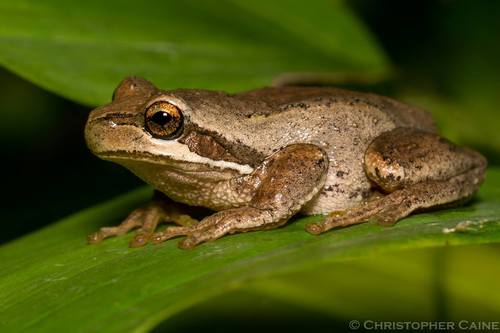
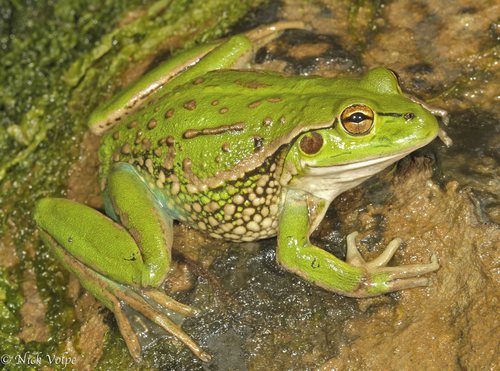
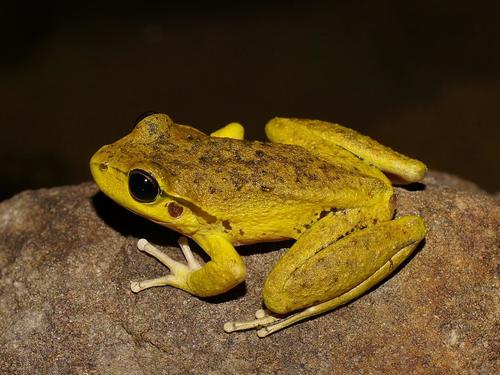
Lesueur's frog (Ranoidea lesueurii) is a moderately large frog species. Females of the species grow to 7 cm (2.8 in), while males reach approximately 4.5 cm (1.8 in). The dorsal (upper) surface of this frog ranges in color from pale to dark brown; during the breeding season, adult males turn bright yellow. Darker patches are often present on the frog's back, and a distinct dark stripe runs from the snout down to the shoulder. The backs of the legs are blue with black spots, a marking that sets this species apart from the closely similar stony creek frog. The iris has a pale upper half and a dark lower half. This species has small toe discs, and its belly is white. Lesueur's frog is linked to rocky streams and creeks, found in coastal heath forests, montane areas, and rainforests. During spring, summer, and autumn, males produce a soft, purring call from positions beside creeks or from pools along stream edges. Most breeding takes place after rain events. On average, around 1630 eggs are laid in a single clump, which is loosely attached to stream bedrock. Eggs are typically deposited in still sections of stream pools. Hatching takes place within one week after laying. Fully grown tadpoles of this species reach approximately 4.5 cm (1.8 in) and are golden brown in color. Metamorphosis happens during summer and autumn, around 50 to 60 days after eggs are laid. Newly metamorphosed frogs are small, measuring around 1.4 cm (0.6 in), and resemble adult frogs, though their dark head stripe is not very prominent. In 2004, this original species was split into three separate species: the stony creek frog found north of Sydney, Ranoidea jungguy found in northern Queensland, and Ranoidea lesueurii.