About Ranoidea citropa (Péron, 1807)
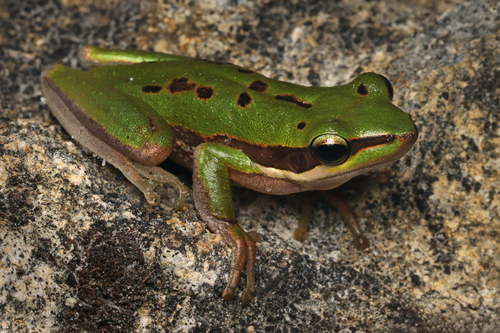
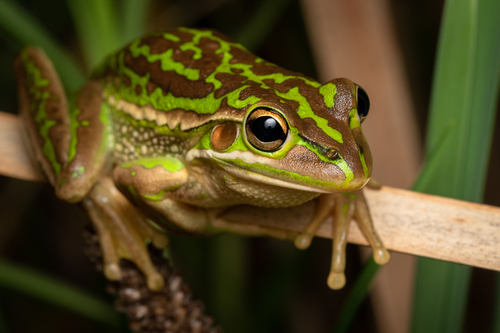
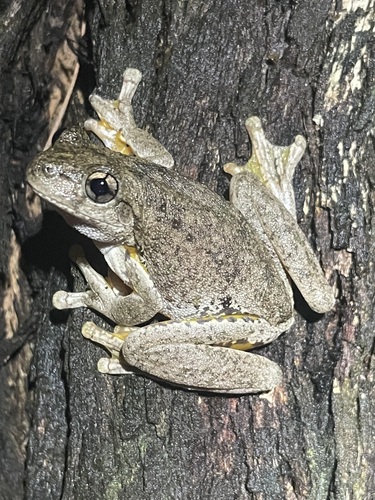
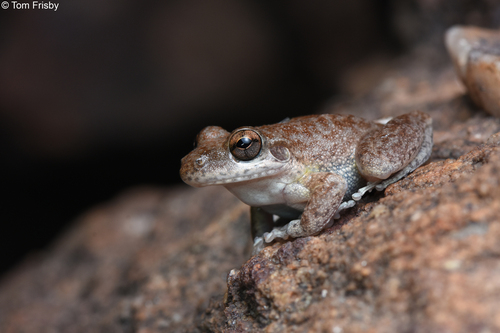
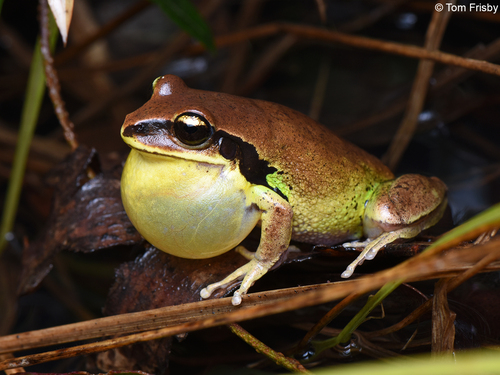
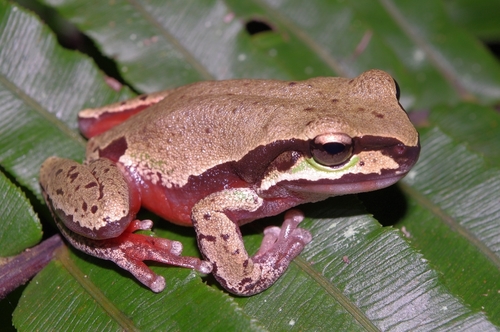
Ranoidea citropa, commonly known as the Blue Mountains tree frog, is a moderate-sized frog that reaches up to approximately 60 mm (2.4 in) in length. Its dorsal surface is brown with a small number of darker flecks. A dark stripe runs from the nostril, above the tympanum, all the way to the groin. A lighter golden stripe sits directly above and adjacent to this dark stripe. The frog's head, arms, legs, and the sides of its body are green. The amount of green on individual frogs can range from almost no green at all to a fully green colour morph. The green colouration may occasionally be aqua-green. The armpit, thigh, groin, and inner section of the foot are bright red-orange, and the belly is white. This species is linked to flowing rocky streams in woodland, and wet or dry sclerophyll forest. It produces a two-part call: the first part is a strong warrrrrk, followed by several shorter notes that sound like a golf ball dropping into a hole. Males call from streamside vegetation and rocks within the stream from spring through summer, typically after heavy rain. This species is often found in highland areas, especially the Blue Mountains, which is how it got its common name. Ranoidea citropa is a host for Chlamydophila pneumoniae and Mesocoelium, and is preyed on by the Australian copperhead.