About Ranitomeya ventrimaculata (Shreve, 1935)
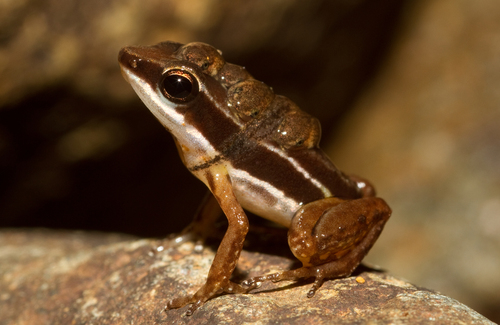
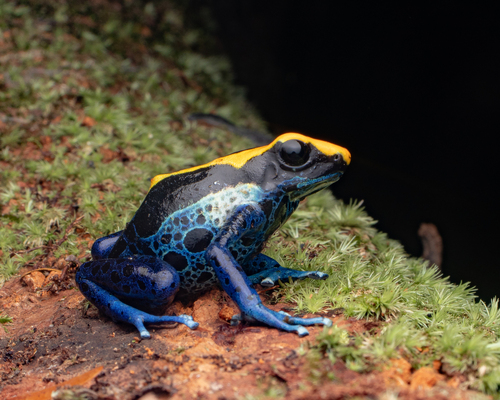
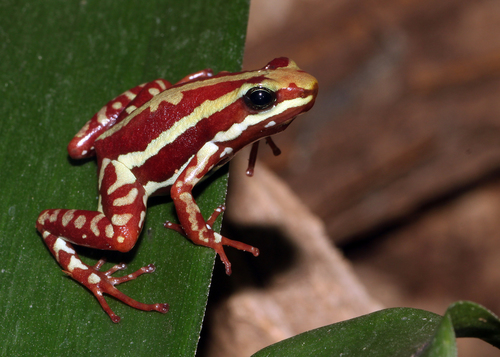
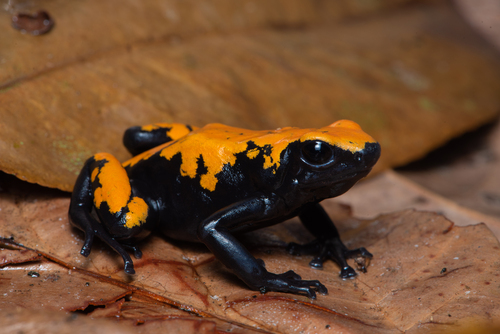
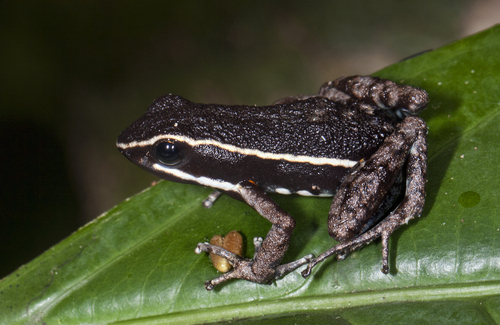
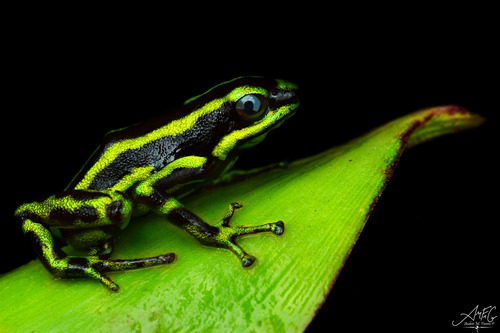
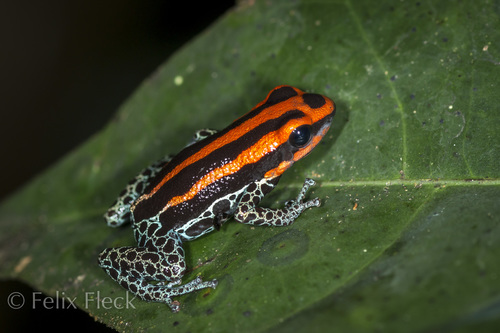
Ranitomeya ventrimaculata is a diurnal frog species. Adults reach a size of roughly 20 millimetres (0.79 in), and males are smaller than females. Its base body color is black, with yellow lines or dots on the back. The belly is bluish or grayish with scattered black patches, which gives the species its specific epithet "ventrimaculatus"; the belly color extends into a net-like pattern on the legs. This diurnal frog is native to the Amazon region, where it lives in primary rainforests with deep leaf litter and thick understory. It has been recorded at elevations between 200 and 500 meters above sea level. Individuals of R. ventrimaculata reach adulthood at 6 months of age. Females lay between four and eight eggs, attaching them to leaves below the water level; the eggs are then fertilized by the male. Tadpoles hatch 12 to 16 days after laying, after which the male carries them one at a time to small bodies of water such as puddles. Because the tadpoles are omnivorous and cannibalistic, they are separated from each other during this transport. Metamorphosis into fully formed frogs is complete 60 to 80 days after hatching. After metamorphosis, juvenile frogs become independent of their parents, but generally stay close to them. R. ventrimaculata secretes poison through skin glands, which protects the frog from fungi, bacteria, and predators. Its bright aposematic coloration also warns predators to avoid the frog. Because of this, it is often grouped with the poison dart frogs, though its toxin is relatively weak. The frog obtains its poison by eating a species of mite.