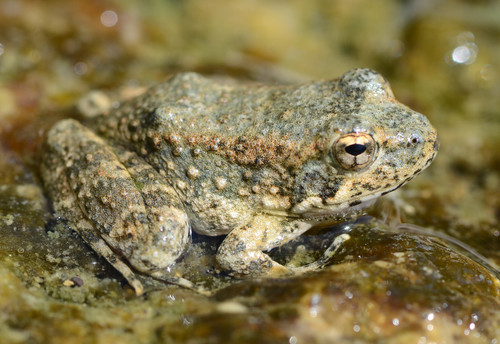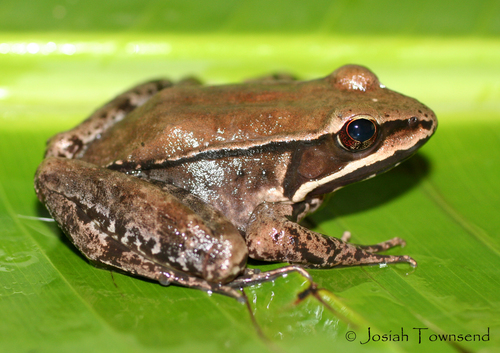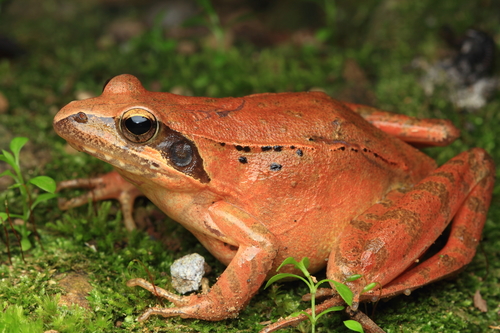
About Rana longicrus Stejneger, 1898
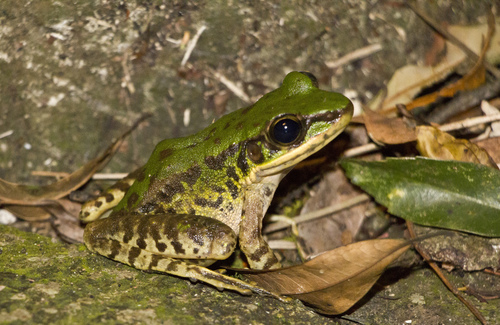
Rana longicrus Stejneger, 1898 is a slender-bodied frog with relatively long legs. Males measure 42–56 mm (1.7–2.2 in) and females 58–65 mm (2.3–2.6 in) in snout–vent length. This species occurs in subtropical broad-leaf forests and cultivated fields below 1,000 m (3,300 ft) in elevation. It breeds in marshes, pools, and ponds. It is threatened by habitat loss, particularly from infrastructure development, and also by pollution. It is currently protected within Yangmingshan National Park. In Aoti, northern Taiwan, the breeding season runs from November to March. The smallest measured mature male has a snout–vent length (SVL) of 33 mm (1.3 in), and the smallest measured gravid female has an SVL of 32 mm (1.3 in). Both sexes appear to reach this mature size by the end of their first year. Peak breeding takes place in December, and this timing is probably influenced by rain. Females lay egg clutches of 600–2,000 eggs in water. Metamorphosis occurs around two months after eggs are laid. Survival to the metamorphosis stage is low, caused by disturbance from human activities such as ricefield plowing, and by egg desiccation.