About Rana iberica Boulenger, 1879
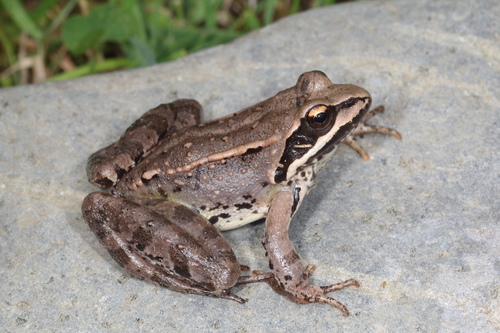
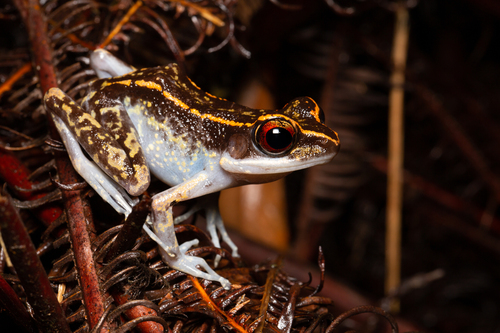
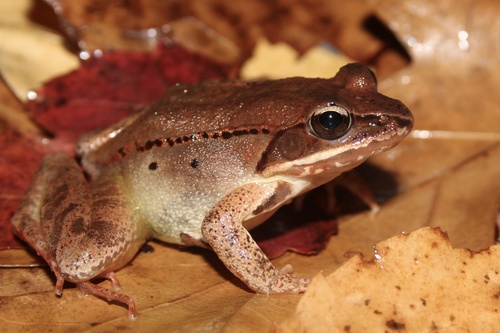
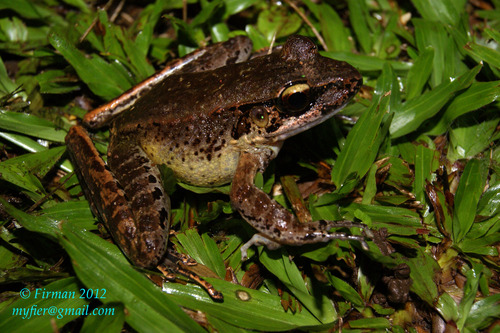
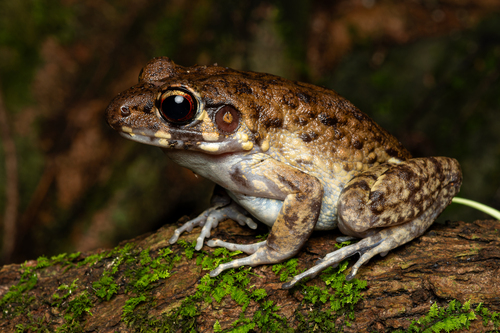
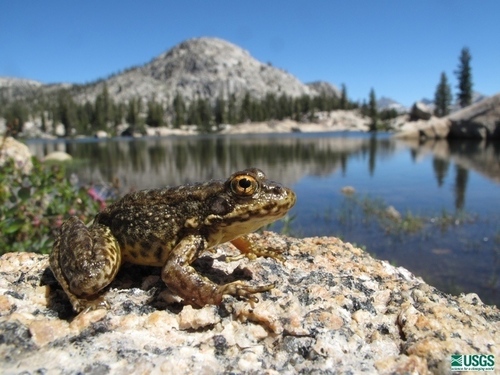
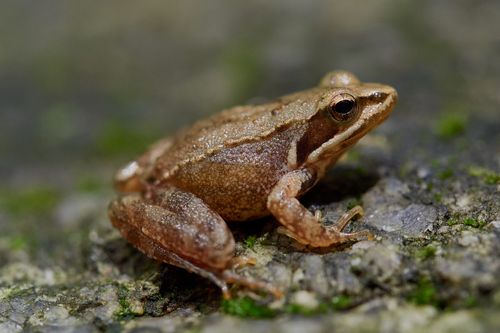
The Iberian frog (Rana iberica Boulenger, 1879) can reach a maximum length of about 7 cm (2.8 in), with a more typical adult size of 5 cm (2.0 in). Females are generally larger than males. The tympanum, visible just behind the eye, has a diameter around half that of the eye. A distinct ridge called the dorsolateral fold runs from the side of the head to the groin; this feature separates the Iberian frog from the common frog. Its skin is smooth with fine granulations. Body coloration is highly variable, with base shades most often being olive, reddish, or greyish-brown, and darker markings are sometimes present. A dark streak runs between the nostril and the eye, and a thin white line marks the upper lip. Dark brown barring sometimes appears on the hind legs. The hind feet are more fully webbed than those of the common frog. The underside is pale, and may sometimes have darker spots, but the center of the throat has no spots. The Iberian frog has a distinctive call, which is most often produced at night. The call sounds like "rao-rao-rao" and is produced at a rate of roughly three calls per second. This species is endemic to Portugal, and north-western and central Spain. It is a mountain species that has been recorded at altitudes up to 2,425 m (7,956 ft). It occurs across the northern half of Portugal. In Spain, it is found in the Galicia region, western León, and north-western Zamora, with isolated separate populations in mountainous areas of central Spain. It prefers habitats including slow-moving streams and rivers with overhanging vegetation, ponds, and glacial lakes. It overlaps in range with the agile frog (Rana dalmatina), Perez's frog (Pelophylax perezi), and the common frog (Rana temporaria).