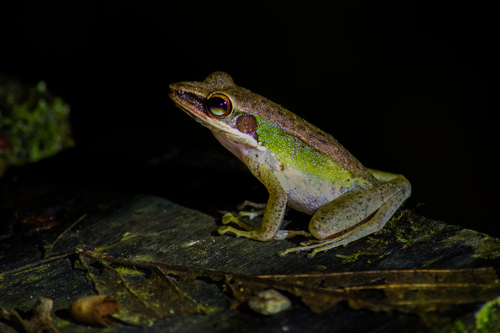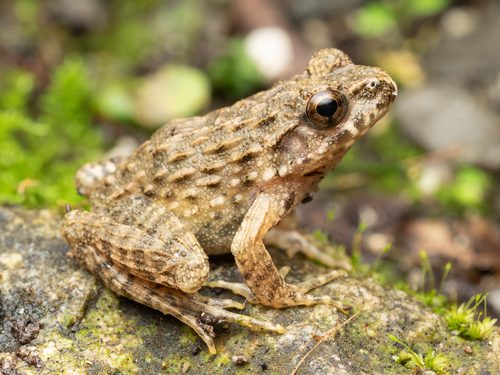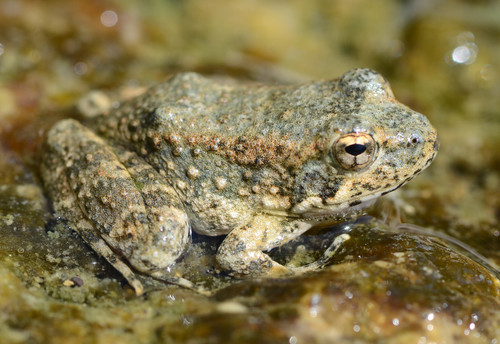
About Rana boylii Baird, 1854
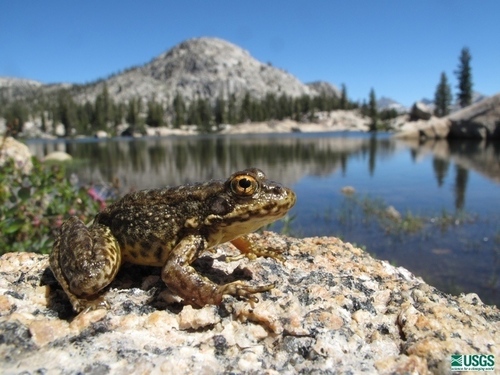
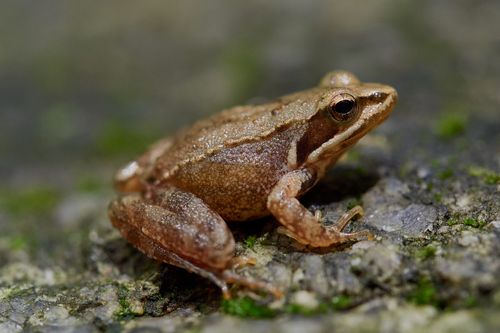
The foothill yellow-legged frog, with the scientific name Rana boylii Baird, 1854, is a small frog belonging to the genus Rana in the family Ranidae, measuring between 3.72–8.2 cm (1.46–3.23 in) in length. Historically, this species ranged through the Coast Ranges from northern Oregon, through California, and into Baja California, Mexico, as well as the foothills of the Sierra Nevada and southern Cascade Range in California. Currently, the foothill yellow-legged frog is a United States Federal Species of Concern and listed as endangered by the state of California. In December 2021, a federal rule was proposed to list four out of six of its existing distinct population segments (DPS) under the Endangered Species Act. Today, foothill yellow-legged frogs occur in the Coast Ranges from the Santiam River in Marion County, Oregon, south to the San Gabriel River in Los Angeles County, California, along the west slopes of the Sierra/Cascade mountain ranges across most of central and northern California. Isolated populations have also been recorded in Baja California Norte, southern California, and at Sutter Buttes in Butte County, California. This species occurs at elevations from sea level up to 2,000 m (6,700 feet) in Baja California Norte. In California, it has been recorded as high as 1,800 m (6,000 feet) near McKesick Peak in Plumas National Forest, and 1,940 m (6,365 feet) at Snow Mountain on the boundary of Lake and Colusa Counties. Foothill yellow-legged frogs inhabit flowing streams and rivers with either rocky substrate or sunny banks. The food available to this species, particularly algae eaten by tadpoles, impacts sexual maturity. The amount of protein in different types of algae can affect the size of the frog at metamorphosis and the time it takes to reach metamorphosis; these food-related effects are thought to act through diet-induced changes to thyroid function. This means that the food tadpoles consume directly influences what proteins the thyroid gland produces. Tadpoles most often feed on algae, diatoms, and detritus. As the frogs mature, they shift to a diet of animal prey that they swallow whole. This is because their hinged jaw structure does not allow sideways chewing movement like that of humans. Adult foothill yellow-legged frogs eat a variety of prey including moths, ants, grasshoppers, hornets, beetles, flies, water striders, and snails.