About Ramsayornis modestus (G.R.Gray, 1858)
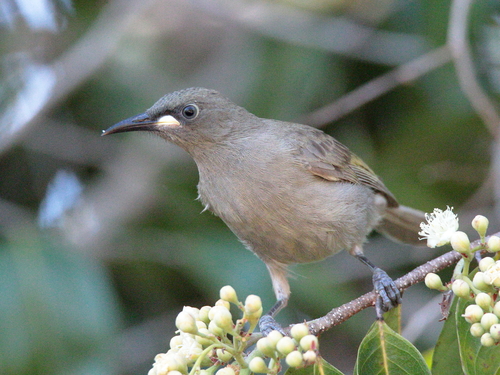
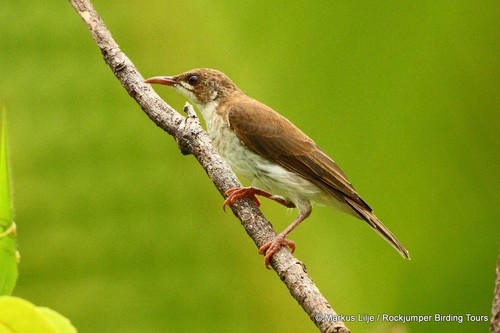
The Brown-backed honeyeater, scientifically named Ramsayornis modestus (G.R.Gray, 1858), is a small bird. It measures approximately 11–12 cm in length, weighs 11–14 g, has an average wingspan of 6.2–7 cm (2.4 to 2.7 in), and a bill 1.5–1.8 cm long. As its common name suggests, this species has a brown back, with brown streaks covering an otherwise white chest and belly, and a red bill. It looks similar to the Bar-breasted Honeyeater, but can be distinguished by its different facial pattern. The Brown-backed honeyeater occurs along the coast of Far North Queensland, Australia, especially around Cape York Peninsula. Its range extends across the islands of the Torres Strait and into New Guinea. Unlike similar bird species that migrate across the Torres Strait, the Brown-backed honeyeater is partly resident and nomadic: it generally stays in the same area year-round, but will travel in response to environmental factors such as food availability and rainfall. In parts of northeast Queensland, it is thought to be seasonally migratory, moving south in August and north during spring. This species inhabits a wide variety of tropical or subtropical coastal habitats near water, including open grassy woodlands, swamps, rainforests, mangroves, and gardens. It is normally found alone or in pairs.