About Ramphomicron microrhynchum (Boissonneau, 1840)
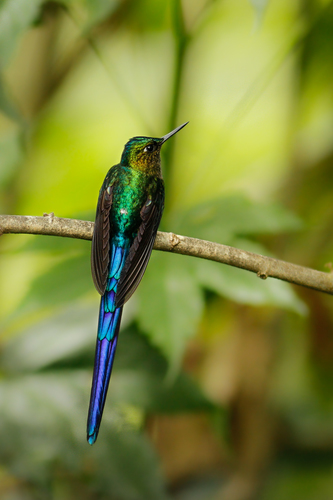
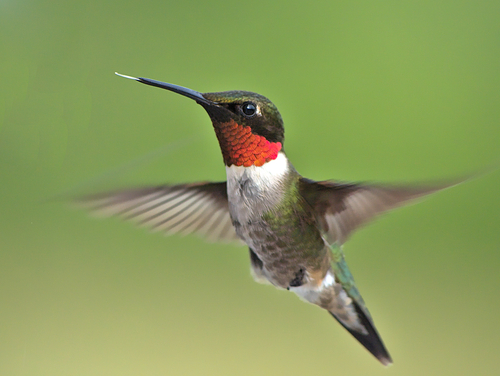
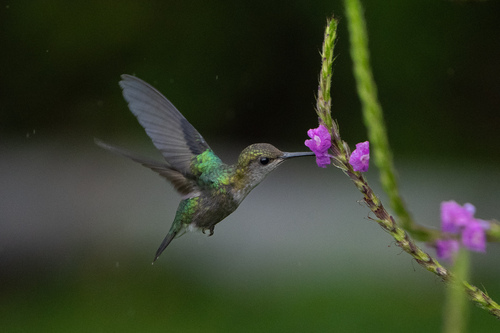
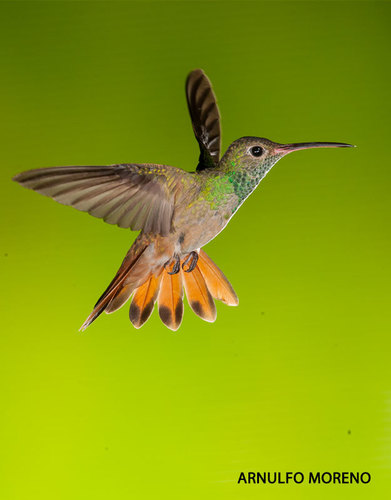
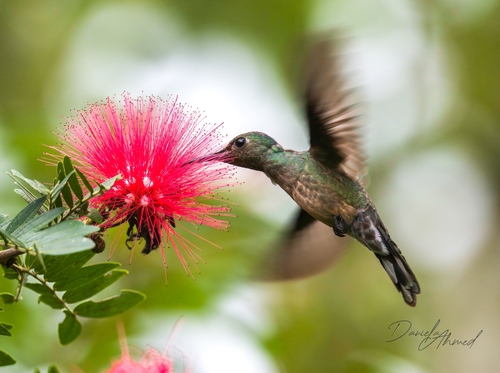
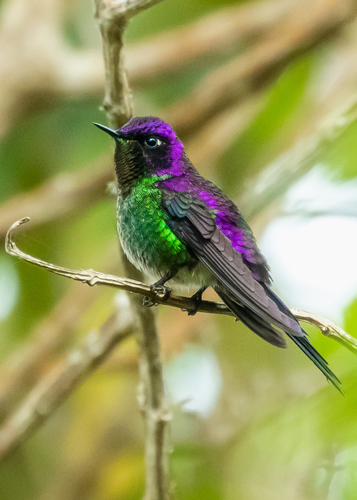
The purple-backed thornbill (Ramphomicron microrhynchum) is 8 to 9 cm (3.1 to 3.5 in) long and weighs about 3.5 g (0.12 oz). Both sexes have a black bill, which is the shortest of any hummingbird. Males of the nominate subspecies have metallic violet-purple upperparts with a white spot behind the eye. They have an iridescent golden green gorget, bronzy green underparts, and coppery undertail coverts with tawny fringes. Their tail is moderately long, forked, and dark purple. Nominate females have shining green upperparts, and share the male's white spot behind the eye. Their underparts are white with green dots, except on the belly. The female's tail is shorter than the male's, less forked, and bronzy purple, and the outer pair of tail feathers have white tips. Males of subspecies R. m. andicola have a green-bordered golden gorget and more rufous undertail coverts. R. m. albiventre is very similar to the nominate subspecies, but it has lighter margins on the male's undertail coverts and smaller spots on the female's underparts. Males of R. m. bolivianum have metallic violet upperparts, dark green underparts, and grayish white undertail coverments. Different subspecies of the purple-backed thornbill have separate geographic distributions: R. m. andicola is found in the Andes of western Venezuela, especially in Mérida state; R. m. microrhynchum (the nominate) is found in the Andes of Colombia, Ecuador, and Cajamarca in northwestern Peru; R. m. albiventre is found on the eastern slope of the Andes in Peru from Huánuco south to Apurímac and Cuzco; R. m. bolivianum is found in the Andes of Cochabamba Department in central Bolivia. The purple-backed thornbill inhabits edges of humid montane forest, Polylepis forest, páramo, and the transition zones between these habitats. R. m. bolivianum also occurs in shrubby areas well below the treeline. Across the whole species, its elevation range is from 1,700 to 3,600 m (5,600 to 11,800 ft).