About Radianthus magnifica (Quoy & Gaimard, 1833)
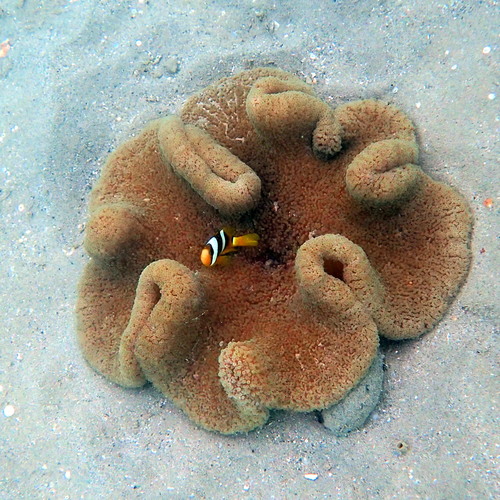
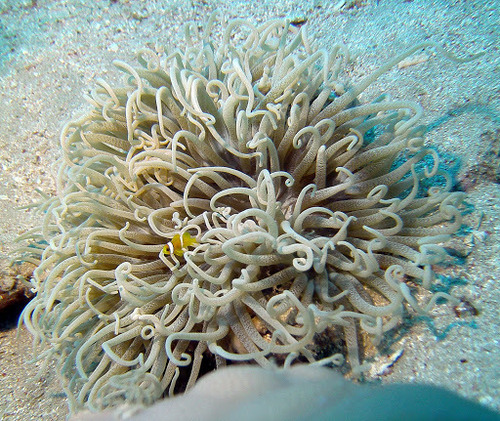
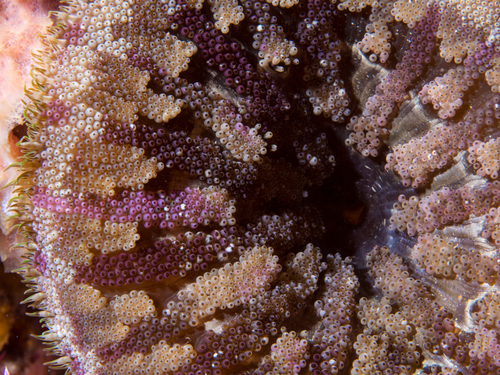
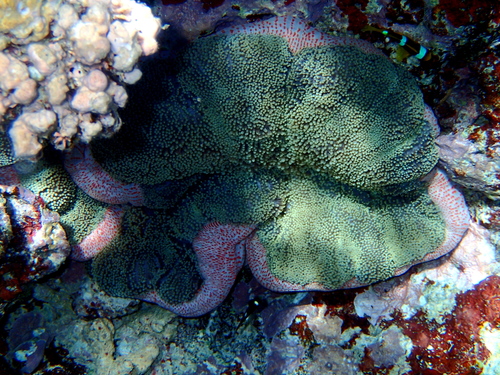
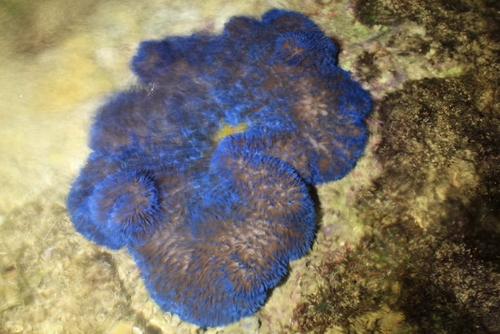
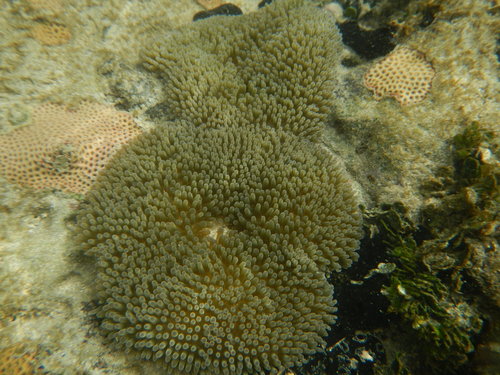
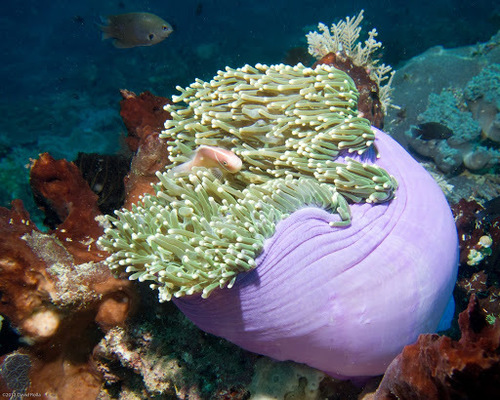
The magnificent sea anemone, scientifically named Radianthus magnifica (Quoy & Gaimard, 1833), has a flared oral disc that is typically 20 to 50 cm in diameter, though some specimens can reach 1 m across. The oral disc, the base of the tentacles, and the oral orifice all share the same color, which ranges from light beige to white. This species has numerous tentacles that are longer than 8 cm. As a member of the group Hexacorallia, it usually bears tentacles in multiples of six, arranged in concentric circles. The tentacle tips are finger-shaped, often lighter in color than the main body of the tentacle, and sometimes vividly colored. Both its specific scientific name magnifica and its common name come from the bright color of its column—the visible outer structure when the animal retracts. The column's color ranges from electric blue to green, red, pink, purple, or brown. The magnificent sea anemone is widespread across tropical and subtropical waters of the Indo-Pacific area, spanning from the eastern coasts of Africa (including the Red Sea) to Polynesia, and from southern Japan to Australia and New Caledonia. This anemone prefers hard substrates that are well exposed to light and current, living from the surface down to 20 m deep, and has also been observed at depths down to 40 m.