About Quercus tuberculata Liebm.
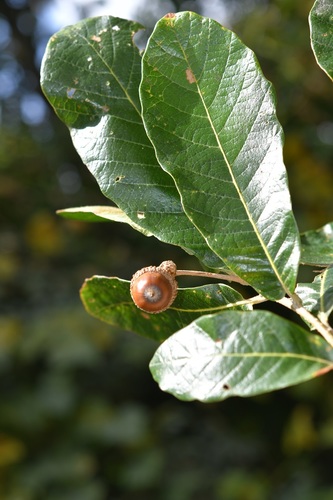
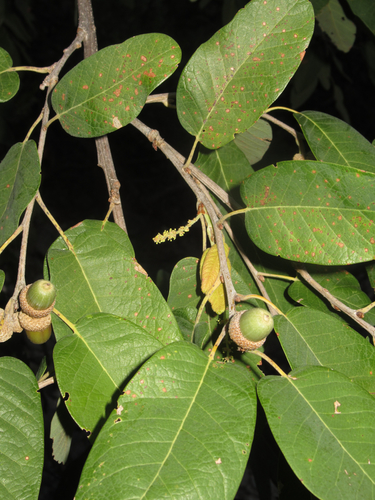
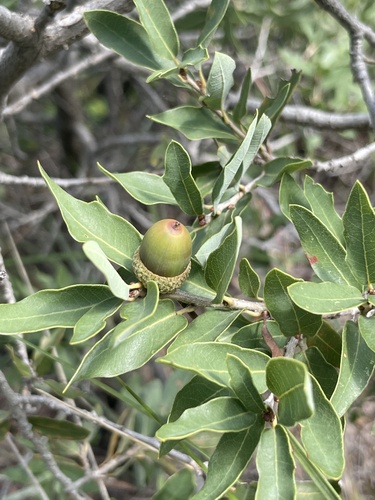
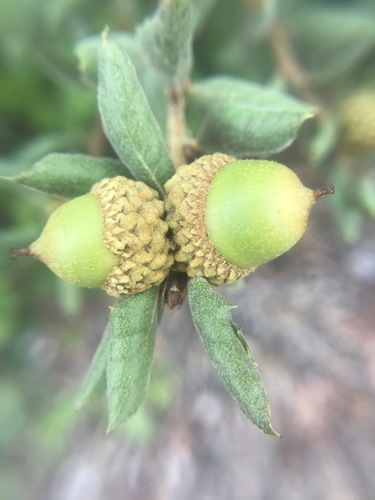
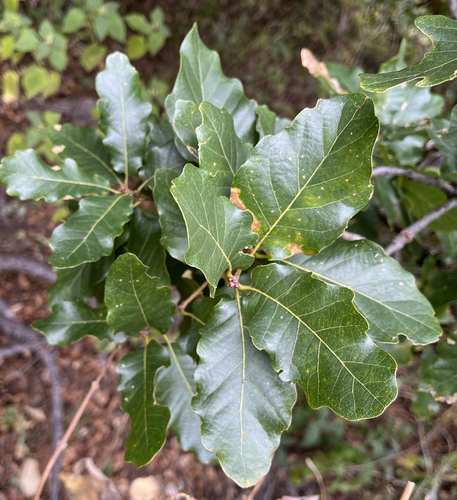
Quercus tuberculata Liebm. is a deciduous tree that grows up to 12 metres (39 feet) tall, with a trunk that can reach up to 30 centimetres (12 inches) in diameter. It produces thick, leathery, egg-shaped leaves that grow up to 15 cm long. The leaves have wavy edges, and lack teeth or lobes. This oak species is native to northwestern Mexico, occurring primarily in the Sierra Madre Occidental across the states of Sonora, Chihuahua, Sinaloa, Durango, and Nayarit. It can also be found in the Sierra de la Laguna on the southern Baja California Peninsula, in the northern Sierra Madre Oriental of Nuevo León, and in Michoacán, located in central Mexico. Quercus tuberculata grows in oak forests, pine-oak forests, and woodlands, at elevations between 900 and 2000 meters. It typically occurs in regions with average annual rainfall between 500 and 600 mm, and average annual temperatures between 18 and 24 °C. It is commonly found on slopes with inclines between 30º and 40º, and grows near streams and other water sources. This species prefers slightly acidic, low-organic-matter soils with a somewhat sandy texture. It is often a dominant species in the areas where it grows. The species has an estimated extent of occurrence (EOO) of 1,015,800 km², and an estimated area of occupancy (AOO) of 536 km². Its overall population is generally stable, and it is abundant across its native range. Its conservation status is classified as Least Concern.