About Quercus suber L.
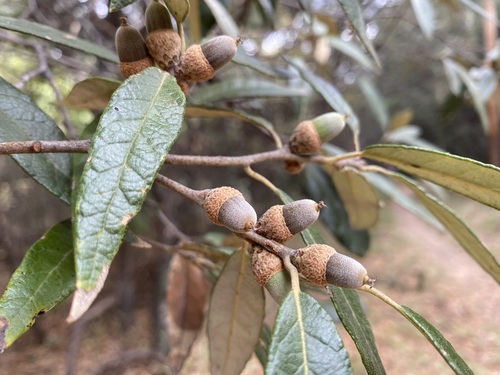
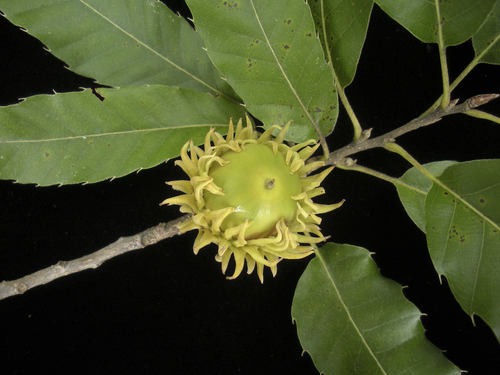
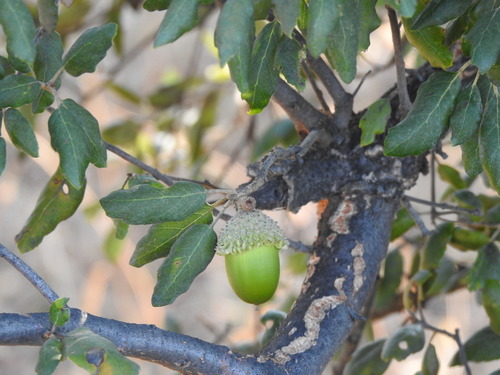
Quercus suber, commonly called the cork oak, is a medium-sized evergreen oak tree placed in Quercus section Cerris. It is the primary source of cork used for wine bottle stoppers, cork flooring, cricket ball cores, and many other products. It is native to southwest Europe and northwest Africa, and is an ancient species with fossil remains dating to the Tertiary period found in the Mediterranean basin. Cork oaks can live up to two centuries. Once the tree reaches 25 years old, its thick bark can be harvested for cork every 9 to 12 years without harming the tree. It tolerates drought, has low requirements for soil quality, and is considered a protective measure against desertification. Cork oak woodlands support a wide diversity of animal and plant species. As bottle corks made from cork are increasingly replaced by other materials, these culturally important forest landscapes are at risk, putting native animal species such as the Iberian lynx and imperial eagles at risk of extinction.
Cork oaks grow naturally throughout the western Mediterranean basin. In Portugal, natural and cultivated stands cover 750,000 hectares. Natural populations of the nominate form are found at altitudes between 150 and 300 m (490 and 980 ft) above sea level, while the subspecies occidentalis grows along the Atlantic coast. In Spain, most populations occur below 600 m (2,000 ft), though they can rarely reach altitudes of 1,200 m (3,900 ft). Cork oaks are common in the southern half of Spain, as well as western and northeastern parts of the country, but rare in central Spain. In Italy, natural populations grow along the Tyrrhenian Sea and in eastern Apulia on the Adriatic Sea. The cork oak also grows along the Adriatic Dalmatian coast, and is one of the most common forest trees in Sardinia. In northwest Africa, natural and human-established populations occur on the Mediterranean coast of Tunisia, Algeria, and Morocco, growing at altitudes up to 1,000 m (3,300 ft), and up to 2,000 m (6,600 ft) in the High Atlas. Across its native range, cork oak forests cover approximately 22,000 square kilometres (8,500 square miles). Outside its native range, the cork oak is cultivated in the Crimea, the Caucasus, India, and the Southwestern United States. The subspecies Quercus suber occidentalis also grows well in mild areas of England.
This species needs very little light and cannot survive in dense stands. It requires warm conditions, growing where mean annual temperatures range from 13 to 17 °C (55 to 63 °F), and can tolerate maximum temperatures up to 40 °C (104 °F). While temperatures below freezing are rare across its native range, it can tolerate temperatures down to −5 °C (23 °F) without damage, and down to −10 °C (14 °F) without major damage. It is not hardy enough to survive in Central Europe. It tolerates drought, surviving summer dry periods by reducing its metabolism. Annual rainfall of 500 to 700 millimetres (20 to 28 in) is considered optimal; in cooler locations with sufficient humidity, 400 to 450 millimetres (16 to 18 in) can be enough. Cork oaks have low soil requirements, growing in poor, dry, or rocky locations. They rarely thrive on calcareous soils, but are often found growing on crystalline slate, gneiss, granite, and sands. They prefer soil acidity between pH 4.5 and 7. The cork oak is classified as a pyrophyte, because it recovers quickly after forest fires, protected by its thick cork layer.
Cork oak forest is one of the major plant communities of the Mediterranean woodlands and forests ecoregion. In natural populations, cork oak grows alongside holm oaks (Quercus ilex, Quercus rotundifolia), Portuguese oak (Quercus faginea), Pyrenean oak (Quercus pyrenaica), Mirbeck's oak (Quercus canariensis), maritime pine (Pinus pinaster), stone pine (Pinus pinea), strawberry tree (Arbutus unedo), and olive tree (Olea europaea); in cooler locations it also grows with sweet chestnut (Castanea sativa). Common associated shrub species include Kermes oak (Quercus coccifera), Lusitanian oak (Quercus lusitanica), holly buckthorn (Rhamnus alaternus), species in the genus Phillyrea, myrtle (Myrtus communis), green heather (Erica scoparia), common smilax (Smilax aspera), and Montpellier cistus (Cistus monspeliensis). As a pyrophyte, its thick insulating bark is well adapted to wildfires. After a fire, many tree species regenerate from seeds (such as maritime pine) or resprout from the tree base (such as holm oak), but the cork oak's bark allows it to survive fires directly, then regrow new branches to refill its canopy. This quick regeneration allows it to thrive in the fire-adapted ecosystems of the Mediterranean biome.
Cork oaks are grown for cork production across multiple Mediterranean countries, with production centered in southern Portugal (which accounts for 50% of total global cork production) and southern Spain. In these regions, low-growing trees with large crowns and strong branches are grown across large areas to maximize cork yield. These extensively managed landscapes are called montados in Portugal and dehesas in Spain, and they are highly valued for both their biodiversity and cultural heritage.
Cork is made of dead, air-filled, thin-walled cells that contain cellulose and suberin. It insulates against heat and sound, and suberin gives it water-repellent properties. The cork layer is renewed by the cork-producing phellogen tissue, so it can be harvested repeatedly without causing severe damage to the tree. The first harvest usually takes place after around 25 years when the tree has a diameter at breast height (DBH) of 70 cm (28 in), though new techniques such as improved irrigation can reduce this waiting period to 8 to 10 years. The first harvested cork layer, called "male cork" or "virgin cork", is not very elastic and is cracked, so it is only used for making insulating mats. The second harvest, called secundeira, produces cork with a more regular structure and softer texture, but it is still only used for insulation and decorative objects. Only subsequent harvests produce higher quality "female cork" that can be used for all commercial purposes. The highest quality cork comes from the third and fourth harvests. Harvesting is done when the cork layer reaches a thickness of 2.7 to 4 cm (1 to 1+1⁄2 in), which takes 9 to 12 years. Under favorable warm conditions, harvesting can happen every 8 years, and every 7 years in North Africa. A single cork oak can be harvested 5 to 17 times over its lifespan. To minimize damage to the trunk surface, harvesting can be done every three years by removing only one third of the usable bark surface in each session. An important maintenance practice is pruning, which begins around the tree's tenth year at a height of about 3 m (10 ft). Different sources report different cork yield estimates: some say a single oak produces 100 to 200 kilograms (220 to 440 pounds) of cork over its lifespan, and one hectare produces 200 to 500 kg (440 to 1,100 lb) per year; others note an average of 40 to 60 kg (88 to 132 lb) of cork per harvest for a single tree, a higher value since cork oaks can live more than 200 years under good conditions.
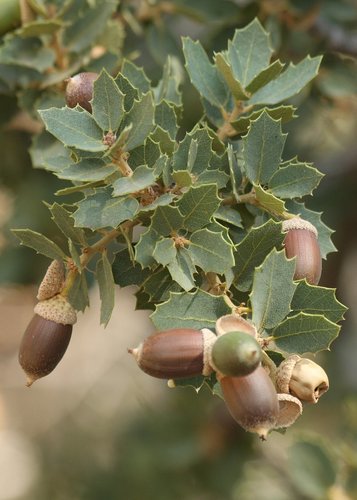
Cork is mainly used to produce wine bottle stoppers, and is also used for heat and sound insulation, cork paper, badminton shuttlecocks, cricket balls, fishing rod and hand tool handles, specialized devices for the space industry, and other technical applications including composite materials, shoe soles, and floor coverings. Bottle cork production accounts for around 70% of the added value in cork cultivation. As natural corks are increasingly replaced by plastic or metal bottle closures, cork oak populations in southwestern Europe may decline significantly, endangering biodiversity in these ecosystems. The bark, which contains around twelve percent extractable tannin, is also used. In addition, cork oak acorns are used as feed for extensive pig fattening for products like Iberian ham, though holm oak (Quercus ilex) acorns are preferred because they are sweeter. A single cork oak produces 15 to 30 kg (33 to 66 lb) of acorns per year. In Portugal, cork oaks cannot legally be cut down except for forest management felling of old, unproductive trees, and even for this purpose, farmers need special permission from the Ministry of Agriculture.
Cork harvesting is done entirely by hand, without machinery, and relies solely on human labor. Usually five people are needed to harvest a tree's bark, using a small axe. The process requires specialized training, because skill is needed to remove the bark without causing excessive damage to the tree. The European cork industry produces 300,000 tonnes of cork per year, has a value of €1.5 billion, and employs 30,000 people. By weight, wine corks make up 15% of cork usage, but account for 66% of industry revenues. Cork oaks are sometimes planted as individual specimen trees, providing a minor income for their owners. The tree is also sometimes cultivated as an ornamental. Hybrids with Turkey oak (Quercus cerris) are not uncommon, both where their ranges overlap in the wild in southwest Europe and in cultivation; the hybrid Quercus × hispanica is commonly called Lucombe oak, named for William Lucombe who first identified it. Some cork is also produced in eastern Asia from the related Chinese cork oak (Quercus variabilis).