About Quercus stellata Wangenh.
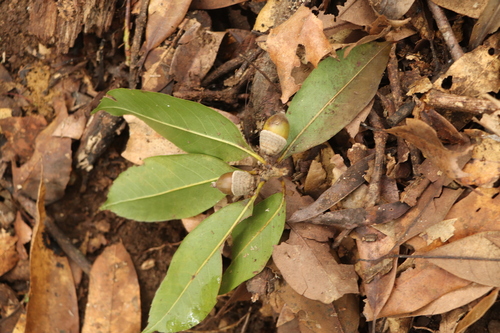
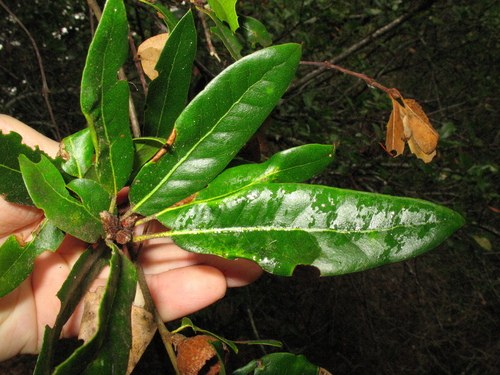
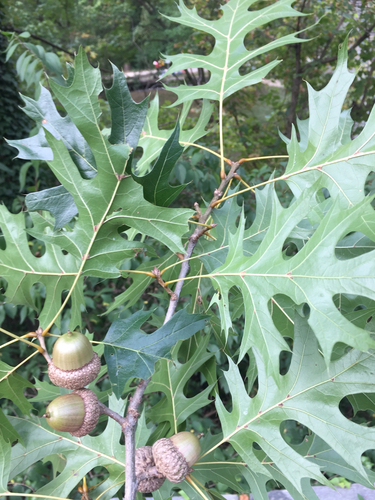
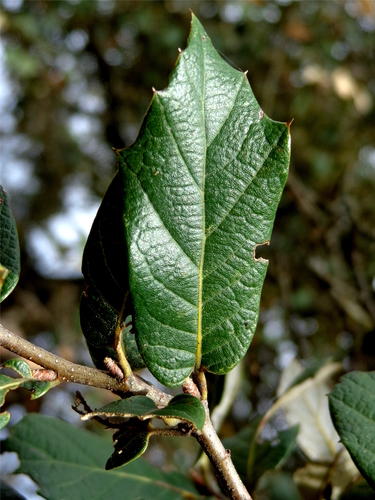
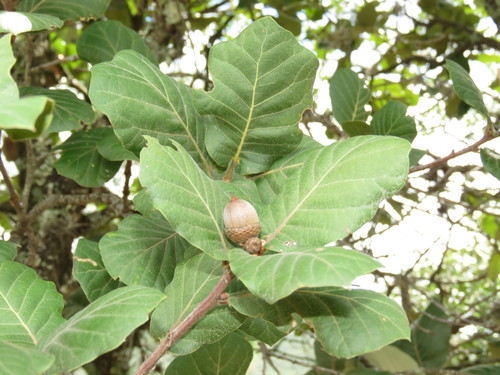
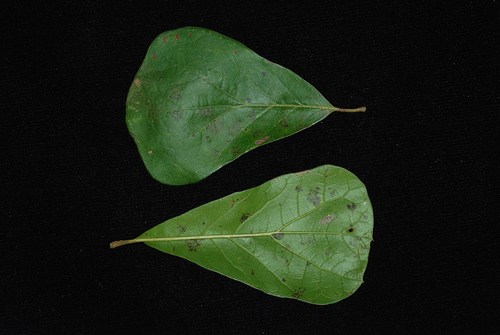
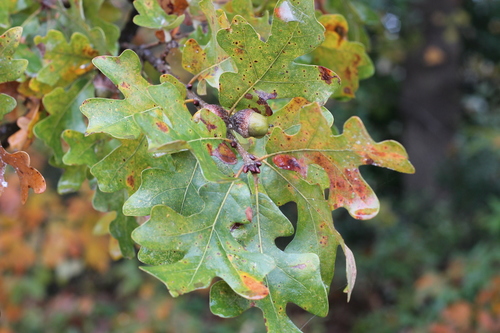
Post oak (Quercus stellata Wangenh.) is a generally small tree, usually growing 10–15 metres (33–49 feet) tall, with a trunk 30–60 centimetres (12–24 inches) in diameter. Rare individual specimens can reach 30 m (98 ft) in height and 140 cm (55 in) in trunk diameter. Its leaves have a very distinct shape, featuring three perpendicular terminal lobes that closely resemble a Maltese cross. The leaves are leathery, and tomentose (densely covered in short hairs) on their underside. The tree's branching pattern often gives it a rugged overall appearance. Its acorns measure 1.5–2 cm (5⁄8–3⁄4 in) long and reach maturity during their first summer. Quercus stellata is distributed across the eastern and Midwestern United States, occurring both inland and along the coast. Its range extends along a narrow strip of the eastern coast from Massachusetts to Florida, westward to Texas, and inland as far as Iowa. It most commonly grows at forest edges, typically in dry, sandy areas with low nutrient availability. This species can survive wildfires thanks to its thicker bark. Its tree rings are useful for fire surveys, as they can be used to reconstruct the fire history of a given area. A tree ring survey of 36 Quercus stellata trees in Illinois produced a 226-year tree ring record, which showed that many of these trees survived an average fire return interval of 1.44 fires per year for over 100 years. The acorns provide food for deer, turkeys, squirrels, and other rodents, but the nuts contain tannin, making them toxic to cattle. A recent study conducted in Kansas found that deer browsing generally reduces post oak recruitment in canopy gaps during the sapling growth phase. Due to its ability to grow in dry sites, its attractive crown, and its strong horizontal branches, post oak is used in urban forestry. Its wood is resistant to decay, so it is used for railroad ties, siding, planks, construction timbers, stair risers and treads, flooring, pulp, veneer, particle board, and fuel. It is also used for the fence posts that give the tree its common name. It is one of the most common types of wood used for barbecue in Central Texas.