About Quercus shumardii Buckley
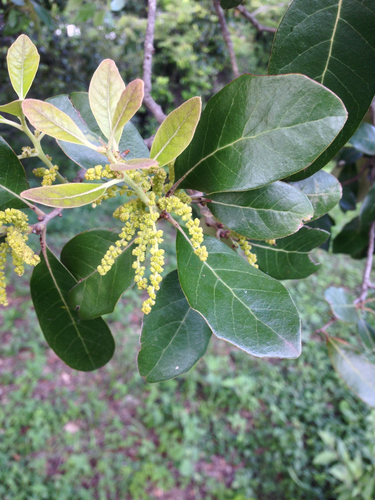
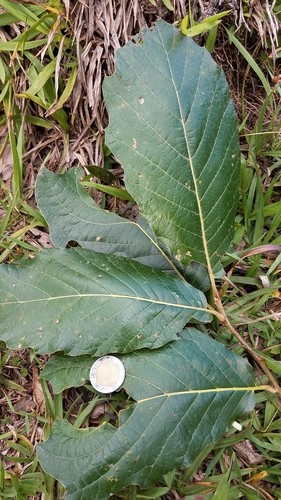
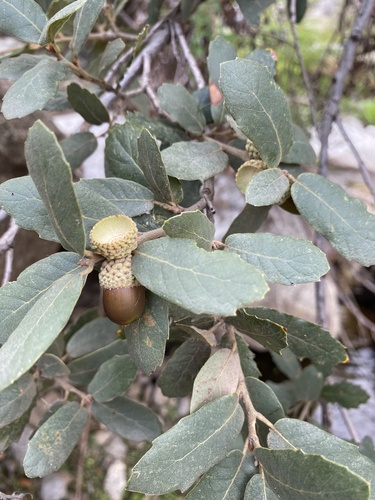
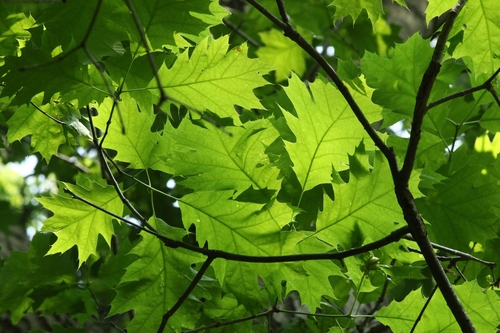
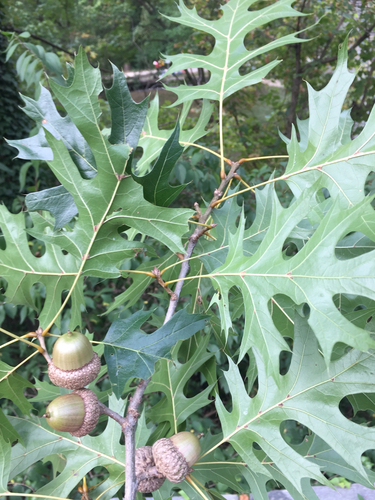
Quercus shumardii Buckley, commonly known as Shumard oak, was first described in an 1860 publication by Samuel Botsford Buckley, who was then assistant geologist of Texas. Buckley named the species in honor of Benjamin Franklin Shumard, an alumnus of Miami University who later served as Texas State Geologist. Mature Shumard oaks typically grow 25 to 35 metres (82 to 115 feet) tall, with a trunk diameter of 60 to 100 centimetres (24 to 39 inches), and a crown width of 12 to 18 m (39 to 59 ft). Typical tree size varies by region, with larger specimens growing in the southern portions of its native range in the United States. The largest recorded Shumard oaks have measured up to 60 m (200 ft) tall, with crowns reaching up to 27.5 m (90 ft) wide. Young trees usually have conic or ovate crowns, and the upper crown fills out as the tree matures. Trunks are generally straight and vertical, and may develop deeply fluted buttresses near the ground. Shumard oak naturally grows in lowland areas, and can survive in soils that experience flooding for up to six weeks each year. The bark of young Shumard oaks is light gray, very smooth, and highly reflective. As the tree ages, the bark darkens and develops ridges and furrows, and occasional white splotches may appear on the bark. Shumard oak twigs end in a cluster of buds, which are lighter in color than the tree's olive-green twigs. Young twigs are also highly reflective. Leaves are arranged alternately along twigs, and are broadly obovate with 5 to 9 lobes, each lobe ending in a bristle-tipped tooth. Mature leaves measure 10 to 21 cm (4 to 8 inches) in length. The leaf surfaces are glabrous, except for tufts of hair in the vein axils on the underside. Leaves are dark green on the upper surface, and a slightly lighter shade of green on the lower surface. In fall, leaves turn from brown to red, sometimes mixed with yellow hues. Fall color development occurs relatively late: specimens in central Texas may reach their peak red color in early December, while specimens in Florida may not develop significant fall color until February. Shumard oaks produce relatively large acorns, which typically grow up to 3 cm (1 in) in diameter. Acorns take 1.5 to 3 years to fully mature, and may be unnoticeable during their early development stages. Shumard oak is native to the Atlantic coastal plain of North America, ranging primarily from North Carolina to northern Florida and west to central Texas. It is also found north along the Mississippi River Valley to central Oklahoma, eastern Kansas, Missouri, southern Illinois, Indiana, western and southern Ohio, Kentucky, and Tennessee. It occurs locally as far north as southern Michigan, southern Pennsylvania, Maryland, western New York, and the extreme south of Ontario, Canada. This species tolerates a wide range of soil pH levels, is drought-resistant, and prefers partial to full sunlight. Shumard oaks do not begin producing seeds until they are at least 25 years old, and the optimum age for seed development is 50 years. Known individuals have reached at least 480 years of age, and their roots are intolerant to disturbance. The acorns of Shumard oak are a food source for many species, including various songbirds, game birds such as wild turkey and quail, waterfowl, white-tailed deer, feral hogs, and various rodents such as squirrels. The leaves and twigs also serve as browse for white-tailed deer. Like all red oaks, Shumard oak is susceptible to oak wilt. Other diseases that affect the species include various leaf-infecting fungi, powdery mildew, canker diseases, and shoestring root rot. Shumard oak is valued for both commercial use and as a shade tree. Because it can tolerate and thrive in a wide range of soil types, it is cultivated as far north as Ottawa, Ontario and southern Quebec, and as far south as Lake Worth Beach, Florida. Shumard oak lumber is grouped with other red oak lumber for use in flooring, furniture, interior trim, decorative molding, paneling, and cabinetry. One forestry guide describes Shumard oak lumber as "mechanically superior" to lumber from other red oak species.