About Quercus prinoides Willd.
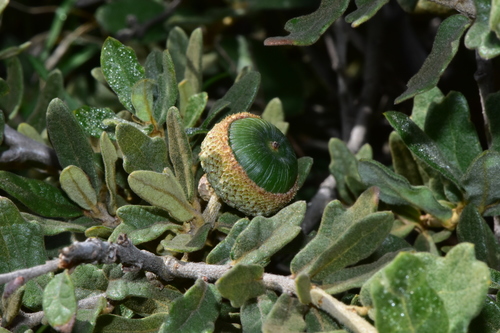
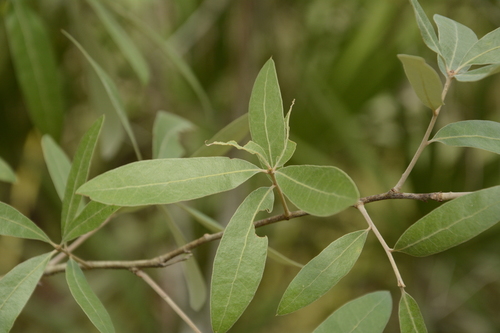
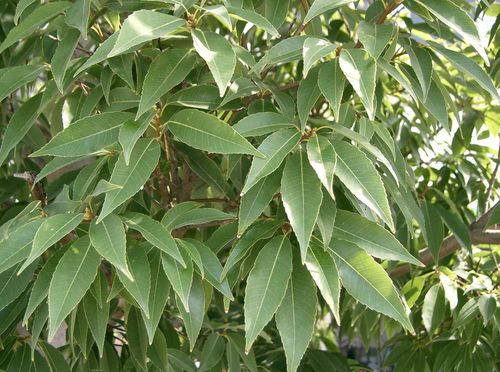
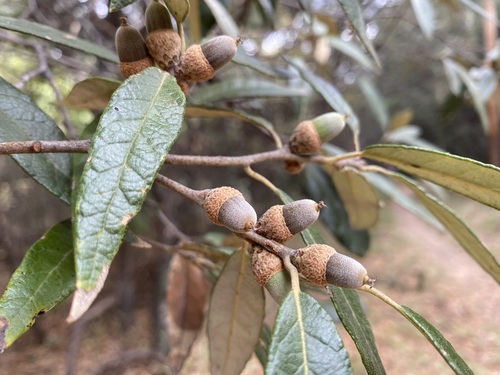
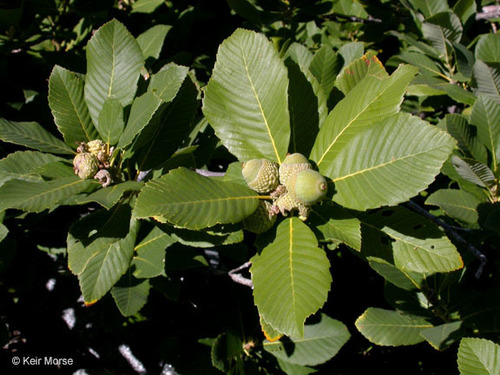
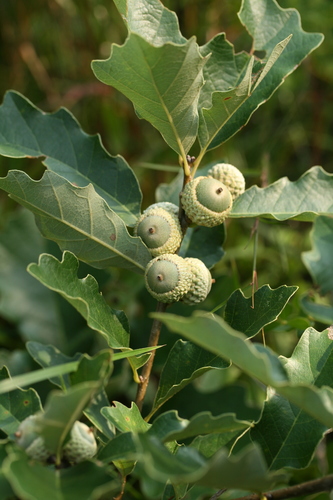
Quercus prinoides Willd., commonly called dwarf chinkapin oak, is a shrub or small tree that typically reaches 13–20 feet (4–6 meters) in both height and width. It sometimes spreads vegetatively via underground rhizomes. The leaves of dwarf chinkapin oak closely resemble the leaves of regular chinkapin oak, but are smaller: they measure 5–15 centimeters (2–6 inches) long, while chinkapin oak leaves are 10–18 cm (4–7 in) long. Its acorns are 15–25 millimeters (1⁄2–1 in) long, with the acorn cup enclosing about half of the nut. Though similar to chinkapin oak in foliage and fruit, dwarf chinkapin oak can be distinguished by its growth habit and habitat. It has a clonally spreading shrubby growth form and smaller overall size, even when growing on rich soils. It typically grows on dry, often acidic, sandy soils or dry shales, while chinkapin oak is usually found on rocky, calcareous sites. The native range of this species extends from eastern Nebraska south to Oklahoma, with an isolated population in Louisiana, east to northern Alabama and Georgia, and northeast to New Hampshire. In southeast Canada, its range reaches as far north as the Carolinian forest zone of southern Ontario. It has a discontinuous (disjunct) distribution: it is fairly common in New England, the Appalachian Mountains, and the eastern Great Plains, but rare in the intervening Ohio Valley. The acorns of dwarf chinkapin oak are sweet-tasting, and are enjoyed by humans and many types of wildlife including deer, turkeys, squirrels, chipmunks, and mice, all of which use these chestnut oak acorns as a nutritious part of their diet. Due to the plant’s small stature, its wood has little commercial value.