About Quercus muehlenbergii Engelm.
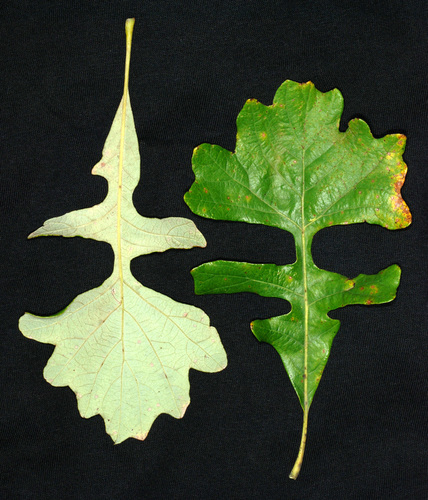
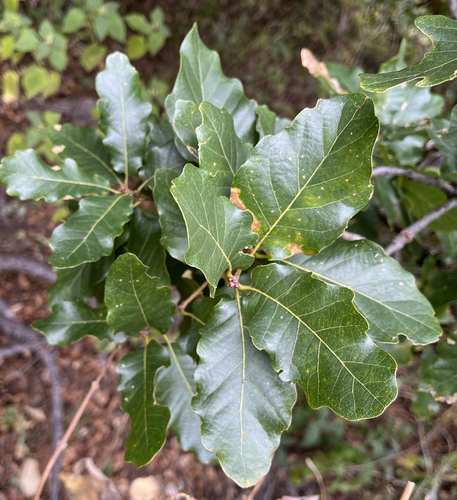
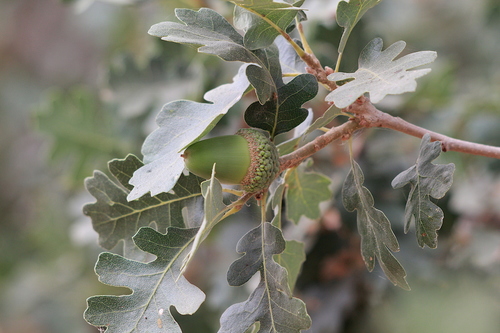
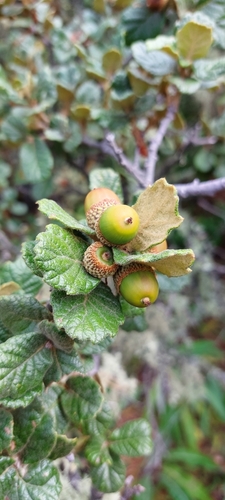
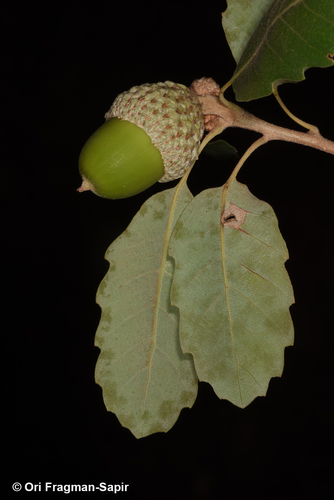
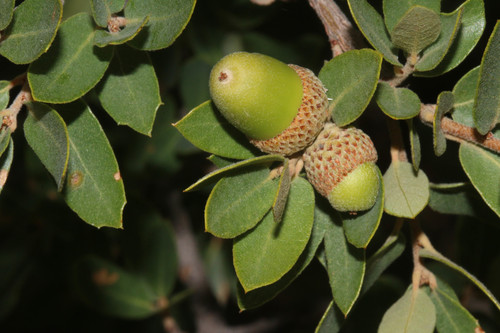
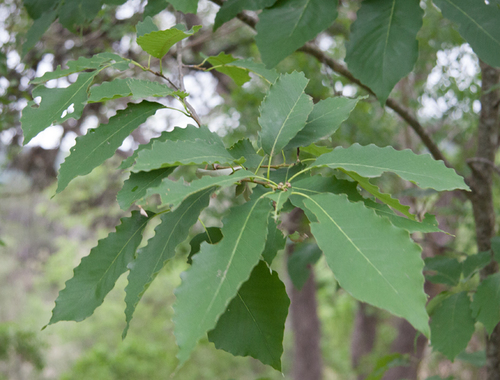
Chinquapin oak (Quercus muehlenbergii Engelm.) has a monoecious flowering habit, with flowers emerging from April to late May or early June. Staminate flowers grow in catkins that develop from leaf axils of the previous year, while pistillate flowers develop from the axils of the current year’s leaves. Its fruit is an acorn (or nut), which is borne singly or in pairs, matures within one year, and ripens in September or October. Roughly half of the acorn is enclosed in a thin cup, and the acorn ranges in color from chestnut brown to nearly black. Chinquapin oak is closely related to the generally similar but smaller dwarf chinquapin oak (Quercus prinoides). Chinquapin oak is usually a tree, though it occasionally grows as a shrub; dwarf chinquapin oak is a low-growing, clone-forming shrub. The two species generally occupy different habitats: chinquapin oak is typically found on calcareous soils and rocky slopes, while dwarf chinquapin oak is usually found on acidic substrates, primarily sand or sandy soils, and also dry shales. Chinquapin oak is also sometimes confused with the related chestnut oak (Quercus montana), which it closely resembles. However, unlike the pointed teeth on chinquapin oak leaves, chestnut oak leaves generally have rounded teeth. The two species also have distinct bark types: chinquapin oak has gray, flaky bark very similar to that of white oak (Q. alba), but with a more yellow-brown tone; this color gives the species its occasional alternate name yellow oak. Chestnut oak, by contrast, has dark, solid, deeply ridged bark. Chinquapin oak also produces smaller acorns than chestnut oak or another similar species, swamp chestnut oak (Q. michauxii), which produce some of the largest acorns of any oak. Key identifying characteristics of Quercus muehlenbergii include: a typically rounded leaf base, regular veins and sinuses, acorns with no stalks or short stalks less than 8 mm long, acorns that turn chestnut brown in the fall, and leaves that have sharp teeth but no bristles, consistent with its membership in the white oak subgenus of Quercus. Like the wood of other white oak species, chinquapin oak wood is a durable hardwood that is prized for many types of construction. Chinquapin oak is especially known for its sweet, palatable acorns. The nuts inside their thin shells are among the sweetest of any oak, with an excellent taste even when eaten raw, and provide a good source of food for both wildlife and people. Its acorns are eaten by squirrels, mice, voles, chipmunks, deer, turkey, and other birds.