About Quercus infectoria G.Olivier
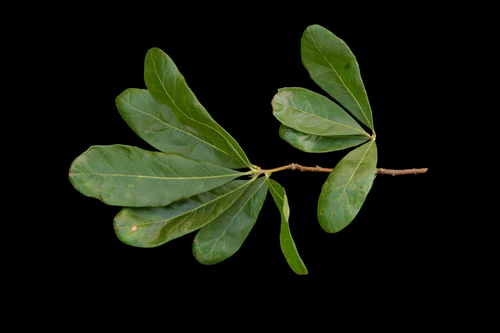
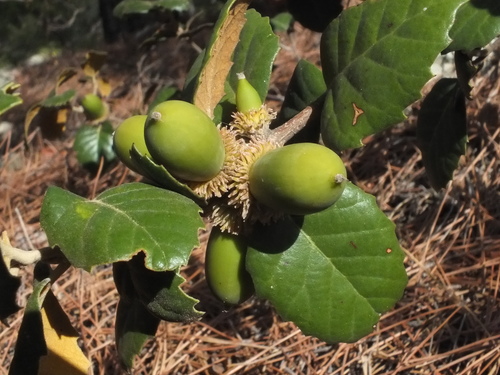
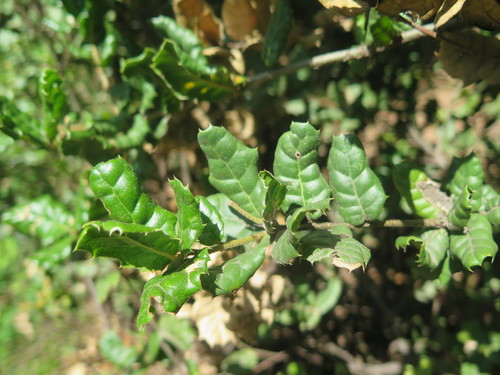
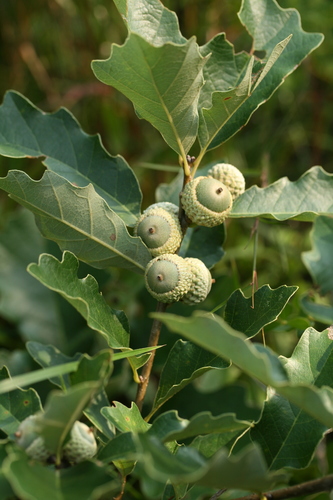
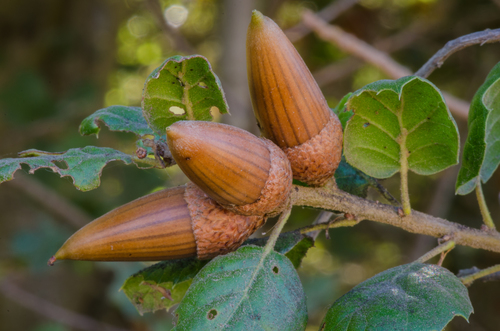
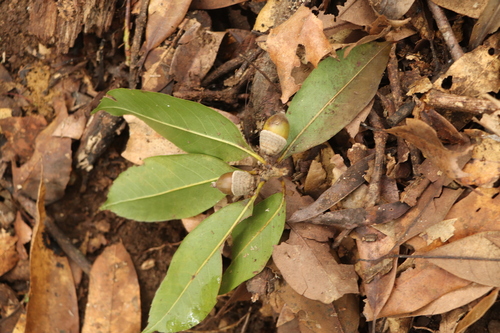
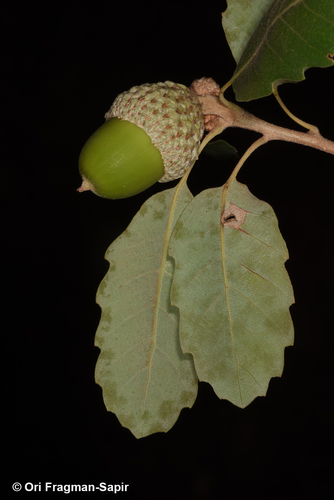
Quercus infectoria is a small tree that grows to 1 to 2 metres (4 to 6 feet) in height. Its stems are crooked and shrubby in appearance, with smooth, bright-green leaves that grow on short petioles 3–4 centimetres (1+1⁄4–1+1⁄2 inches) long. The leaves are bluntly mucronate, rounded, smooth, unequal at the base, and shiny on the upper surface. Hard, corrugated galls form on the tree's young branches when gall wasps sting the oak and deposit their larvae; a chemical reaction in the tree causes an abnormality that forms these hard, ball-shaped structures. Quercus infectoria is native to parts of southern Europe, including Greece and the East Aegean Islands, and the Middle East, including Turkey, Cyprus, Iran, Iraq, Lebanon, Syria, Israel and Jordan. Quercus infectoria can be used as a thickener in stews, or mixed with cereals to make bread. It is known as Majuphal (or manjakani) in Indian traditional medicine, where it has been used as dental powder and to treat toothache and gingivitis. "Aleppo tannin" is tannic acid obtained from the galls of this tree (also called Aleppo oak). It has unique chemical properties that are essential for preparing gold sols (colloids) used as markers in immunocytochemistry, a finding that is repeated in descriptions of medical laboratory techniques. Today, gallnut extracts from Quercus infectoria are also widely used in pharmaceuticals, food and feed additives, dyes, inks, and metallurgy.