About Quercus ilicifolia Wangenh.
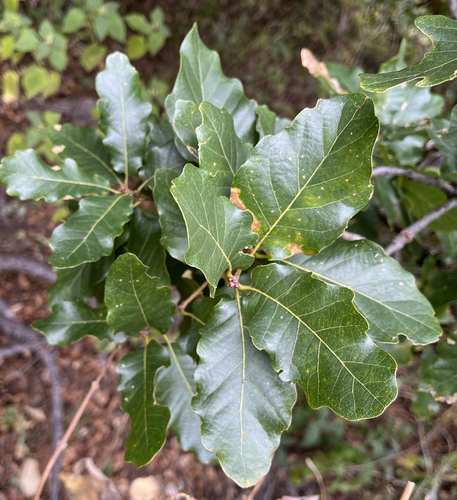
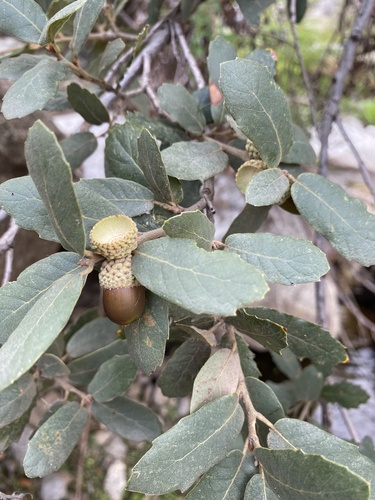
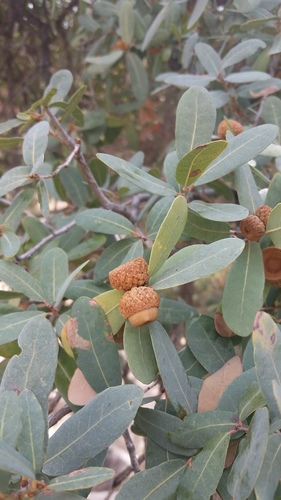
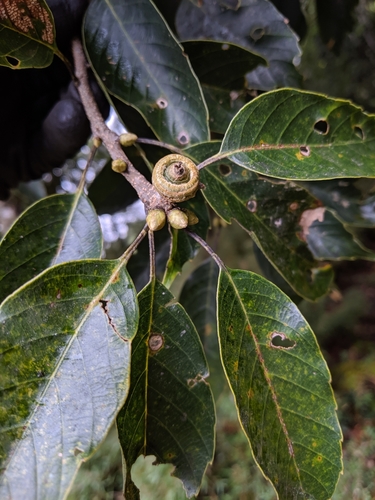
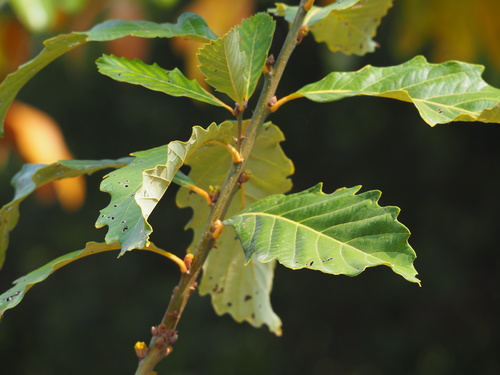
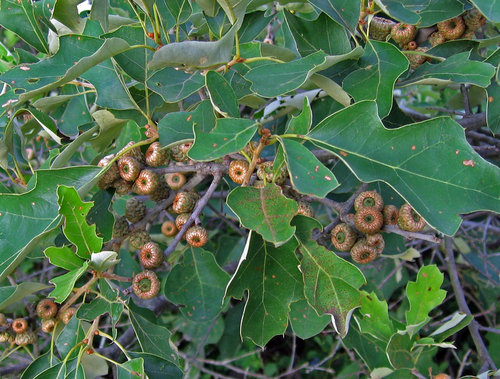
Quercus ilicifolia Wangenh. is a deciduous oak that grows as either a tree or a shrub. It occasionally reaches a height of 6 meters (20 feet), though it is usually much smaller. It has a gangly growth form and can form dense thickets. This species grows from a large taproot that can reach 20 centimeters (8 inches) in thickness. The long-lived taproot can produce several generations of above-ground plant structures. Its alternately arranged leaves grow up to 15 cm (6 in) long and 10 cm (4 in) wide. Quercus ilicifolia is monoecious, meaning individual plants bear both male catkins and solitary or clustered female flowers. Its egg-shaped acorns measure 1 to 2 cm (1⁄2 to 3⁄4 in) long and have a saucer-shaped cap. This species reproduces both sexually by seed, and vegetatively by sprouting new stems. Quercus ilicifolia is a dominant plant species across a number of regions and habitat types. In Maine, it grows in deciduous forests alongside red maple (Acer rubrum), gray birch (Betula populifolia), and quaking aspen (Populus tremuloides). In Massachusetts, it codominates with black huckleberry (Gaylussacia baccata) in the shrublands of Nantucket and Martha's Vineyard. On Cape Cod, it grows alongside pitch pine (Pinus rigida) and broom crowberry (Corema conradii). It is common in the Pine Barrens of New Jersey and the pine barrens of Long Island. It also grows in fire barrens on granite and gneiss in more northern areas of Canada. It is present in the Piedmont region of North Carolina, where it is listed as a state endangered plant. This oak is adapted to habitat disturbances such as wildfire and browsing. It cannot tolerate shade, and requires disturbance to remove other plants so it can access sunlight. It sprouts prolifically after fire burns away its above-ground parts. Quercus ilicifolia provides food and shelter for many animal species. Bears eat its bitter acorns, especially when preparing for hibernation. White-tailed deer consume its acorns, stems, and foliage. Many types of squirrels cache its acorns. Many bird species rely on these acorns, and wild turkeys prefer them over other foods. A large number of insect species live on this oak. It is the primary or only larval host for 29% of the rare or endangered Lepidopterans in southern New England and southeastern New York. Quercus ilicifolia has been used in revegetation projects at the Fresh Kills Landfill on Staten Island.