About Quercus fusiformis Small
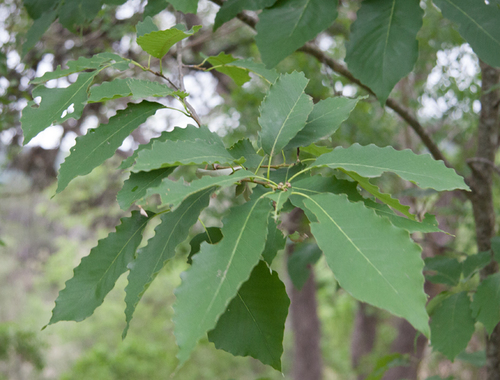
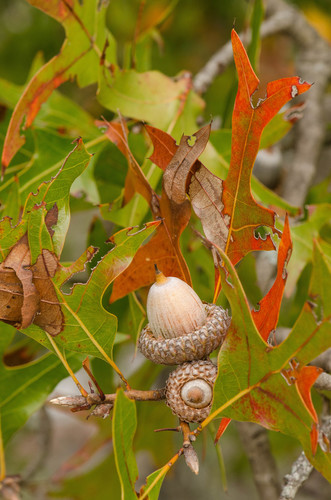
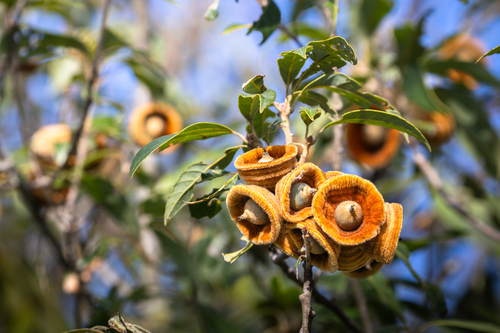
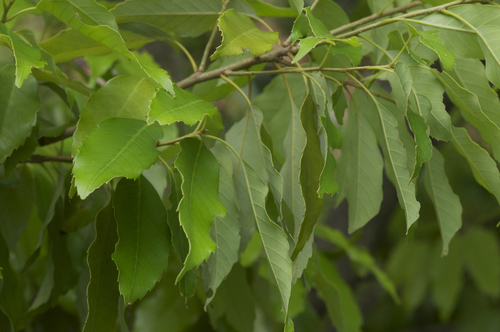
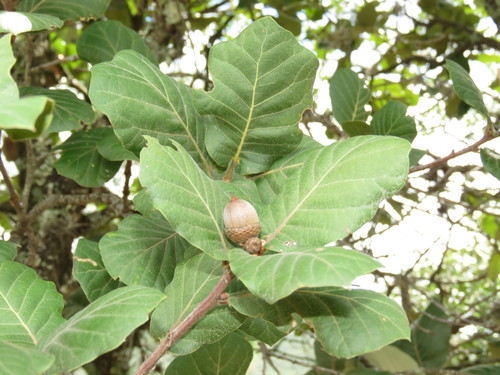
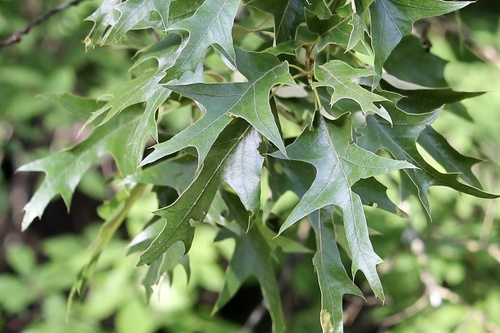
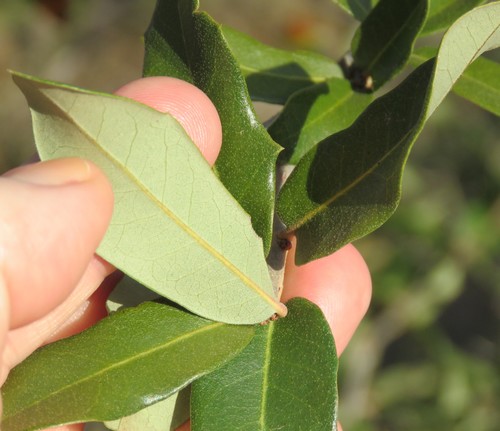
Quercus fusiformis Small, also often referred to as Quercus virginiana var. fusiformis, is commonly known by the common names escarpment live oak, plateau live oak, plateau oak, or Texas live oak. This species is an evergreen or nearly evergreen tree, placed in the southern live oaks section (section Virentes) of the genus Quercus. Its native range extends from the Quartz Mountains and Wichita Mountains in southwestern Oklahoma, through Texas (roughly from the Brazos River west to the Pecos River and southern Llano Estacado), into the Mexican states of Coahuila, Tamaulipas, and Nuevo León. It is most easily distinguished from the related southern live oak (Quercus virginiana) by its acorns, which are slightly larger and have a more pointed apex. It is also a smaller tree: it does not exceed 1 metre (40 inches) in trunk diameter, compared to 2.5 m (75 in) for southern live oak, and it has more erect branching with a less wide crown. Like Q. virginiana, its magnificent stately form and exceptional longevity have made it popular with generations of people living across its native range, and its low-hanging branches are a favorite for local children to climb and play on. Escarpment live oak typically grows on dry sites, while southern live oak prefers moister growing conditions. The species, especially the variety found in the Quartz Mountains, is widely considered the hardiest evergreen oak, capable of surviving very cold winters with minimal leaf burn even in areas as cold as USDA zone 6a. Because of this, it has become popular in the landscape industry for its beauty, tolerance of urban conditions, and general hardiness. It is already commonly used for landscaping in Texas and southern Oklahoma, and its use is becoming more widespread across the Western United States. The largest recorded individual Quercus fusiformis in the state of Texas is located in Bosque County; this tree is not the same as the "Election Oak" or the Bosque County Oak. It has a circumference of 870 centimetres (342 inches), which is larger than the circumference of the largest recorded Quercus virginiana in Texas, which is listed at 860 cm (338 in).