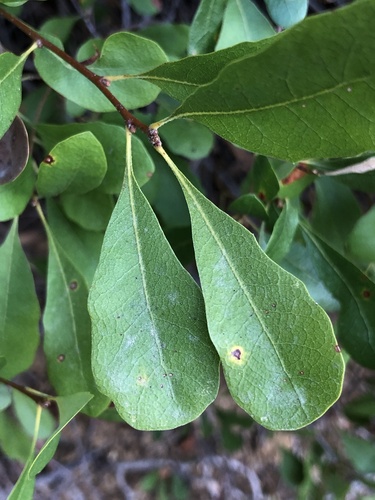
About Quercus emoryi Torr.
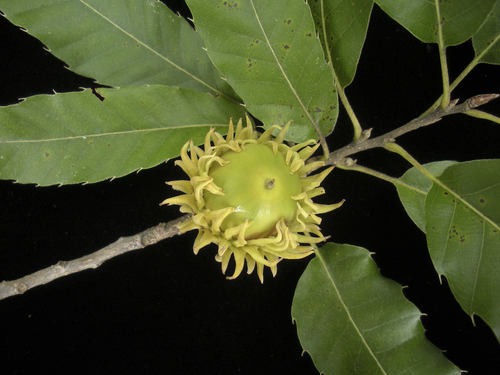
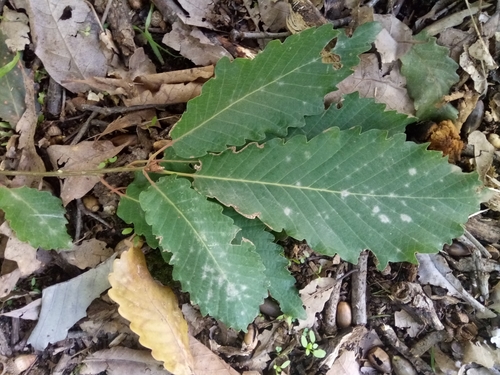
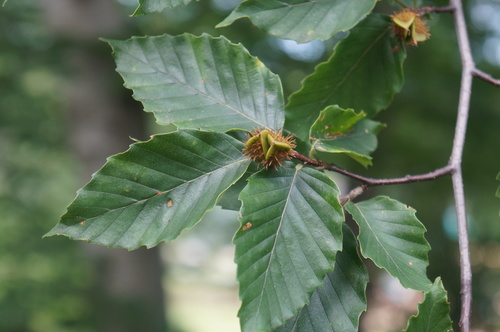
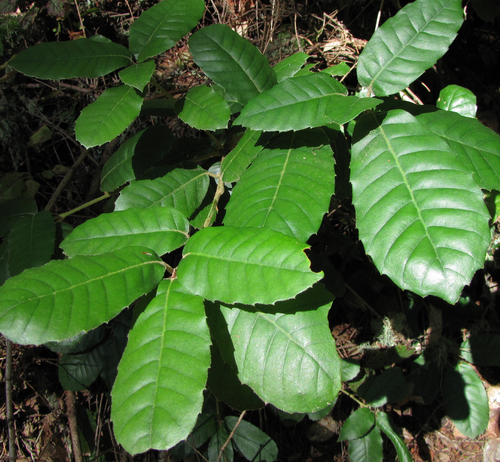
Quercus emoryi Torr. is a wintergreen tree that belongs to the red oak group; it retains its leaves through the winter until new leaves grow in spring. It typically grows as a large shrub or small tree, reaching 5–17 metres (16–56 feet) in height. Its leaves measure 3–6 centimetres (1–2+1⁄2 inches) long, with a simple shape or wavy-toothed edges, a leathery texture, dark green upper surfaces, and paler lower surfaces. Its acorns are 1.5–2 cm (5⁄8–3⁄4 in) long, blackish-brown, and mature 6–8 months after pollination; the kernel is sweet, and serves as an important food for people and certain other mammals. The seeds of this tree are called chich'il in Ndee, wi-yo:thi or toa in O'odham, bellotas in Spanish, and acorns in English. Both the English common name and the Latin botanical name of this tree honor United States Army surveyor Lieutenant William Hemsley Emory, who surveyed the area that became known as West Texas in the 1840s. In its ecology, the sweet Emory oak acorn is an important food source for livestock, deer, squirrels, cliff chipmunks (Tamnias dorsalis), and birds including quail and wild turkeys. Deer and livestock also browse the tree's foliage. For uses, Native American groups have eaten Emory acorns traditionally, for ceremonial purposes, and in contemporary cuisine, most commonly grinding the acorns into meal. In 2020, the health and habitat of Emory oaks faced new challenges, including in Oak Flat, Arizona in the Tonto National Forest, from the large copper mine operated by Resolution Copper mining company. According to the United States Department of Agriculture, Emory oak acorns are a critically important resource for the Western Apache Tribal Nation, both as a food source and for its cultural and ceremonial uses. For decades, Apache elders have watched in frustration as acorn yields dropped and the overall health of Emory oak groves declined. The Emory oak Collaborative Tribal Restoration Initiative works to restore and protect Emory oak stands to ensure the species' long-term persistence. Habitat loss, fire suppression, livestock grazing, reduced groundwater, interspecies competition and climate change have all negatively affected Emory oak populations. This restoration program uses tribal traditional ecological knowledge to guide its goals and activities.