About Quercus castanea Née
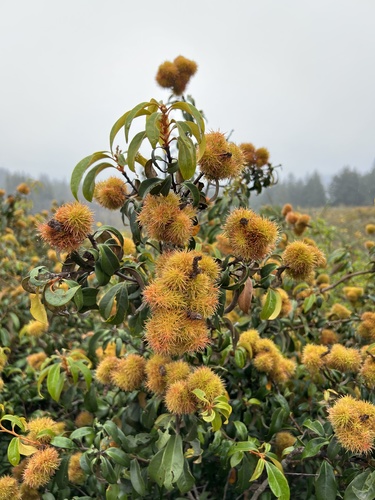
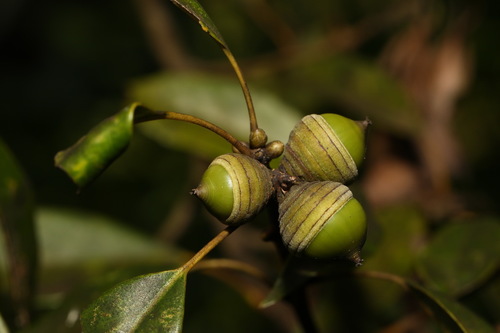
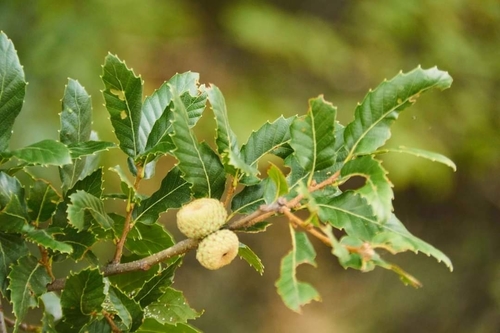
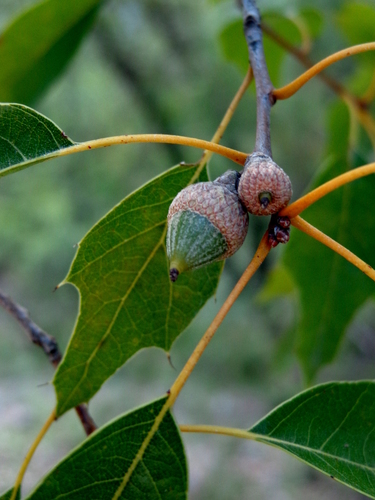
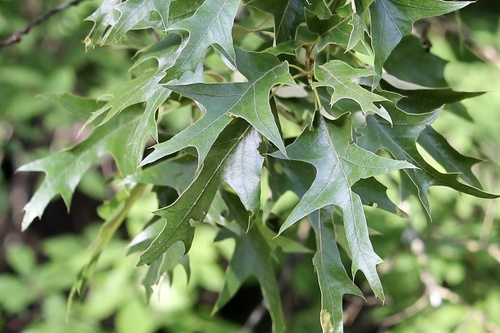
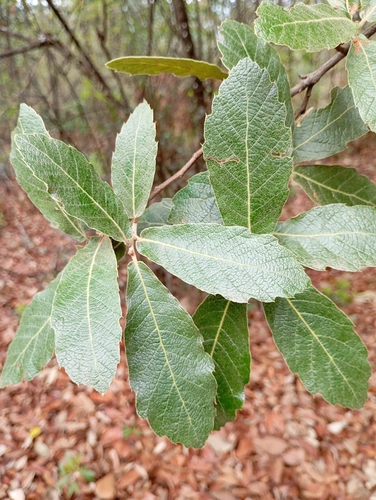
Quercus castanea Née is a deciduous tree that grows up to 15 metres (49 feet) tall, with a trunk that can reach 80 cm (31 in) in diameter. Its leaves are thick and leathery, growing up to 11.6 cm (4+1⁄2 in) long. The leaves are elliptical, with numerous pointed teeth along their edges. This species flowers from March to June, and its acorns mature between October and December. Quercus castanea hybridizes with other sympatric red oak species across its native range. This species is native to the mountains of Mexico, Guatemala, El Salvador, and Honduras. In Mexico, it grows in the Sierra Madre Oriental, Sierra Madre Occidental, Trans-Mexican Volcanic Belt, Sierra Madre de Oaxaca, and Sierra Madre del Sur, at elevations between 1,400 and 2,600 m (4,600 and 8,500 ft). It also grows in the Sierra Madre de Chiapas (shared by Mexico and Guatemala), and the Montecristo Massif, located where the borders of El Salvador, Guatemala, and Honduras meet. In Guatemala, Quercus castanea has been recorded at elevations as high as 3,500 m (11,500 ft). Based on more than 500 collections and herbarium records, the species' estimated extent of occurrence is 1,110,000 square kilometres (430,000 sq mi). It can be found in a wide variety of montane habitats. It is common in dry oak forests, xerophytic shrublands, and open oak woodlands, where it grows alongside cacti and trees from the family Leguminaceae. It also grows in humid montane cloud forests. In the Cuitzeo Basin of central Mexico, acorn woodpeckers (Melanerpes formicivorus) and golden-fronted woodpeckers (Melanerpes aurifrons) are important acorn dispersers for this species.