About Quercus aliena Blume
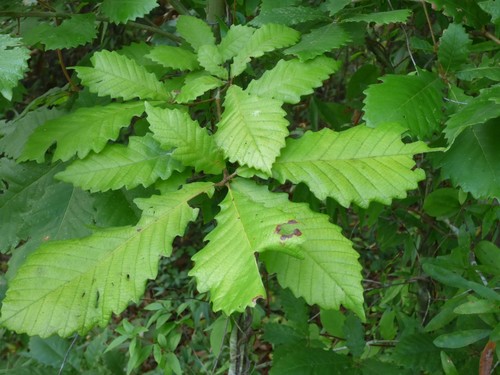
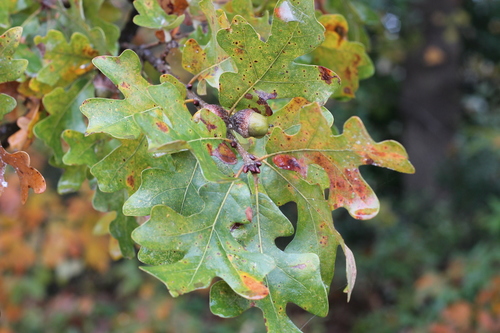
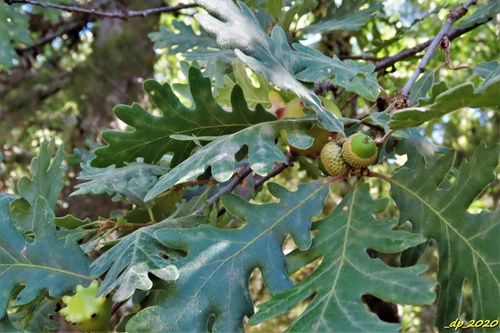
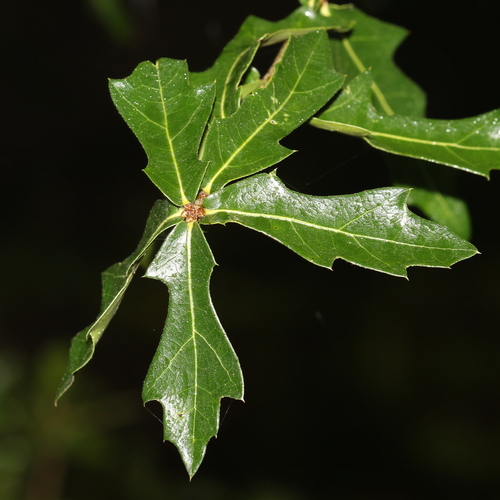
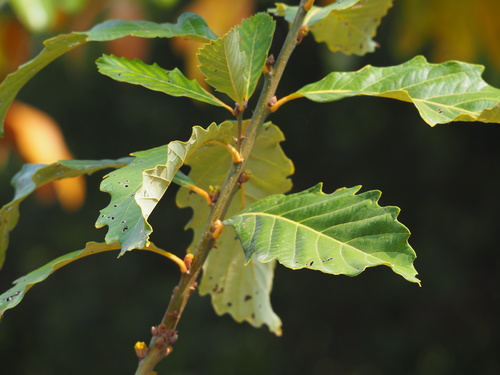
Quercus aliena Blume, the Oriental white oak, is a slow-growing, long-lived deciduous tree. It reaches up to 30 metres (98 ft) in height, with a trunk that can grow to 1 metre (3 ft) in diameter, covered in fissured gray-brown bark. Its leaves are shaped obovate to oblong, glabrous on the upper surface, and glabrous to densely covered in grey-white hairs on the lower surface. Most leaves measure 10–20 centimetres (4–8 inches) long and 5–14 cm (2–5+1⁄2 in) wide, though they may rarely reach up to 30 cm (12 in) long and 16 cm (6 in) wide. Each leaf has 9 to 15 lobes along each edge, and attaches to the branch with a 10–13 mm (3⁄8–1⁄2 in) petiole. This species produces monoecious flowers in the form of catkins. Its acorns are 17–25 mm (5⁄8–1 in) long and 13–18 mm (1⁄2–3⁄4 in) wide; between one-third and one-half of each acorn is enclosed in a green-grey cup, attached to a short peduncle. Acorns grow singly or in groups of 2–3, and mature around six months after pollination. This species is native to East Asia, where it occurs in Korea, Japan (Honshu, Shikoku, and Kyushu), Taiwan, and mainland China (Anhui, Gansu, Guangdong, Guangxi, Guizhou, Hebei, Henan, Hubei, Hunan, Jiangsu, Jiangxi, Liaoning, Shaanxi, Shandong, Shanxi, Sichuan, Yunnan, and Zhejiang provinces). In East Asia, its wood is used for boat building and residential wood flooring. Its seeds can be crushed into powder that serves as a soup thickener, and is mixed into cereals and breads; roasted seeds can also be used as a coffee substitute. Galls formed by insect larvae on this tree are a rich source of tannin. Quercus aliena was introduced to Europe in 1908, and it remains rare in cultivation outside of its native range. Mature plants have a deep taproot that makes them difficult to transplant. It grows in full sun or partial shade, tolerates strong winds, and can grow in nearly any soil type as long as the soil is not waterlogged.