About Quassia amara L.
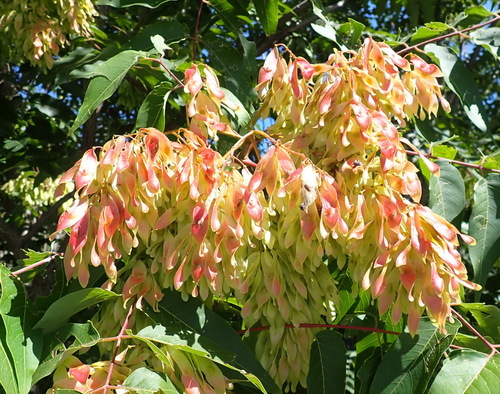
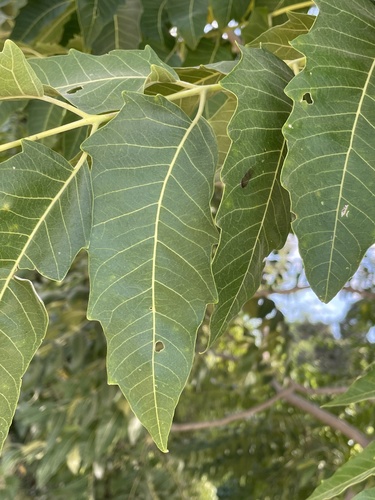
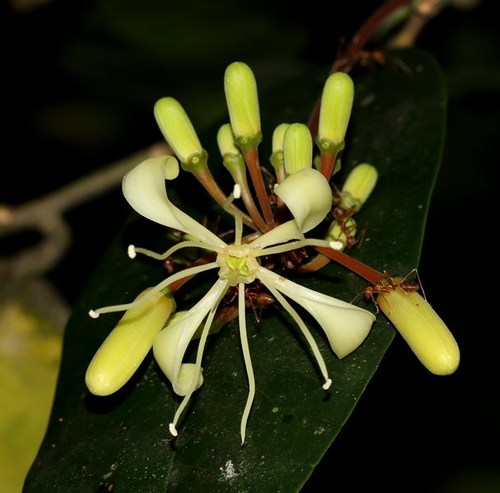
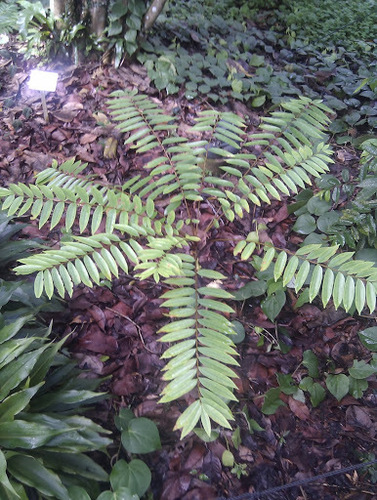
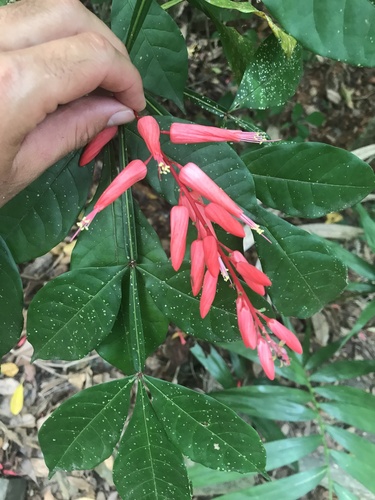
Quassia amara L. is typically a small, multi-stemmed, slow-growing plant that usually grows as a shrub and rarely as a small tree, reaching a maximum height of 6 metres. It has disorderly, twiggy branches. Its leaves are alternate, pinnate, dark green, polished, deeply veined, 15–25 cm long, and have 3–5 leaflets; they are distinct for their broadly winged leaf rachis (axis) and reddish veins. Flowers grow on terminal red-branched racemes held in panicles 10–30 cm long. The individual flowers are narrow, vivid crimson, 2.5–3.5 cm long, and grow at the tips of small branches. Each flower has 5 lanceolate petals that stay mostly closed together to form a tapered cylinder; they are bright red on the outside and white on the inside. Flowers are generally open for just two days, with only one to four open flowers present on each inflorescence at a time. They are fragile and sometimes fall from the rachis with even the lightest touch. After flowering, five small elliptic fleshy purple-black drupes, 0.8–1.5 cm long, develop; these turn red as they mature, and each fruit holds one small seed. All parts of Q. amara contain the bitter plant compound quassimarin. This species is primarily pollinated by hummingbirds, is self-compatible, and is also pollinated by other birds and Trigona species from the Apidae family. Quassia amara grows as an understorey plant in neotropical rainforests and humid sites, and is most abundant in young forests. It is native to the South American tropics, specifically found in Trinidad and Tobago in the Caribbean; Costa Rica, Nicaragua, and Panama in Central America; French Guiana, Guyana, Suriname, Venezuela, Brazil, and Peru in northern South America; and Colombia and Argentina in western South America. It occurs in the Amazon Rainforest at altitudes from sea level up to 900 m (3,000 ft). It grows in zones with high annual precipitation, between 1500–4500 mm, but may also grow in permanently humid dry areas or riparian zones. It is traditionally harvested from natural forests, has been reported in cultivation in other Central and South American countries, and is widely planted outside its native range. In Costa Rica, Q. amara flowers between October and April, while in central Panama it flowers from October to January. Fruits ripen two months after flowering, with a ripening peak in February and early March. Drupes change colour as they ripen, shifting from reddish to green before turning fully black. The best germination results come from seeds collected from drupes just before they turn fully black. Both fruit colour and size are indicators of seed viability: fruits between 1 and 1.5 cm long are suitable for reproduction, and can be easily detached from the receptacle. This tree can be propagated sexually by seed, or asexually from cuttings of half-ripe wood. Seedlings can be grown in tree nurseries. Seeds may be sown in substrates such as sawdust, sand, or soil, and grown for eight months until they reach around 40 cm in height. Germination occurs within 10 weeks, and requires daily watering during the germination period. In nurseries, a spacing of 10 x 15 cm, at a density of 35 plants per square metre, is recommended. Quassia amara grows well in medium loamy and heavy clay soils, and prefers rich, water-retentive soils. It can adapt to a wide range of soil pH values. It is sensitive to frost, and has low tolerance to salt and drought. It is classified as a semi-sciophyte: it tolerates heavy shade but requires direct sunlight to complete its life cycle, particularly to support flower and fruit production. Higher light levels increase flower and fruit production, though they do not affect seed fertility. As a result, natural regeneration of this species is limited by light availability and interspecific competition with upperstorey forest trees. In cultivation for wood harvest, agroecological recommendations advise planting in settings with large amounts of indirect light; younger trees may tolerate greater or more direct light intensities. It can be propagated with either seeds or cuttings. Frost is not tolerated, and the plant is partially drought tolerant; large amounts of indirect light are recommended. As a tropical tree, it prefers fertile, moist but well-drained soil in a partially shaded position. The bitter principle found in this species' bark and wood forms the base of Angostura Bitters, which is used as a flavouring in longdrinks, soft drinks, digestive tonics, and gin-based drinks. It can also be used as a substitute for hops in beer production, or added to baked goods. Traditionally, Q. amara is used as a digestive aid, to treat fever, to control hair parasites including lice and fleas, and to control mosquito larvae in ponds (this use has not been shown to harm fish populations). The compound simalikalactone D from this species has been identified as having antimalarial properties. In French Guiana, a traditional tea made from young leaves is used, and experiments have shown strong inhibition of Plasmodium yoelii yoelii and Plasmodium falciparum. A 2012 study found a topical gel with 4% Quassia extract to be a safe and effective treatment for rosacea. Quassia amara belongs to the Simaroubaceae family, whose members produce quassinoids, which are secondary metabolites with a broad range of biological activities. The bark contains active principles with a number of effects: they increase appetite, act as a tonic, diuretic, febrifuge, anthelmintic, and anti-leukemic agent, stimulate gall bladder activity, and help treat liver congestion. Externally, it is effective against parasites like pinworms. It is used as a tribal remedy in South America to treat debility, liver problems, malaria, snakebite, and back spasms. It is sold as ground chips that are used to make tonics or tinctures, prepared by soaking the bark in water for a long period. It is also used in Ayurvedic traditional Indian medicine to treat rheumatism, alcoholism, dandruff, stomach problems, and worms, and it is used in homeopathic medicine. Older plants accumulate greater amounts of quassinoids in their xylem. Cultivation conditions, specifically whether plants are grown in shade or sun, have a notable effect on the amount of quassine plants accumulate. This factor must be considered to achieve a good harvest. Controlled light conditions promote plant growth and increase quassinoid concentration in plant tissues, improving the quality of the raw material. Organic fertilizers such as deep mulch or other organic mulch can be used to supply nutrients.