About Pyura chilensis Molina, 1782
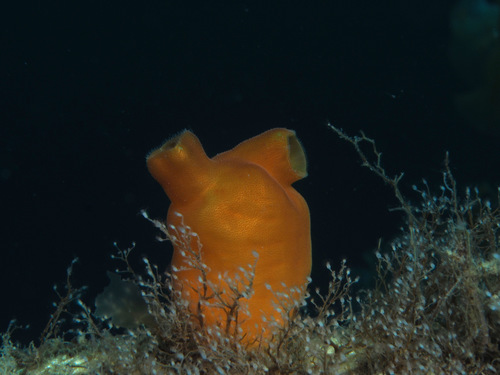
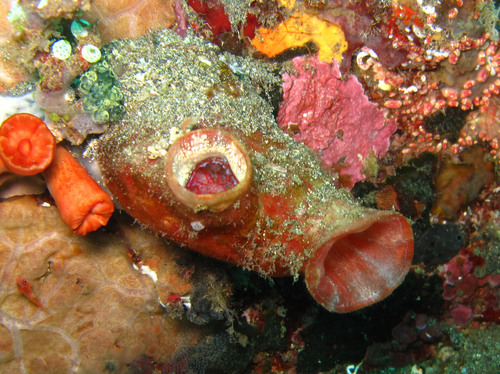
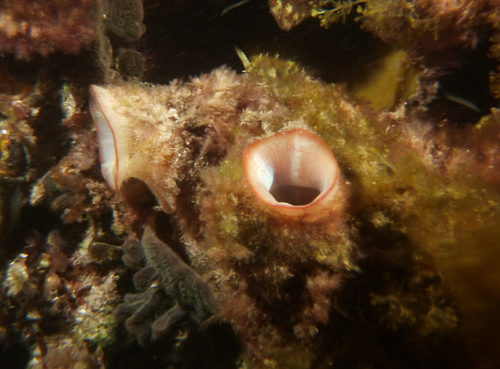
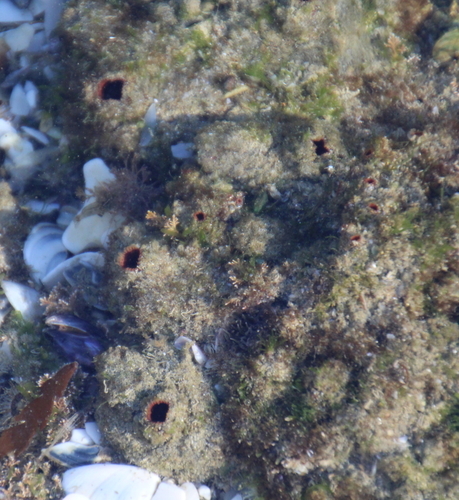
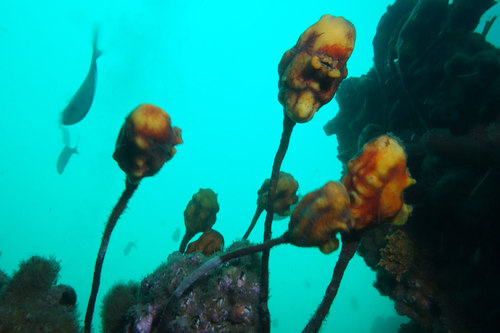
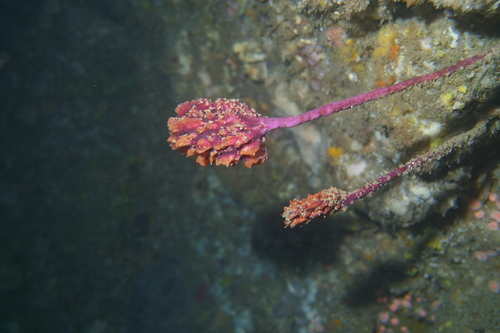
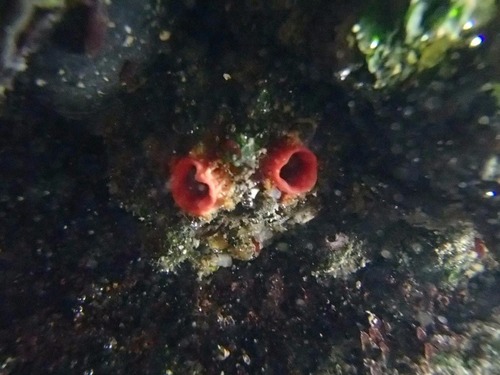
Pyura chilensis, described by Molina in 1782, is a species of tunicate. Its overall form somewhat resembles a mass of organs held inside a rock-like outer structure. This species is often found forming dense aggregations along the intertidal and subtidal coasts of Chile and Peru. It is a filter feeder, feeding by sucking in seawater and filtering out small microorganisms for consumption. Pyura chilensis shares basic characteristics common to chordates, including a notochord and a perforated pharynx. Individuals are born male, become hermaphroditic when they reach puberty, and reproduce by releasing large clouds of sperm and eggs into the surrounding water. When a single individual is alone, it can procreate through self-fertilization. Its blood is clear, and can contain very high concentrations of vanadium. These concentrations can be up to ten million times higher than the vanadium concentration in the surrounding seawater. Both the source of this accumulated vanadium and the function of these high concentrations are currently unknown. There are unconfirmed claims regarding this species' effects on human reproduction. On Chiloé Island, Chile, it has been claimed that women who ate increased amounts of piure (the common name for Pyura chilensis) during pregnancy had higher rates of multiple births. However, the veracity of these claims remains dubious when considered alongside established mechanisms of human reproduction. Pyura chilensis is also said to have aphrodisiac properties, and to produce a significant sildenafil-like effect in men for a period of time after consumption.