About Pyralis farinalis Linnaeus, 1758
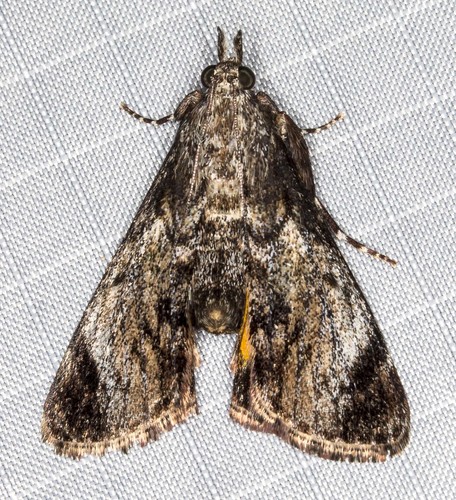
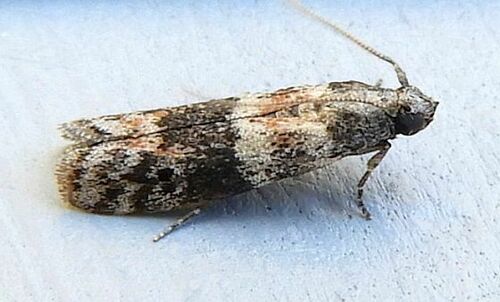
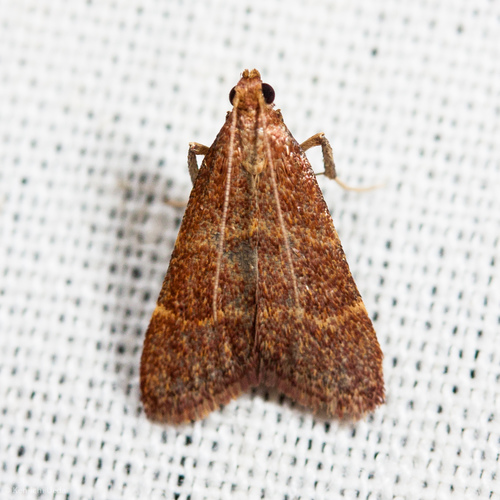
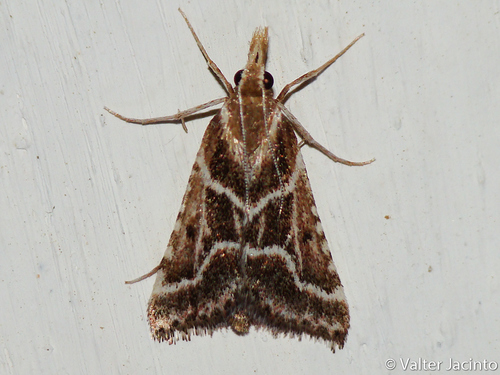
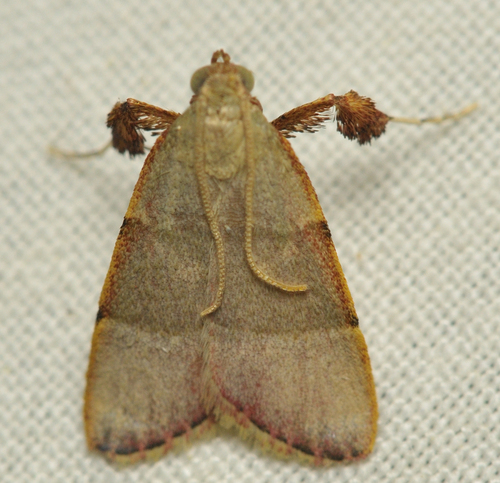
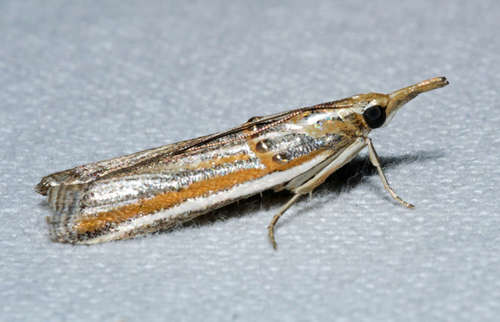
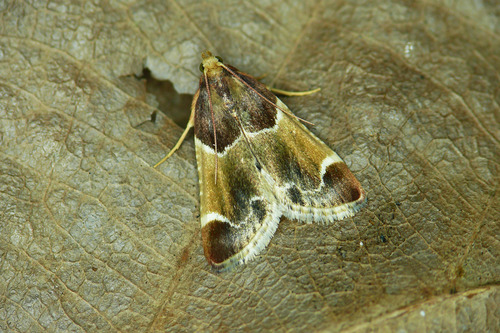
Pyralis farinalis, commonly called the meal moth, is a cosmopolitan moth species belonging to the family Pyralidae. Its caterpillar larvae are pests that feed on certain stored foods, specifically milled plant products. This species is the type species of the genus Pyralis, and by extension, of the entire tribe Pyralini, subfamily Pyralinae, and family Pyralidae. Its synanthropic habits were documented by 18th- and 19th-century naturalists, who gave it species names like domesticalis (meaning "of home and hearth"), fraterna (meaning "as close as a brother"), and the currently valid name farinalis (meaning "of the flour"). At rest, adult meal moths (called imagines) typically hold the tip of their abdomen at a 90-degree angle to the rest of their body. By moth standards, their upperwings are fairly colourful, and adults have a wingspan ranging from 18 to 30 mm. In its range, adults fly from June to August. Adults do not live long after mating, and eggs hatch quickly, so this moth has a fast life cycle and can produce multiple generations in a single year. In Great Britain and certain other locations, especially outside its natural range, it is mostly limited to human-created habitats with stored grain, such as barns and warehouses. However, it has also been found in almond orchards among plant detritus and at poultry farms among chicken manure. P. farinalis is well adapted to live alongside humans and human-associated urbanization. Though it is widely considered a pest that can damage stored grain supplies, humans have found uses for this moth. In Chinese culture, it is the main ingredient of a drink called "insect tea". This drink is popular enough that scientists have studied the moth's optimal growth conditions to explore commercial cultivation of the species. As a cosmopolitan species, P. farinalis has a geographic range that extends across most of the world. It occurs throughout the United States, but is mostly found along the eastern coast, and is most commonly seen in the country's Northeastern region. It is also found in Great Britain, the Falkland Islands, and China. P. farinalis typically inhabits silos and other grain storage buildings where grain is stored poorly, allowing moisture to enter the grain supply. It is more likely to be found in areas where decaying vegetable refuse accumulates, rather than in clean, dry grain storage facilities. The species prefers to live in detritus, and has been found in non-urban almond orchards. Meal moths can live in a variety of habitats with damp, moist plant debris, and may also live in poultry manure. One known use of P. farinalis is its role in producing insect tea in China. In China, the moth lives on the host plant Litsea coreana, and scientists have studied the optimal temperatures for the moth's growth and development, with the goal of cultivating the moth for commercial insect tea production.