About Pycnonotus xantholaemus (Jerdon, 1845)
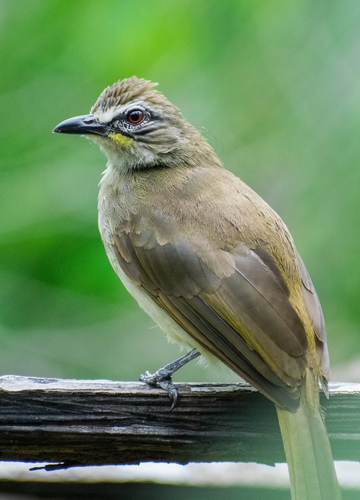
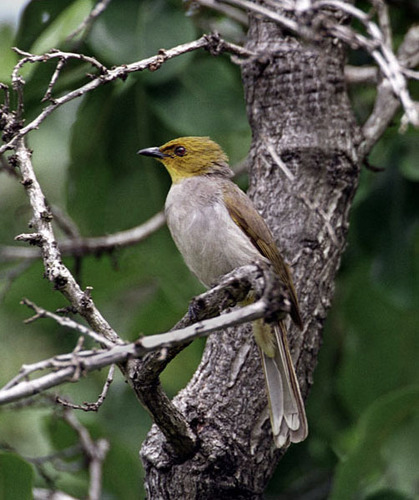
This uncrested species of bulbul has olive grey upperparts, a yellow throat, yellow undertail coverts and yellow tail tips. Its head is plain, while the breast and belly have a grey wash. Males and females have similar plumage. The species that most closely resembles it is the white-browed bulbul, which differs from Pycnonotus xantholaemus by having a supercilium and lacking a yellow throat.
Its habitat is rocky, scrub-covered hills, found mostly in the Eastern Ghats and central peninsular India, and also in some locations in the Western Ghats. The species' distribution is highly fragmented, and its populations are very localized, making its hilly habitats a high priority for conservation. Many of these hill forests are threatened by granite quarrying, forest fires and grazing, and the species has already disappeared from many sites where it was previously recorded. Well-known locations where it occurs include Nandi Hills, Horsley Hills, Gingee, Yercaud and the Biligirirangans. It is also seen in parts of the Western Ghats including the Anamalais. Its confirmed northern limit is in the Nallamala range, though it is suspected to extend further into the northern Eastern Ghats of Orissa.
This bulbul is typically shy and stays hidden within scrub vegetation, and is most often detected by its sudden cackling outbursts of call, which are similar to those of the white-browed bulbul. It feeds on insects and berries from a variety of scrub plant species, including Lantana camara, Flueggea leucopyrus, Toddalia asiatica, Erythroxylon monogynum, Solanum indicum, Santalum album, Ziziphus, Ficus benghalensis, Ficus nervosa, Ficus montana, Canthium dicoccum and Phyllanthus reticulata. During hot afternoons in the dry season, the birds visit pools of water to drink and bathe. The breeding season runs from June to August. The nest is built in the fork of a small tree. A clutch contains two eggs, which hatch after 20 days of incubation, and the chicks fledge 13 days after hatching.