About Pycnonotus goiavier (Scopoli, 1786)
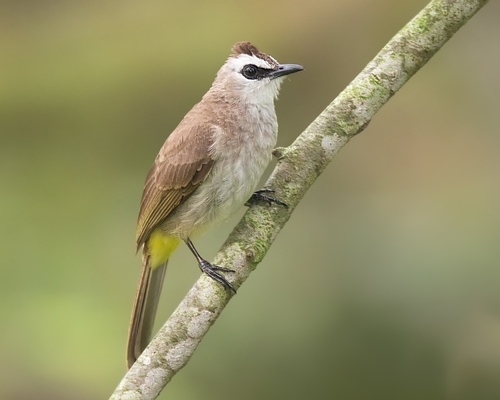
The yellow-vented bulbul (Pycnonotus goiavier), also called the eastern yellow-vented bulbul, is a member of the bulbul family of passerine birds. It is a resident breeding species found in southeastern Asia, ranging from Indochina to the Philippines. It occurs in a wide variety of open habitats, but does not live in deep forests. It is one of the most common bird species found in cultivated areas. These birds appear to be nomadic, and regularly roam between different locations.
In terms of behaviour and ecology, the yellow-vented bulbul builds a well-camouflaged but fragile, loose, deep, circular cup-shaped nest using grass, leaves, roots, vine stems, and twigs. The outside of the nest is untidy, but it is neatly lined with plant fibres on the inside. Nests may be built in a wide range of locations, from low bushes to tall trees. This species is adapted to living near humans, and may even nest in gardens. Yellow-vented bulbuls lay between 2 and 5 eggs between February and June each year. The yellow-vented bulbul feeds on berries and small fruit, and also sips nectar, nibbles on young shoots, and eats some insects.