About Puntigrus tetrazona (Bleeker, 1855)
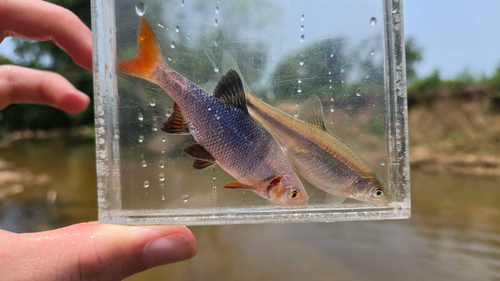
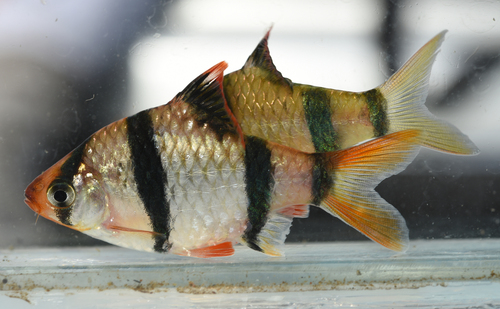
Puntigrus tetrazona, commonly called the tiger barb, typically reaches 7–10 centimeters (2.8–3.9 inches) long and 3–4 centimeters (1.2–1.6 inches) wide. Individuals kept in captivity are often smaller, though some can grow to around 13 centimeters. Wild native tiger barbs have a silver to brownish yellow body with four vertical black stripes, plus red fins and a red snout. The green tiger barb, also often called the moss green tiger barb, matches the normal tiger barb in size and behavior, but has a green body. The intensity of its green color can vary considerably, and some observers see it as nearly black. Albino tiger barbs are light yellow with four barely visible stripes. This fish is endemic to the southern portion of the eastern slope of Sumatra, Indonesia, where it has been recorded from the Kampar, Siak, Indragiri, Batanghari, Musi, Tulangbawang, and Way Sekampung basins. It has also been definitely introduced to Singapore and found in other parts of Asia, which makes it difficult to draw definite conclusions about its original natural geographic range compared to areas where it has established introduced populations. Tiger barbs have been found in clear or turbid shallow waters of moderately flowing streams, and have also been discovered in swamp lakes that experience large changes in water level, suggesting they have a wide tolerance to fluctuations in water quality. They inhabit tropical climates in Indonesia and Borneo, and prefer water with a pH of 6.0–7.5, a water hardness of 5–19 dGH, and a temperature range of 77–82 °F (25–27.8 °C). Their average lifespan is 7 years. Exposure to lower water temperatures causes changes to the tiger barb's body color. Mature males typically show bright red coloring on the dorsal fin, ventral fin, caudal fin, and snout. When water temperature drops to 21 °C, both male and female tiger barb develop faded body color. If the temperature decreases further to 19 °C, the fish's distinct stripes become visibly dimmed.