About Pugettia producta (Randall, 1840)
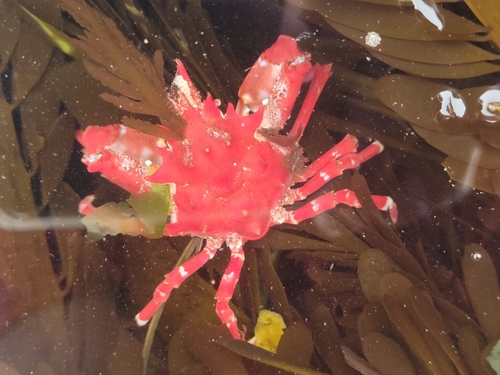
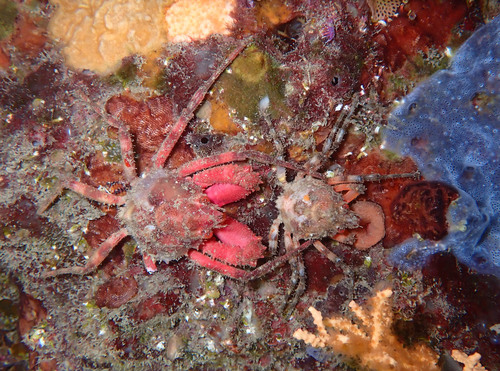
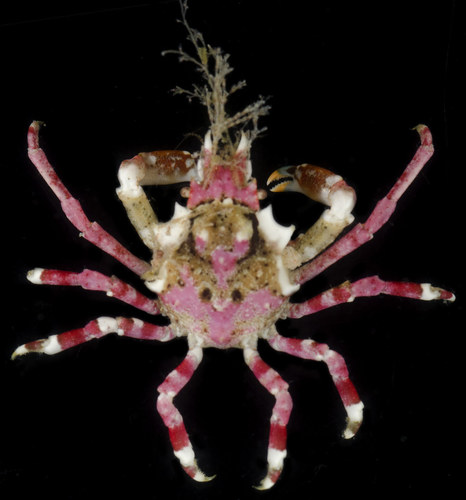
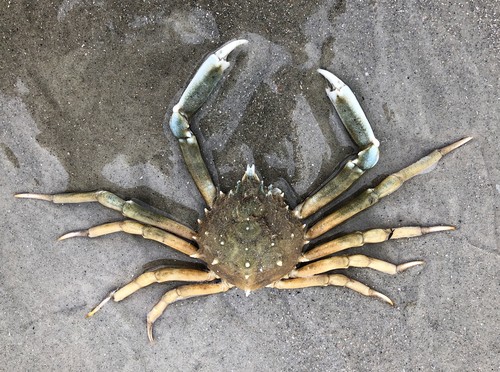
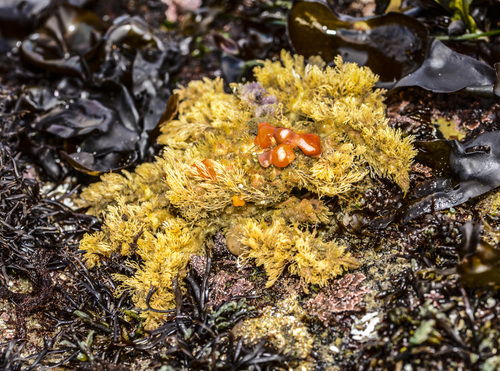
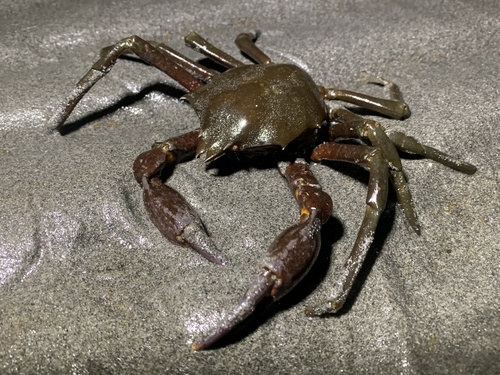
The scientific name of this species is Pugettia producta (Randall, 1840), also commonly called the shield-backed crab and the northern kelp crab. Its upper carapace is typically dark brown, olive, or olive-brown. The underside tends to be more vibrantly colored, with shades of red, yellow, or orange. Younger crabs may be lighter olive-brown or reddish-brown. The carapace has a badge-like shape similar to a police officer's badge or shield, which gives the species its common name shield-backed crab. The carapace is curved, smooth, and has a slick texture. At the front of the crab, a protrusion called a rostrum extends forward from the carapace and is used in feeding. They have large chelipeds that are used for both defense and feeding. As a member of the spider crab family, it has the long, multi-jointed, hairless legs that are characteristic of the family. Its long legs and shield-like carapace are the key identifying features of the species. It is distributed along the Pacific Coast of North America, ranging from southern Alaska to northern Mexico. For reproduction, adult crabs migrate to waters as deep as 75 m to mate. They aggregate, feed, then mate. Females may carry eggs during most parts of the year, but are rarely seen carrying eggs in south Puget Sound during May, September, and October. A female's egg clutch can contain between 34,000 and 84,000 eggs. Eggs change color as they age: they start bright orange, turn red as they mature, and hatch when they reach a grayish purple color. This maturation and development process can take anywhere from one month to nearly a year. This species has a terminal molt, and after this final molt, the crab's shell may end up covered with barnacles, limpets, or bits of algae.