About Pugettia gracilis Dana, 1851
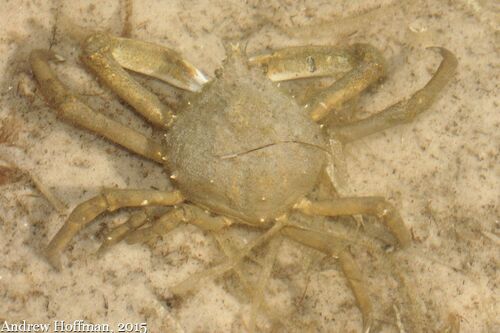
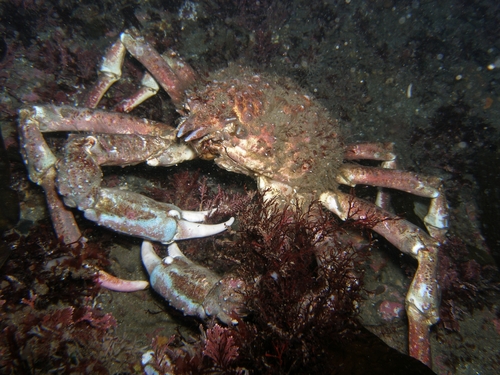
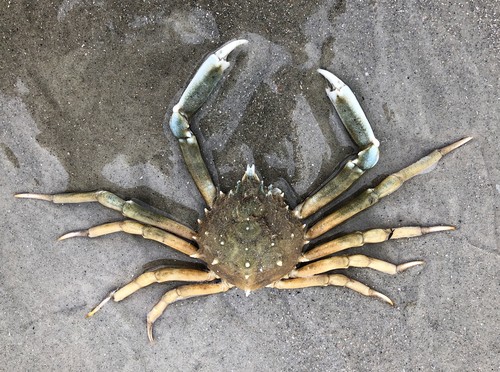
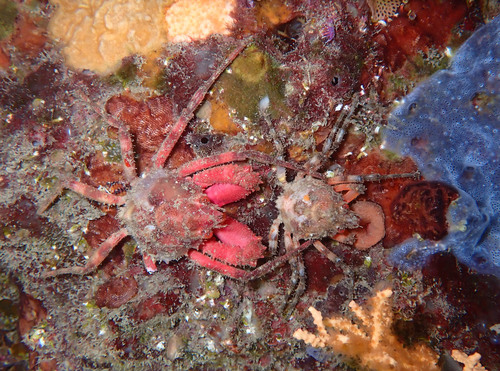
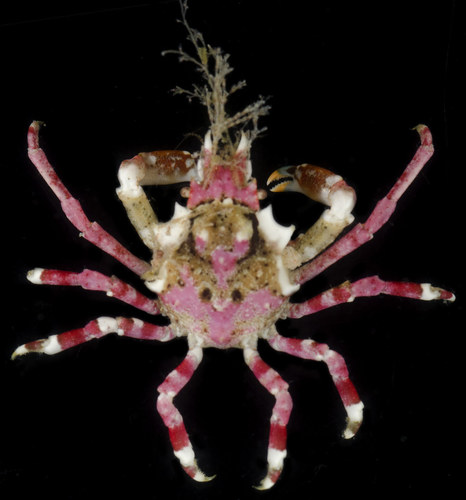
This small crab species, Pugettia gracilis, has a carapace that is slightly longer than it is wide. Male carapaces grow up to 4 cm (1.6 in) wide, while female carapaces reach a maximum width of 2.8 cm (1.1 in). The rostrum, the section of the carapace in front of the eyes, has two flattened, spreading projections. On the carapace margin, there is a pair of large teeth on either side of the rostrum, with another more flattened pair located slightly further back. Small tubercles are scattered across the surface of the carapace. The crab has long legs that bear spines, which likely help it cling to kelp. Its coloration is variable: it is most commonly brown, red, or yellow, but may also be orange, pink, white, or blue. The chelae (claws) have blue extremities tipped with red, orange, or white, and the walking legs often feature pale bands. Pugettia gracilis is native to the west coast of North America, with a range that extends from the Aleutian Islands off Alaska to Monterey Bay, California. Its typical habitat is among kelp fronds or eelgrass stems, found on both exposed coasts and in more sheltered areas. It can also live on pilings even in locations with strong water movement. Its depth ranges from the low intertidal zone down to approximately 140 m (460 ft). The species relies on the kelp it inhabits for both food and protection from predators. It sometimes decorates itself with fragments of kelp, but does so less extensively than the graceful decorator crab, Oregonia gracilis. Pugettia gracilis is most abundant in late summer, when kelp forest canopies reach their maximum size. It is generally found in the upper part of the kelp understory rather than in the canopy. In winter, after kelp dies back, the crab population declines, and surviving crabs may hide in rock crevices. Predators of this crab include fish, sea otters, and octopuses. During mating, the male crab lies on its back while the female stands over it, facing toward him. After laying, the female carries her clutch of eggs, which can number more than six thousand, beneath her abdomen.