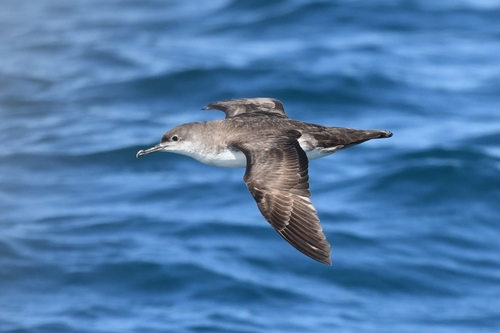
About Puffinus yelkouan (Acerbi, 1827)
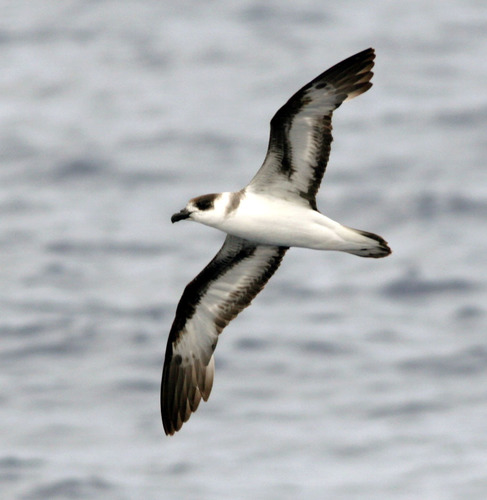
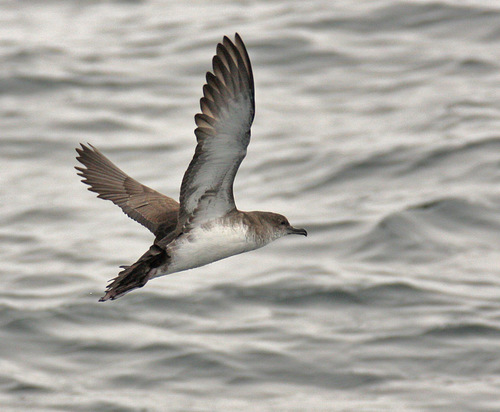
Yelkouan shearwater (Puffinus yelkouan) measures 30–35 cm (12–14 in) in length, with a wingspan of 70–84 cm (28–33 in). It shares the characteristic "shearing" flight of its genus, dipping from side to side on stiff wings with few wingbeats, and its wingtips almost touch the water during flight. Held at right angles to its body, the wings give this bird the appearance of a flying cross; as it flies low over the sea, alternating exposure of its dark upperparts and paler undersides makes it shift in color from very dark brown to white. The species is silent at sea, but breeding colonies are filled with raucous cackling calls at night that are higher pitched and more drawn out than the calls of Manx shearwaters. Compared to the Balearic shearwater, which shares its winter range, the yelkouan shearwater has a more contrasting appearance: the Balearic shearwater is brown above and dirty white below. It is very similar to the black-and-white Atlantic Manx shearwater, and stray individuals outside their usual range are very hard to identify with certainty. At least one mixed breeding colony of yelkouan and Balearic shearwaters exists on Menorca. A study of these birds concluded that a combination of morphological characteristics and DNA sequence data is required, at least for scientific purposes, to assign individual birds to either species. For breeding, yelkouan shearwaters use islands and coastal cliffs in the eastern and central Mediterranean. Most individuals winter within this sea, but small numbers enter the Atlantic in late summer. This species nests in burrows, which are only visited at night to avoid predation by large gulls. It is a gregarious species, and large numbers can be seen from boats or headlands, especially in autumn. The yelkouan shearwater feeds on fish and molluscs, and will follow fishing ships when offal is being thrown.