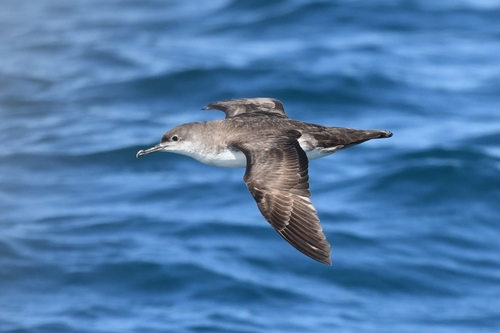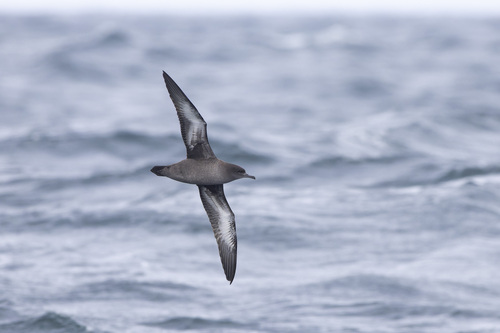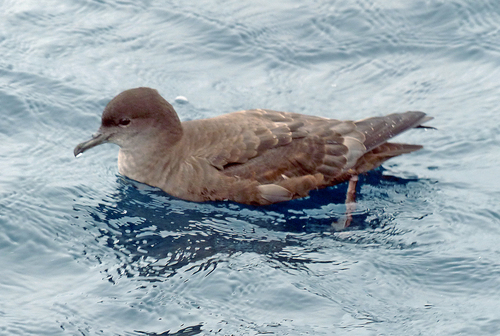
About Puffinus tenuirostris (Temminck, 1836)
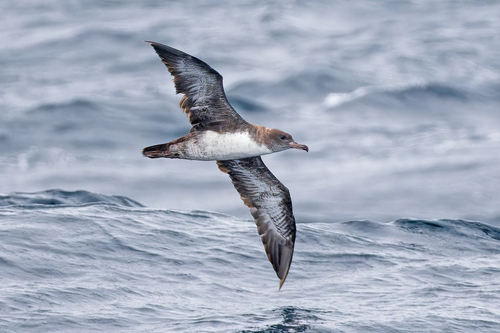
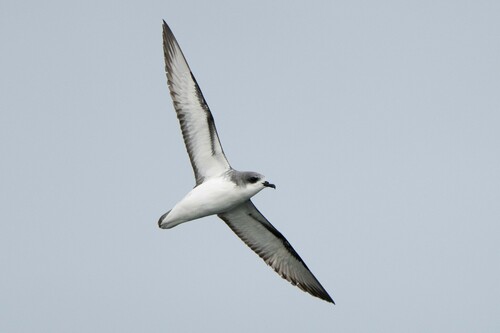
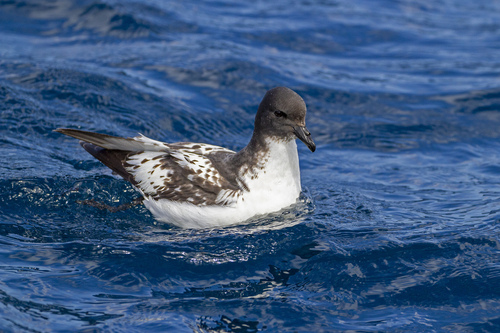
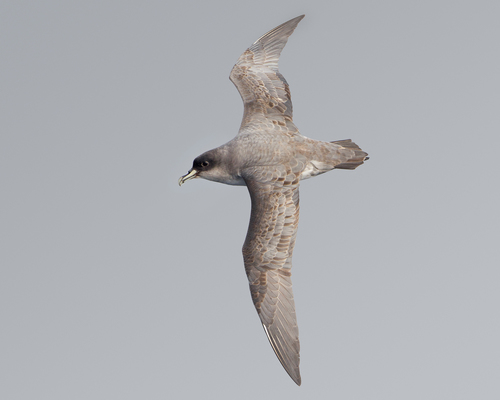
The short-tailed shearwater (also called slender-billed shearwater, yolla, or moonbird) has the scientific synonym Ardenna tenuirostris; it is commonly known as the muttonbird in both early Australia and New Zealand. This species is the most abundant seabird found in Australian waters, and it is one of the few native Australian bird species whose chicks are commercially harvested. It is a migratory species that breeds mainly on small islands in Bass Strait and Tasmania, then migrates to the Northern Hemisphere for the boreal summer.
In its ecology, each adult parent feeds its single chick for 2–3 days, then leaves on a foraging trip that can last up to three weeks to search for food. These trips can cover up to 1,500 km (930 mi), meaning the chick may be left alone for over a week. When the chicks fledge, they weigh around 900 g (2 lb), and may be heavier than their adult parents. In Tasmania, particularly on the muttonbird islands of the Furneaux Group, chicks are harvested at this fledging stage for food and oil. The world's largest population of this species, numbering 2.8 million pairs (about 12% of the total global population), is located on Babel Island.
Adult birds foraging for food on the open ocean mistake plastic debris for food and feed this plastic to their chicks. Ingested plastic, along with other factors, likely contributes to contamination of the chicks. Thousands of short-tailed shearwater fledglings are attracted to artificial lights during their first flights from their nests to the open ocean. Fledglings face a high risk of injury or death from collisions with human infrastructure; if they become grounded, they are also vulnerable to predation or death as road casualties.