About Puffinus pacificus (Gmelin, 1789)
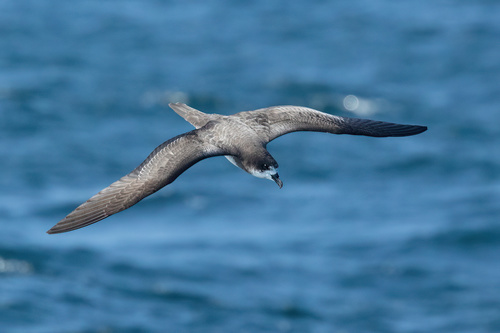
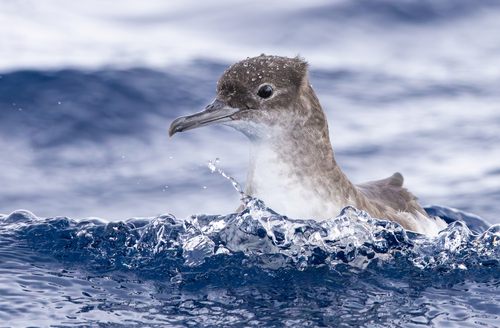
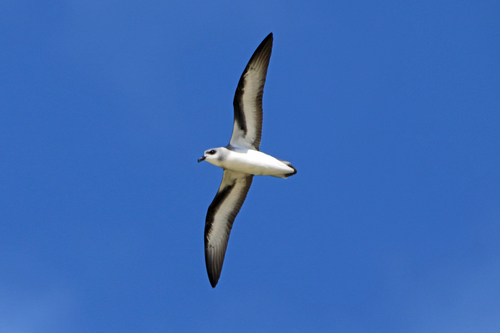
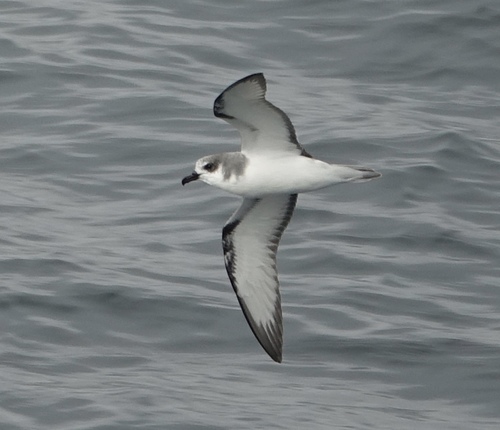
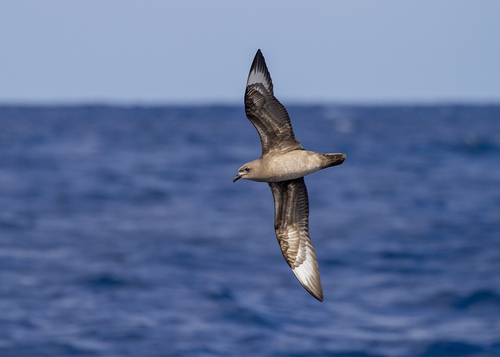
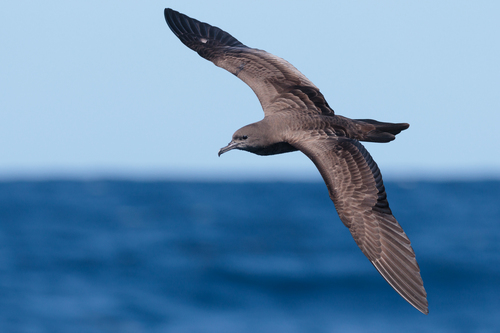
The wedge-tailed shearwater, scientifically named Puffinus pacificus (Gmelin, 1789), is the largest tropical shearwater. This species has two distinct color morphs: dark and pale. Pale morphs are the most common in the North Pacific, while dark morphs are dominant in all other regions. Both morphs occur in every population, and their presence is not linked to the sex of the bird or its breeding condition. Pale morphs have grey-brown plumage on the back, head, and upper wings, with whiter plumage on their underparts. Dark morphs have uniform dark grey-brown plumage across their entire body. The species gets its common name from its large, wedge-shaped tail, which is thought to help the bird glide. It has a dark bill and salmon pink legs; like other shearwaters, its legs are set far back on its body, an adaptation for swimming. This species is closely related to Buller's shearwater, which is found across the Pacific. Buller's shearwater has a very different color pattern, but it also has a wedge-shaped tail and a thin black bill. The two species form the Thyellodroma group, a superspecies of large shearwaters that was long included in the genus Puffinus. Wedge-tailed shearwaters feed in pelagic (open ocean) areas, preying on fish, squid, and crustaceans. Fish makes up 66% of their diet, and goatfish is the most common type of fish they eat. It was once thought that this species mostly obtained food by feeding at the water surface, and observations of feeding wedge-tailed shearwaters suggested that contact-dipping—snatching prey from the water while flying close to the surface—was the most common hunting method. However, a 2001 study using maximum depth recorders found that 83% of wedge-tailed shearwaters dove during foraging trips. The study recorded a mean maximum dive depth of 14 meters (46 feet), and the birds were found to be able to reach depths of up to 66 meters (217 feet).