About Puffinus huttoni Mathews, 1912
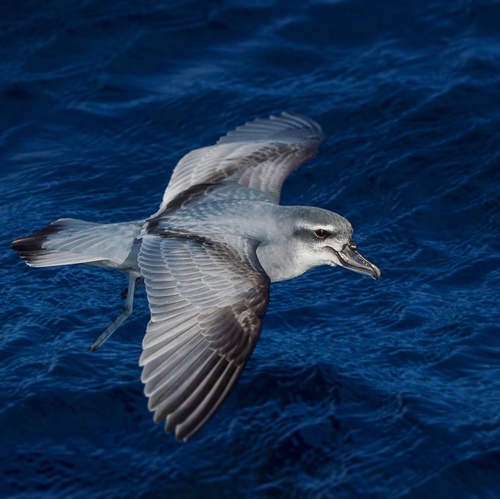
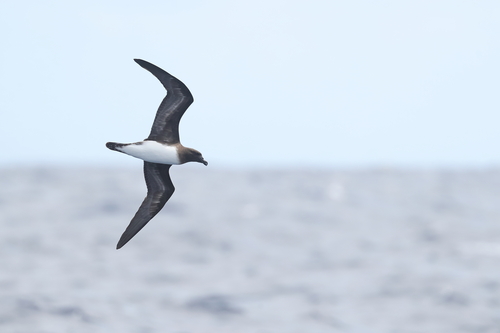
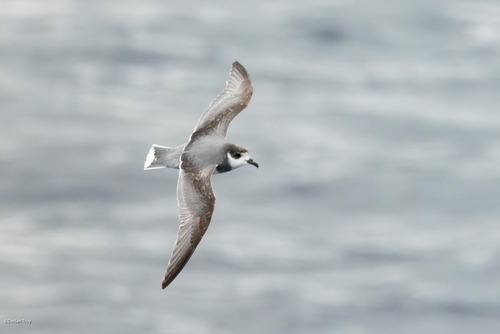
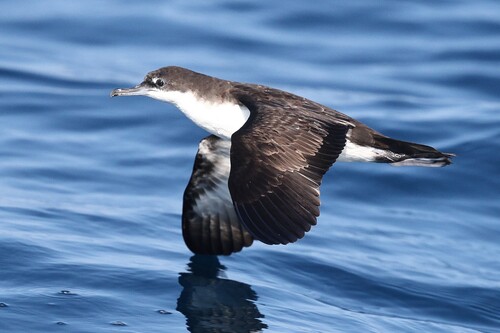
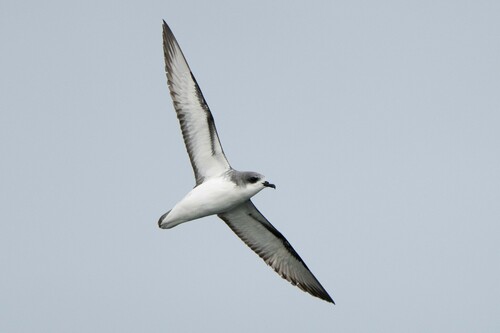
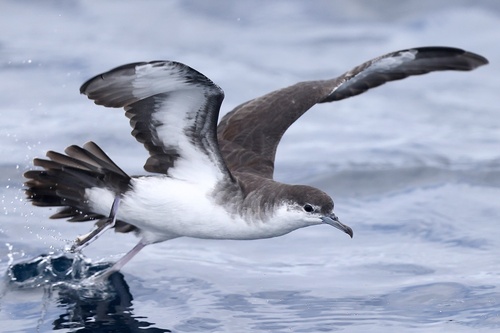
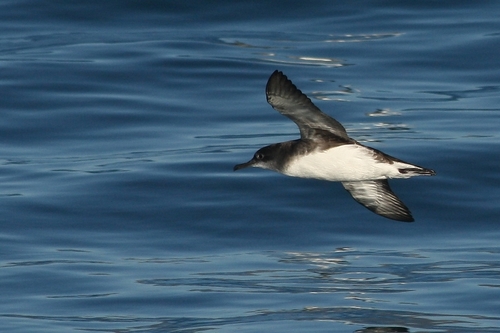
This bird species, Puffinus huttoni Mathews, 1912, is commonly known as Hutton's shearwater. Its scientific name commemorates Frederick Hutton, a former curator of the Canterbury Museum in Christchurch, New Zealand. It is a medium-sized seabird that weighs 350 g, with a 75 cm wingspan. Its plumage is brown overall, with a white underbelly, a brown collar, and dark borders along the underwing. It has a dark grey bill and pinkish feet with dark webbing. It can be told apart from the fluttering shearwater by its dark grey "armpits". When at a breeding colony, it produces a loud cackling call. Except during the breeding season, these birds live entirely out at sea. During the September to March (spring and summer) breeding season, adult birds migrate to New Zealand waters. Individual birds have been sighted all along the entire New Zealand coast, but most individuals feed off the eastern coast of New Zealand's South Island, especially between Cook Strait and Banks Peninsula. Large flocks can be seen off the Kaikōura coast during summer. Outside of the breeding season, most birds are found in Australian waters. Geo-locators fitted to young birds have shown that some individuals circumnavigate Australia in an anti-clockwise direction over the 4 to 5 years before they reach sexual maturity. Hutton's shearwater feeds in the open ocean, mostly eating small fish and krill. It can dive to depths of up to 20 m to catch prey. This species has long bills adapted to catch prey underwater. It obtains prey either by plunging into the water from a few metres above the surface, or by paddling slowly forward with its head submerged to search, then diving using its partly opened wings for propulsion.