About Puffinus creatopus Coues, 1864
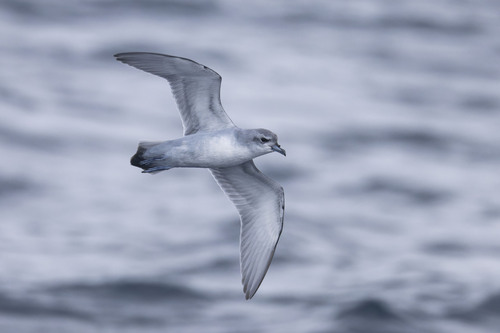
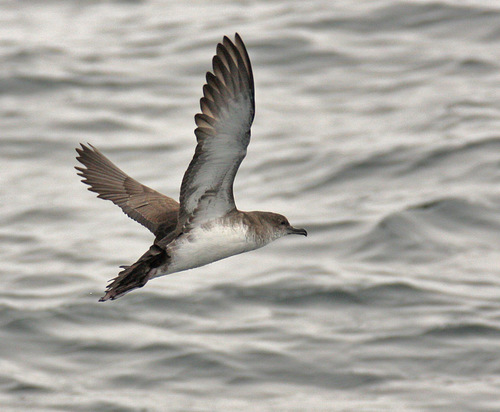
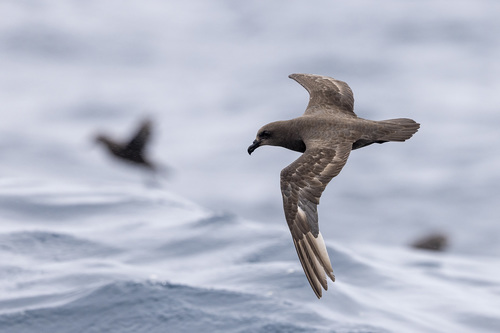
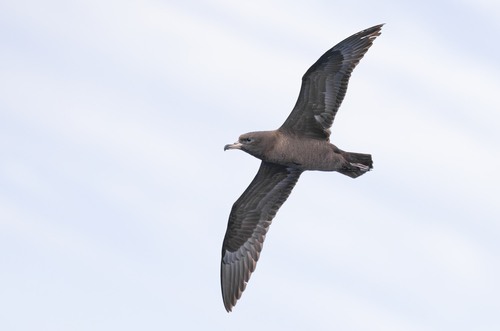
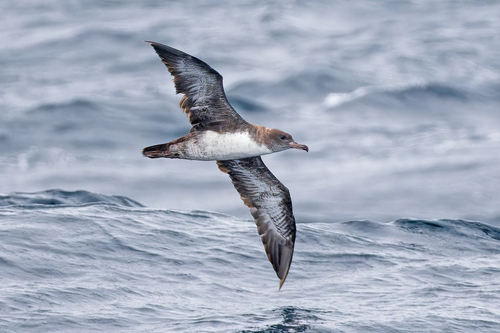
Identification: On average, male pink-footed shearwaters are larger than females. Morphological traits including bill size, tail length, head length, and average body size are linked not only to sex but also to breeding locality. These differences may be adaptations to local environmental conditions such as food availability, prey type and mobility, and wind speed. Among procellariiformes, larger wing area is generally associated with feeding on highly mobile prey, lower wind speeds, and less abundant, more dispersed food sources. This means that size differences between pink-footed shearwaters from different breeding locations may reflect both sex differences and colony-specific differences in foraging habits. For vocal behavior, pink-footed shearwaters are not especially vocal, but they can produce a horse-like whinny when feeding. Distribution and habitat: Pink-footed shearwaters breed on islands off the coast of Chile, specifically the Juan Fernandez Archipelago and Isla Mocha. During the non-breeding season, they migrate north through the eastern Pacific Ocean, spending this period between Northern and Southern Peru, or off the coast of North America from Southern California to Vancouver. They complete trans-equatorial migrations of 11,000 km, and some individuals travel a total distance of up to 31,000 km from their Chilean breeding sites. They use coastal and pelagic waters as stopover sites during migration, and utilize continental shelf and slope habitats during the non-breeding season. Feeding ecology: Pink-footed shearwaters strongly prefer to feed close to the mainland coast, which likely reflects both local oceanographic conditions and food availability. This preference may be connected to their favoring of high salinity waters with surface temperatures between 14 and 18 degrees Celsius. Their foraging sites align with areas that have high populations of their primary prey: anchovies and sardines. Pink-footed shearwaters are known to make long feeding trips that last one to two weeks. Pelagic seabirds that breed in the southern hemisphere typically follow a dual foraging strategy, alternating between short and long foraging trips. This strategy is thought to be a compromise between meeting the need for regular feedings for chicks and allowing adult birds to maintain their body condition by foraging in highly productive waters. Still, few studies have been done on the movement ecology of pink-footed shearwaters that document their foraging behavior.