About Pudu puda (Molina, 1782)
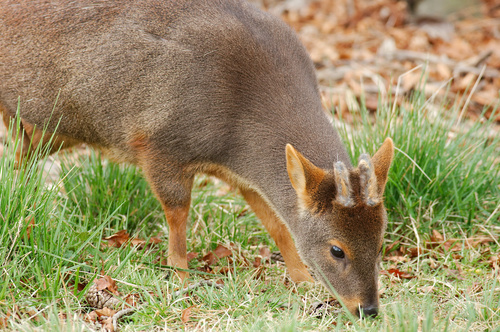
The southern pudu, Pudu puda, is the third smallest deer species in the world. It is slightly larger than its close relatives the northern pudu and Pudella carlae. It stands 35 to 45 cm (14 to 18 in) tall at the shoulder, and weighs 6.4 to 13.4 kg (14 to 30 lb). The southern pudu’s antlers grow to 5.3 to 9 cm (2.1 to 3.5 in) long, and curve backward in a shape similar to a mountain goat’s horns. Its coat is dark chestnut-brown, and forms a tuft of fur at the front of the head that covers the antlers. The southern pudu inhabits forests, including both mature and disturbed forests, that typically have a dense understory. It prefers open spaces with abundant vegetation for feeding. It occurs at lower elevations than its sister species, ranging from sea level up to 1,700 m (5,600 ft) in elevation. In the Chilean Coast Range, the southern pudu lives in primary and secondary broadleaf evergreen forests, alerce (Fitzroya cupressoides) forests, and sometimes in Eucalyptus plantations. In the southern Andes of Chile and Argentina, it is associated with bamboo thickets (Chusquea spp.) and Nothofagus dombeyi forests. Foraging by southern pudu is considered harmful to the regeneration of burned Pilgerodendron uviferum forests.