About Puccinia monoica (Peck) Arthur
Puccinia monoica (Peck) Arthur is a parasitic rust fungus of the genus Puccinia that prevents flowering in its host plant (usually a Boechera species) and drastically alters the host’s morphology to enable its own sexual reproduction.
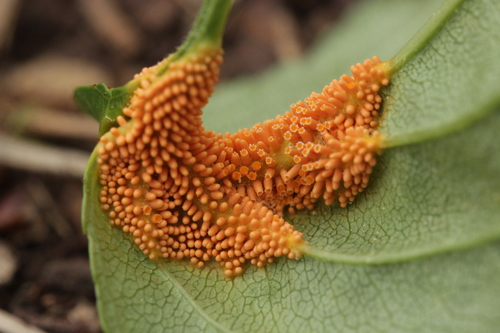
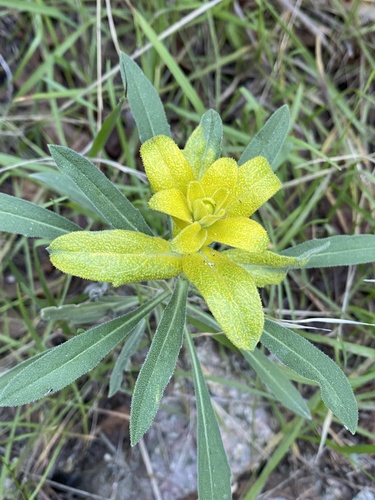
In late summer, wind-borne basidiospores infect host plants, including Boechera and several other members of the mustard family. After the spores germinate, fungal hyphae penetrate the mustard plant’s stem and extract nutrients from the host. To reproduce sexually, the fungus needs to transfer spermatia from spermatogonia on one infected plant to receptive hyphae in the spermatogonia of another infected mustard plant. To make this happen, the fungus sterilizes the host plant, stopping it from producing true flowers. Instead, it forces the infected plant to grow leaf clusters into bright yellow "pseudoflowers" that bear the fungal spermatogonia. Insects that visit the pseudoflowers transfer spermatia between host plants, just as pollinators transfer pollen between the true flowers of uninfected plants.
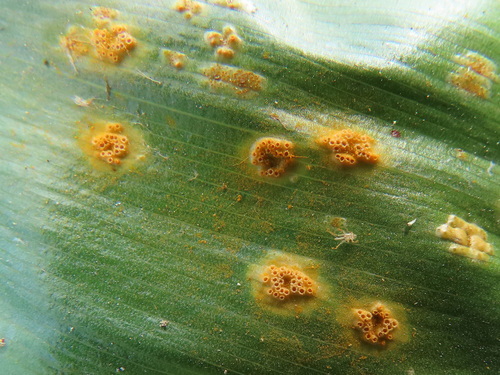
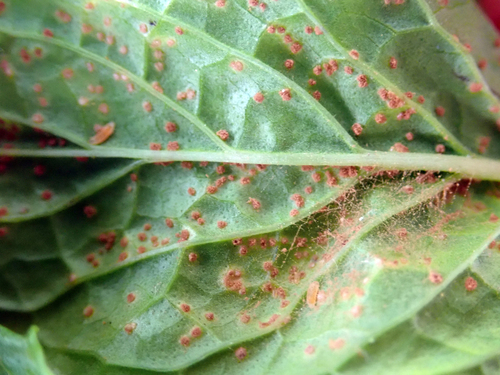
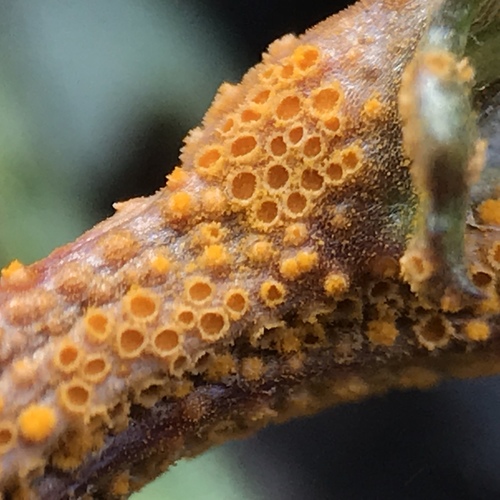
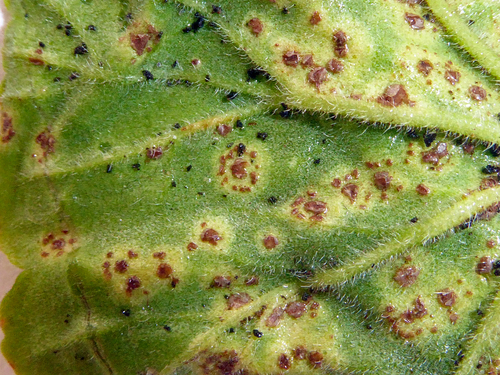
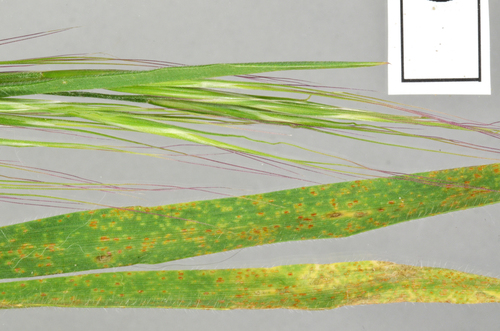
Transferred spermatia fuse with receptive spermatogonial hyphae on the recipient plant. The resulting hyphae then form aecia. At this stage, pseudoflowers lose their green color and stop producing nectar. Spores produced in the aecia, called aeciospores, infect P. monoica's alternate host: a grass species from Koeleria, Trisetum, or Stipa. After germination, hyphae from the aeciospores penetrate the grass and lead to the production of uredia. Uredia produce urediniospores that can infect more grass plants. Eventually, telia develop on the infected grasses, which produce basidia and basidiospores. When released, these basidiospores can infect new mustard plants, completing the full life cycle.