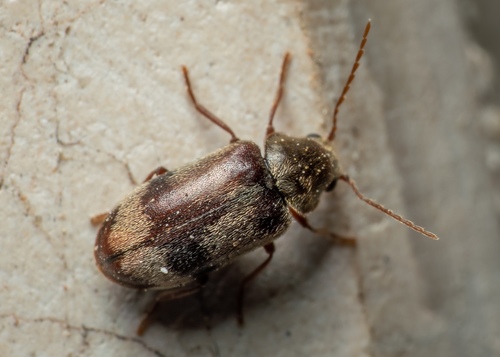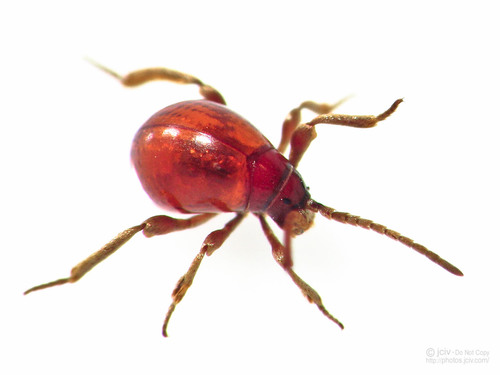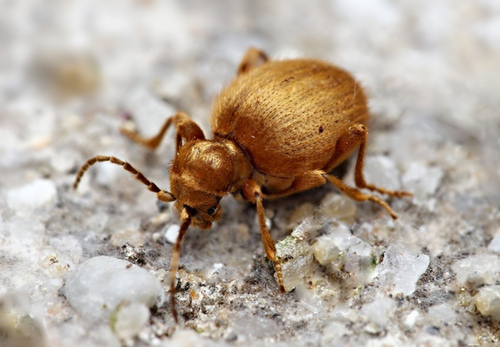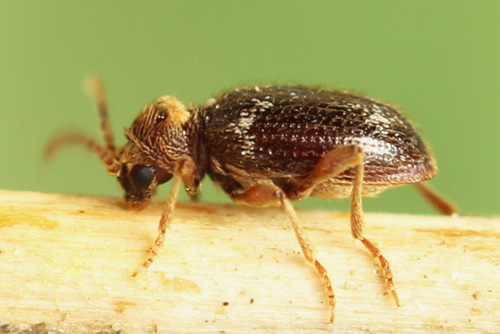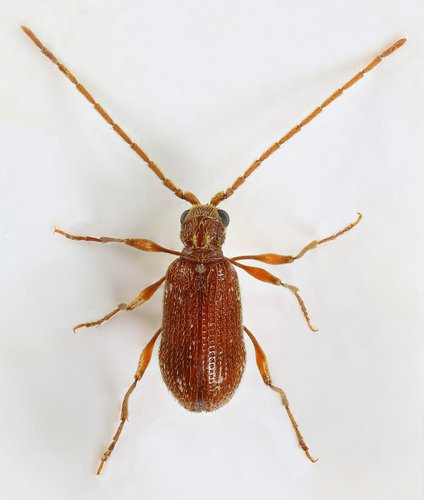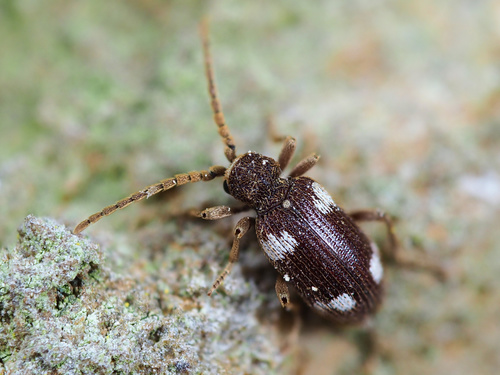
About Ptinus sexpunctatus Panzer, 1789
Ptinus sexpunctatus Panzer, 1789 is approximately 4–5 mm long, has a uniform dark body color, very prominent basal and apical patches of tightly packed appressed white scales, and very deep grooves on its elytra.
Ptinus sexpunctatus is a Palearctic spider beetle belonging to the family Ptinidae, subfamily Ptininae, found across the whole of Europe. In the United Kingdom, the National Biodiversity Network categorizes this species as 'Nationally Notable B', meaning it occurs in between 31 and 100 hectads, which are 10 km grid squares, across the country. In 2007, it was first recorded as an invasive species in North America, and it may have been imported to the continent alongside introduced populations of Osmia cornuta and Osmia cornifrons.
Commonly called the six-spotted spider beetle, this species is generally associated with pine forests, though more widespread cosmopolitan sightings have also been recorded indoors. The larvae of P. sexpunctatus are commensals that live in the nests of cavity-nesting solitary bees from the genera Osmia and Megachile. One recorded example of this association comes from Nova Scotia, Canada, where larvae were found in the nest of the Blue Orchid Mason Bee, Osmia lignaria. Inside host bee nests, P. sexpunctatus larvae feed on the food stores stored for the host larva. The occurrence, or at least the rate of recording, of P. sexpunctatus may be increasing, driven by the growing number of commercially produced bee hotels installed in domestic gardens.